


Table of Contents
Korean weddings are one of the most distinctive ceremonial events in East Asia. A typical Korean wedding today blends a fast Western-style chapel ceremony with deep Confucian traditions like the pyebaek tea ceremony, gift exchanges between families, and rituals that go back hundreds of years to the Joseon dynasty. The result is a hybrid event that takes about an hour from start to finish but contains centuries of cultural history.
This guide walks through Korean wedding traditions from start to finish: the engagement and gift-exchange period, the modern ceremony, the traditional pyebaek, the symbolic clothing, the etiquette for guests, and how K-dramas have shaped the global image of Korean weddings.
The Korean Wedding Day Structure
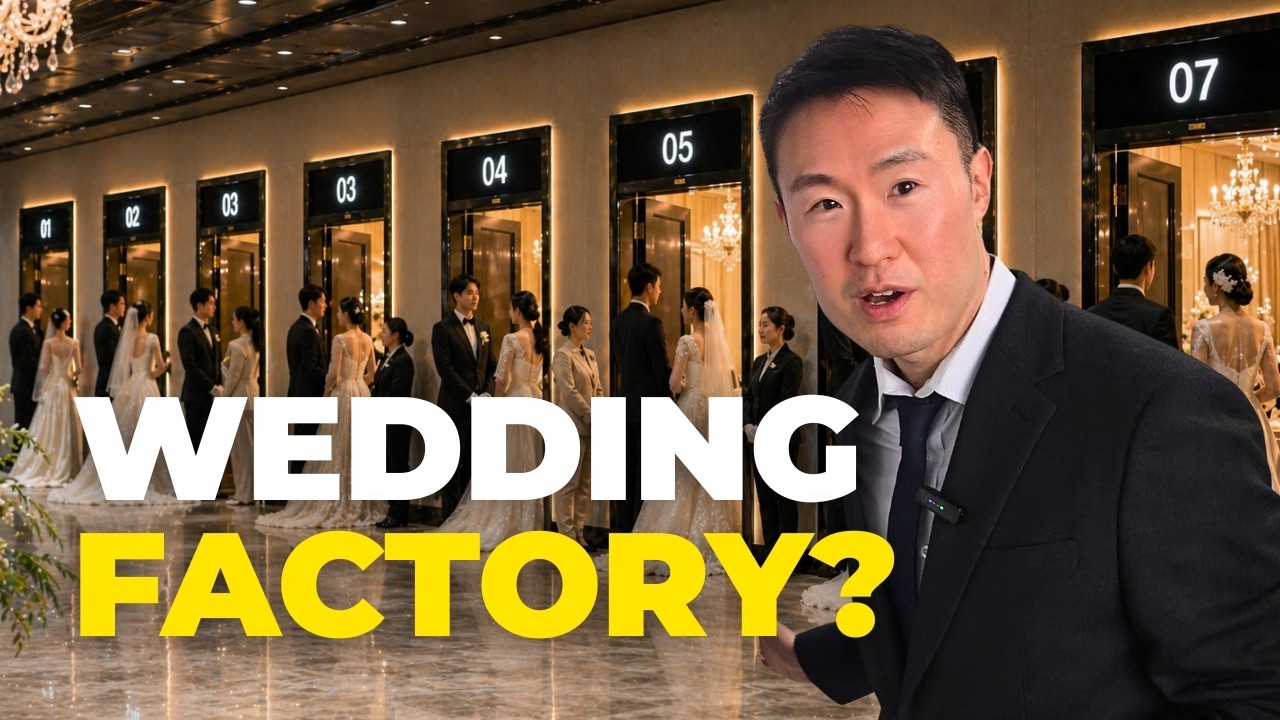
A modern Korean wedding day runs on a tight schedule. The couple meets early at a yejeon (예전), the formal wedding hall, where they put on coordinated outfits in a private bridal suite. The main ceremony usually lasts only 20 to 30 minutes, followed immediately by a buffet meal for hundreds of guests. After the buffet, the couple changes into traditional hanbok and performs the pyebaek tea ceremony in a small private room with close family members.
The compressed timeline reflects a uniquely Korean innovation. Wedding halls in Korea often host multiple ceremonies back-to-back on the same Saturday, sometimes as many as eight in a single day. Each ceremony is choreographed precisely so guests can attend the wedding, eat, hand over their cash gift envelope, and leave within 90 minutes.
The Engagement: Sangyeonrye and Yedan
Before the wedding day, the two families meet at the sangyeonrye (상견례), the formal first-meeting dinner where parents are introduced and the wedding plan is discussed. This dinner is taken seriously: families dress formally, exchange gifts, and discuss expectations openly. The sangyeonrye is treated as the real beginning of the wedding process.
Once the wedding is set, the gift exchange begins. Yedan (예단) is the gift sent from the bride's family to the groom's family, often including high-quality fabrics, jewelry, and household items. Yemul (예물) is the jewelry exchange between the bride and groom themselves, traditionally a diamond ring set for the bride and a watch for the groom. These exchanges still happen at most Korean weddings, although younger couples are increasingly trimming the gift list to focus on a single meaningful piece.
The Modern Wedding Ceremony
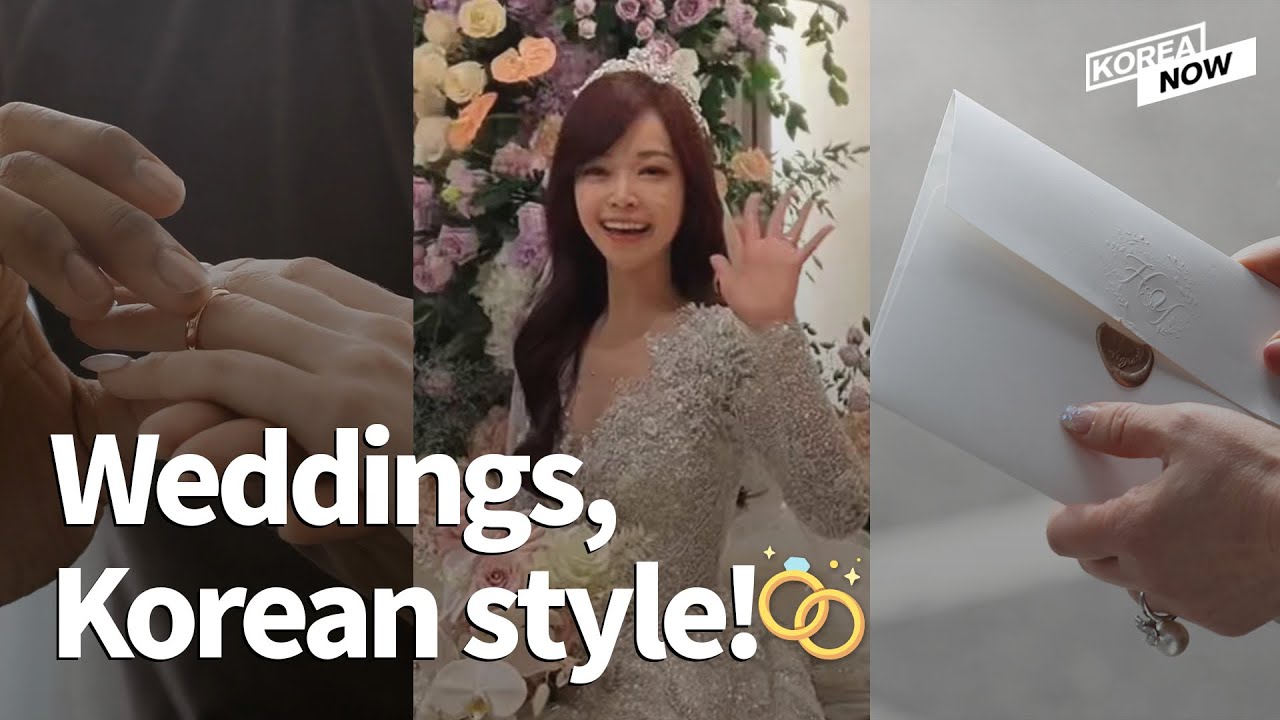
The main ceremony at a Korean wedding hall is heavily Western-influenced but with Korean touches. The bride wears a white wedding dress (often rented), the groom wears a black or navy tuxedo, and the ceremony is officiated by a juryeokin (주례인), a respected senior figure like a former professor or family friend who delivers a short speech about the couple.
The ceremony includes a procession with the bride walked in by her father, vow exchanges, ring exchanges, and a brief speech to the families. After the official ceremony, the couple makes a full circuit of the hall to greet guests and pose for photos, then heads to a private dressing room to change for the pyebaek.
The Pyebaek Tea Ceremony
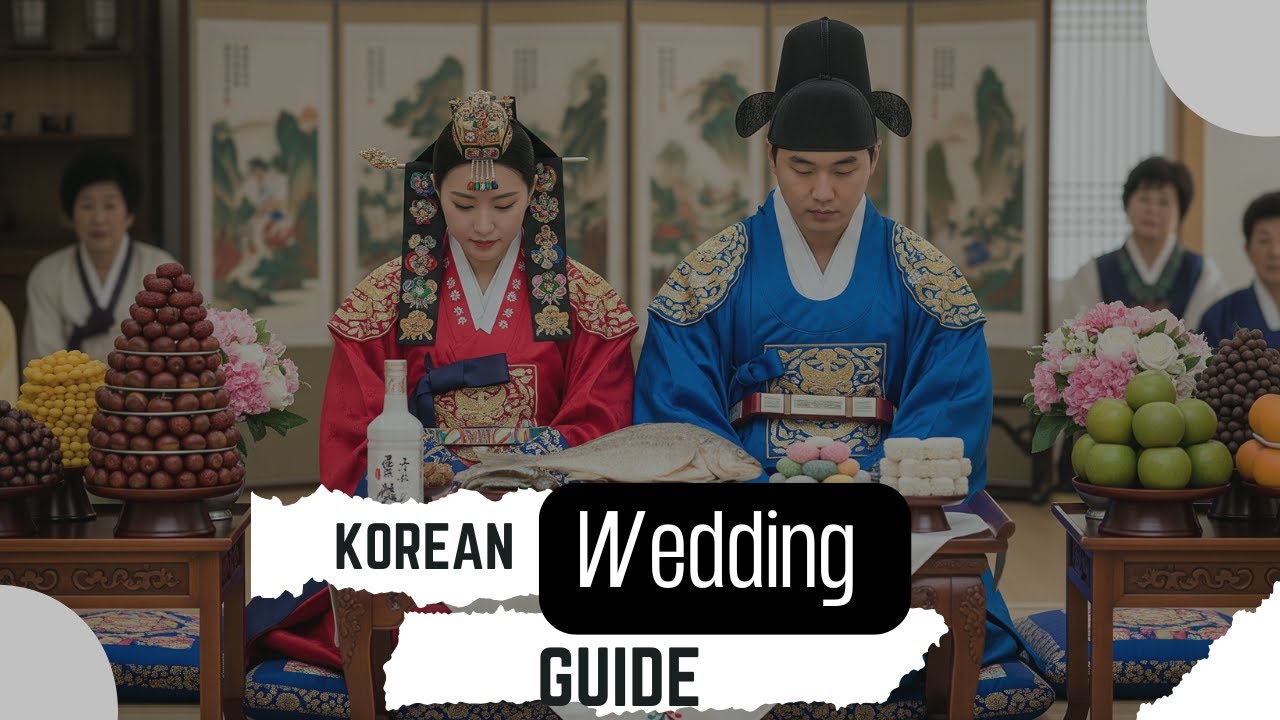
The pyebaek (폐백) is the traditional Korean wedding tea ceremony, held in a private room after the main reception. The bride and groom change into colorful hanbok in red, blue, gold, and green, and the bride wears the iconic jokduri headdress with two red dots painted on her cheeks. The couple bows to the groom's parents and grandparents, who sit on a raised platform.
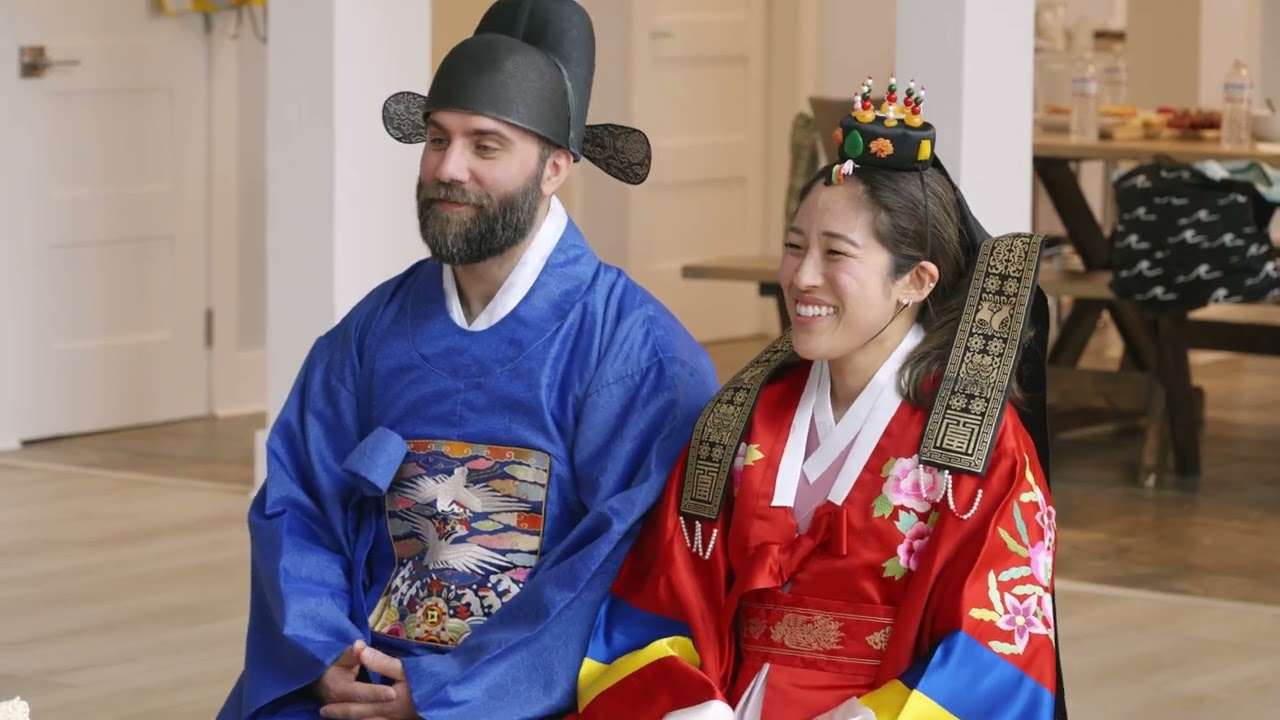
The most iconic moment is the daechu nadeon, when the groom's parents toss dates and chestnuts into a cloth held by the couple. The number of dates the couple catches symbolizes how many daughters they will have, and chestnuts symbolize sons (the folklore is fading but the ritual remains beloved). The bride and groom then offer cups of tea and a low bow to each parent and grandparent in order of seniority.
The Symbolic Wedding Hanbok
Traditional Korean wedding hanbok carries layered symbolism. The bride wears a red chima (skirt) and a green jeogori (jacket), historically the colors of yin and yang representing balance and harmony. Both pieces are embroidered with auspicious symbols: cranes for longevity, peonies for prosperity, and lotus flowers for purity.
The groom wears a danryeong, an official robe historically worn by Joseon-era scholars and government officials. Together with a tall black samo hat, the outfit transforms the groom into the equivalent of a court official receiving family blessings. Modern couples often rent the full set for the pyebaek and return it the same day.
Wedding Guest Etiquette
Attending a Korean wedding as a guest is straightforward but has clear rules. Cash gifts are the standard, presented in a small white envelope at a reception desk near the entrance to the hall. Typical amounts run from 50,000 won for casual acquaintances to 100,000 or 200,000 won for close friends and family, with the bills always presented in odd numbers (50, 70, 100, 150) because even numbers are associated with separation.
Dress code is business formal: dark suits for men and modest dresses for women, with white reserved for the bride. Guests bow politely to both sets of parents, take their seat for the brief ceremony, then head to the buffet hall. Most guests stay for one hour total, eat quickly, and leave before the next ceremony group arrives.
K-Drama Weddings and Global Influence
K-dramas have done more than anything else to shape the global image of Korean weddings. Hit shows like Crash Landing on You, What's Wrong with Secretary Kim, King the Land, and Hospital Playlist have all featured iconic wedding scenes that drew millions of international viewers into the rituals of Korean weddings.

The K-drama version is usually a stylized take on the modern hall ceremony, with extra romance and slower pacing than the real thing. Tourists now book Korean photo studios for hanbok wedding photo shoots, and overseas Korean diaspora couples often add a pyebaek to their Western ceremonies. The hybrid format Koreans invented at home is now a small but growing global trend.
How Korean Weddings Are Changing
Younger Korean couples are reshaping the format. Small destination weddings on Jeju Island, intimate outdoor ceremonies, and Western-style receptions with longer mingling time have all grown popular in the past five years. Some couples skip the wedding hall entirely and host smaller events at restaurants, hotels, or rented venues with their close circle.
The pyebaek and the hanbok photo session, however, remain almost universal. Even couples who go fully untraditional in every other way usually keep these two elements as a way to honor their families and preserve the visual heart of the Korean wedding.
Explore More of Korea with Daebak
Want to bring a little piece of Korea into your life? The Daebak Box is packed with the best Korean snacks, ramen, and cultural goodies delivered monthly to your door.


