


Table of Contents
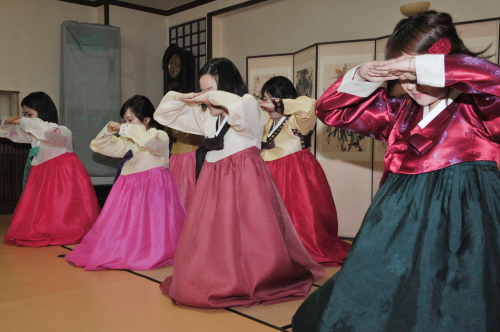
In South Korea, a bow is rarely just a bow. It is a quick read of the room, a measure of age and rank, and an acknowledgment of the relationship between the two people involved. The angle of the spine, the position of the hands, and the speed of the movement all communicate something specific. For visitors, learning when to dip the head, when to fold at the waist, and when to lower onto both knees is one of the fastest ways to navigate daily life in Korea with confidence.
The Basics of Korean Bowing
Korean bowing, known broadly as insa (인사), is rooted in Confucian ideas about hierarchy, age, and reciprocity. According to Korea Times, the practice predates the arrival of Buddhism and Confucianism in the Three Kingdoms period, but Confucian ethics shaped the rules used today. The younger person or the person in a lower social position is expected to bow lower than the senior, while the senior typically initiates the gesture. Koreans bow once when greeting the living, twice when paying respects to the dead, and three times when venerating a Buddhist shrine or a senior monk.
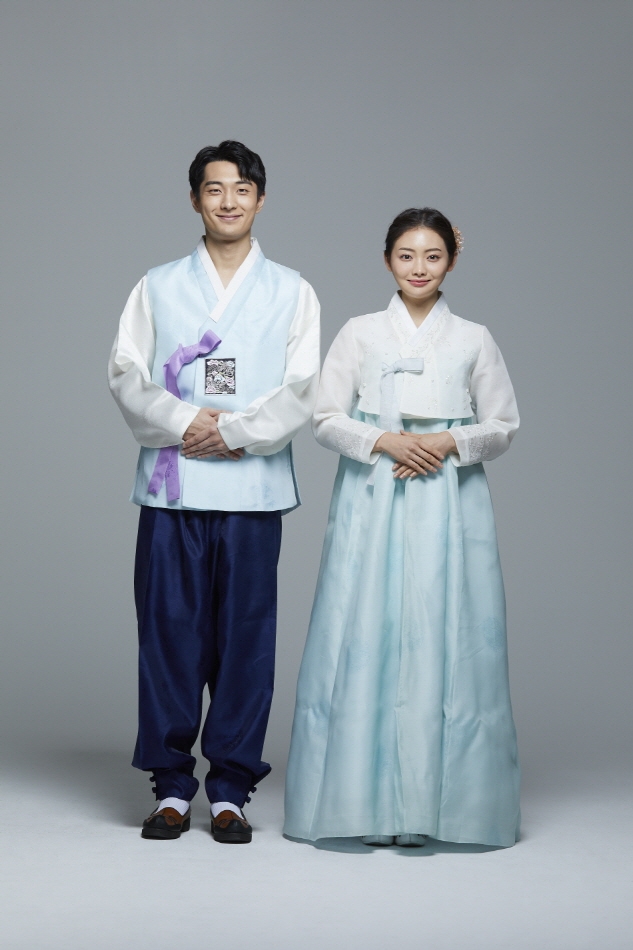
Day-to-day bows fall into three rough angles. A casual head nod of around 15 degrees works between peers or with shop staff. A polite waist bow of about 30 degrees is the default for meeting someone new, greeting an elder in passing, or thanking a coworker. A formal 45-degree bow, held briefly with the eyes downcast, is reserved for first introductions to senior figures, sincere apologies, and ceremonial moments. Hands stay relaxed at the sides for men in business settings, while women often clasp them lightly in front of the stomach.
Casual Insa: Everyday Greetings
Most bows Koreans perform in a day are short. A subway commuter passing a neighbor in the hallway will tilt the head a few inches and offer annyeonghaseyo. Convenience store cashiers nod to greet customers, and customers often return the gesture without breaking stride. According to Stripes Korea, a slight bow when meeting someone new or saying thank you is the simplest way for foreign visitors to show respect, and Koreans tend to be forgiving when the form is not perfect.
The Korea Times notes that Koreans hardly consider bows everyday greetings in the Western sense. They function more like a handshake, often performed simultaneously with one. When a Korean bows while shaking your hand, it is polite to return both movements at once. Children typically begin learning the casual bow before they enter elementary school, practicing on parents, teachers, and elderly neighbors.
The Polite 30-Degree Bow
The middle-depth bow is the workhorse of Korean social life. It is the bow used to meet a friend's parents for the first time, to greet a professor in the hallway, or to thank a stranger for a small kindness. The body folds from the waist, the back stays straight, and the eyes drift toward the floor in front of the bowing person's feet. The bow lasts about one to two seconds before the body returns to upright.
Korea Times identifies the Korean style of bowing as gongsu, a posture where the hands are clasped in front of the stomach rather than held at the thighs as they are in Japanese ojigi. The same Korea Herald report cited Japanese viewers who flagged a McDonald's commercial in Japan as Korean-style precisely because the employee's hands were clasped at the stomach. For men, the left hand rests over the right in formal contexts. For women, the right hand rests over the left. The arrangement reverses at funerals.
Keunjeol: The Deep Traditional Bow
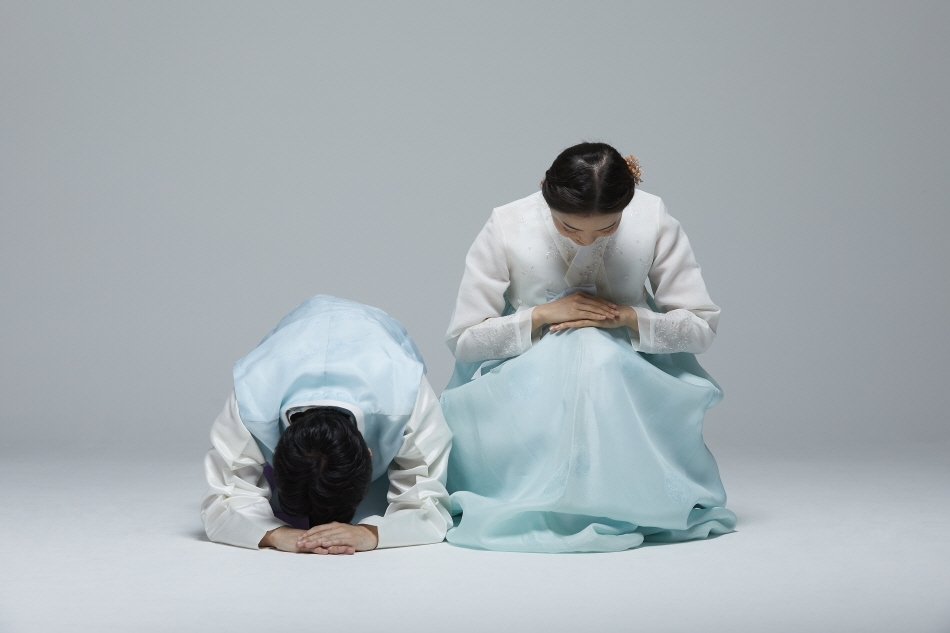
The keunjeol (큰절), sometimes romanized as kunjeol, is the deepest Korean bow. The bowing person lowers onto both knees, places the hands on the floor or holds them at chest level, and presses the forehead toward the ground before rising. The Korea Tourism Organization's VisitKorea guide describes the sequence in detail: hands are held together in front of the body, the bower kneels with the left knee first followed by the right, and the head stays lowered for about three seconds before standing up.
Hand position is taken seriously. VisitKorea specifies that men hold the left hand over the right and women place the right hand over the left during the bow. The arrangement signals respect for the occasion and the recipient. A keunjeol shows up at three main moments in modern Korean life: at Seollal and Chuseok to honor living elders, during ancestral rites known as jesa, and during the traditional pyebaek portion of a wedding.
Sebae: The New Year Bow
The sebae (세배) is the deep bow children and younger family members give to elders on the morning of Seollal, the Lunar New Year. Korea Herald describes sebae as a full bow to one's elders that is time-honored and tied to handsome cash rewards. After completing the bow, the elder offers blessings for the year ahead and hands the child an envelope of sebaetdon, or New Year's money. A 2024 SK Communications survey cited by Korea Herald found that 42.5 percent of respondents considered 50,000 won the proper amount, although roughly the same share said they would prefer to skip the cash exchange entirely.
The mechanics of sebae mirror the keunjeol. Families gather after the morning ancestral rite, the youngest line up first, and each generation bows in turn. Many children wear hanbok for the occasion, though casual clothes are increasingly common in urban households. The phrase saehae bok mani badeuseyo, meaning "receive many blessings in the new year," usually accompanies the bow.
Jesa and Pyebaek Bows
Outside the calendar holidays, the deep bow appears at two other key moments. The first is jesa, the ancestral memorial rite held on death anniversaries and at Chuseok and Seollal. Family members bow twice in front of a table set with food, fruit, and rice wine. As the Korea Times notes in its bowing primer, two bows are reserved for the deceased, distinguishing the ritual from a greeting between the living. North Korean defector families in the south often gather at sites like Imjingak near the border to perform joint ancestral bows toward their hometowns.
The second is pyebaek, the post-wedding ceremony in which the newly married couple pays respects to the groom's family, and increasingly the bride's family as well. Both spouses kneel and perform deep bows before the elder relatives, who throw jujubes and chestnuts into the bride's outstretched skirt as a wish for children. Korea Herald reports on traditional manners schools where future brides spend weeks practicing the pyebaek bow until the hanbok skirt no longer rustles.

Bowing in Modern Korean Business
In Korean offices, the bow doubles as a status check and a politeness marker. Junior employees bow first when entering a meeting room, when greeting clients at reception, and when leaving for the day. The standard depth is around 30 degrees, held briefly, with eye contact reestablished as soon as the body returns to upright. Senior managers respond with a smaller nod rather than a matching bow, since matching the depth would suggest equal rank.
Business cards are exchanged with the bow. Korea Times etiquette guidance emphasizes using both hands when giving or receiving items from someone older or higher in status, especially business cards. The card is presented at a slight angle so the recipient can read it without rotating the page, and the receiver holds it in both hands while reading for a few seconds before placing it on the table. Bowing while shaking hands has also become common in mixed Korean-foreign meetings, and returning the gesture is considered polite.
Common Mistakes International Visitors Make
Three errors come up repeatedly. The first is bowing too deeply too often. A 45-degree bow to a convenience store clerk reads as awkward rather than respectful, since the depth implies the person owes the clerk something significant. A short nod is enough. The second is matching every bow from a senior. According to Korea Times, when a manager or older relative offers a small nod, returning it with a much deeper bow is correct. Returning the same shallow depth can come across as presumptuous.
The third is hand position at the wrong moment. Men sometimes flip the standard left-over-right arrangement during sebae, and visitors at Korean funerals occasionally use the celebratory hand order rather than the reversed funeral order. Beyond bowing itself, etiquette writers at Korea Herald and Korea Times also flag a related rule: giving or receiving objects with a single hand from an elder is considered rude. Bracing the giving hand with the opposite palm at the wrist is the standard fix.
Explore More of Korea with Daebak
Want to bring a little piece of Korea into your life? The Daebak Box is packed with the best Korean snacks, ramen, and cultural goodies delivered monthly to your door.


