


Table of Contents
Ask most Westerners to define a Korean salad and you get a blank stare, or worse, a picture of gochujang drizzled over some iceberg lettuce. That reaction says less about Korean food and more about how narrow the English word "salad" has become. Korea has been dressing vegetables with sesame oil, garlic, gochugaru, vinegar, and soy sauce for centuries, and we already have a name for that whole family of dishes. It is called 무침 (muchim), which literally translates to "mixed" or "dressed." No Western import required.
I have spent over a decade watching Korean food brands, from Bibigo's overseas marketing team to smaller ready-to-eat banchan startups, try to sell muchim to a global audience that already loves kimchi. Their pitch keeps evolving, but the underlying dishes stay the same: crisp cucumber, nutty bean sprouts, briny seaweed. This is the case for treating muchim as Korea's answer to salad, and it is a much better answer than most people realize.
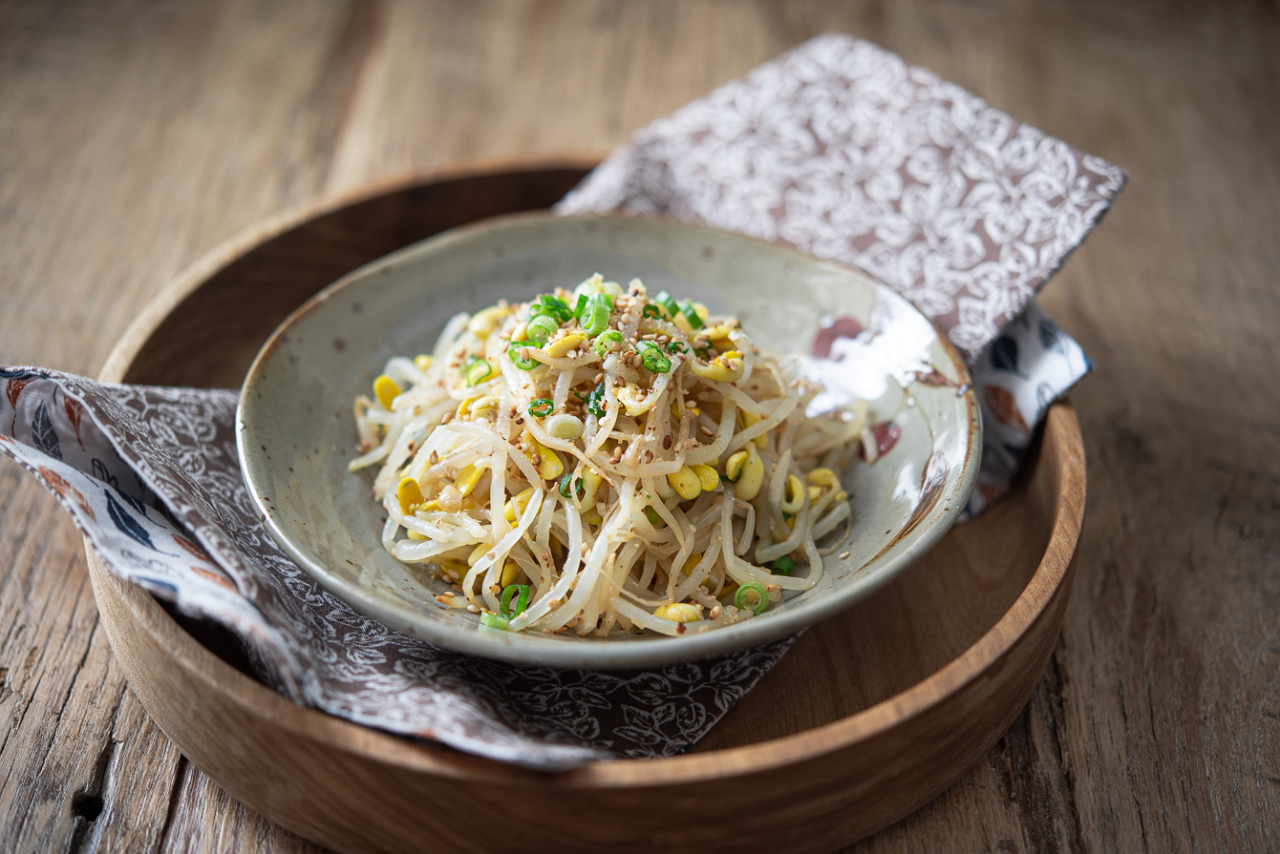
Muchim Isn't Actually a Salad. That's Exactly Why It Works.
The verb 무치다 (muchida) means to toss something with seasonings using your hands. That physicality is the whole point. You are not gently coating a green with vinaigrette. You are massaging gochugaru and sesame oil into blanched sprouts or salted cucumber until every strand carries flavor. The Korean grandmother method, if you have ever watched one work, involves gloved hands and a large steel bowl, and about ninety seconds of aggressive tossing.
That is why muchim ends up denser and more flavorful than a Caesar or a Greek salad ever could. There is no oil-heavy dressing pooling at the bottom of the bowl. The seasoning becomes part of the vegetable. Traditionally these dishes served a preservation function too, since Korea's peninsula climate meant fresh produce disappeared for months at a time, and muchim was the compromise between fully fermenting a vegetable into kimchi and eating it raw.
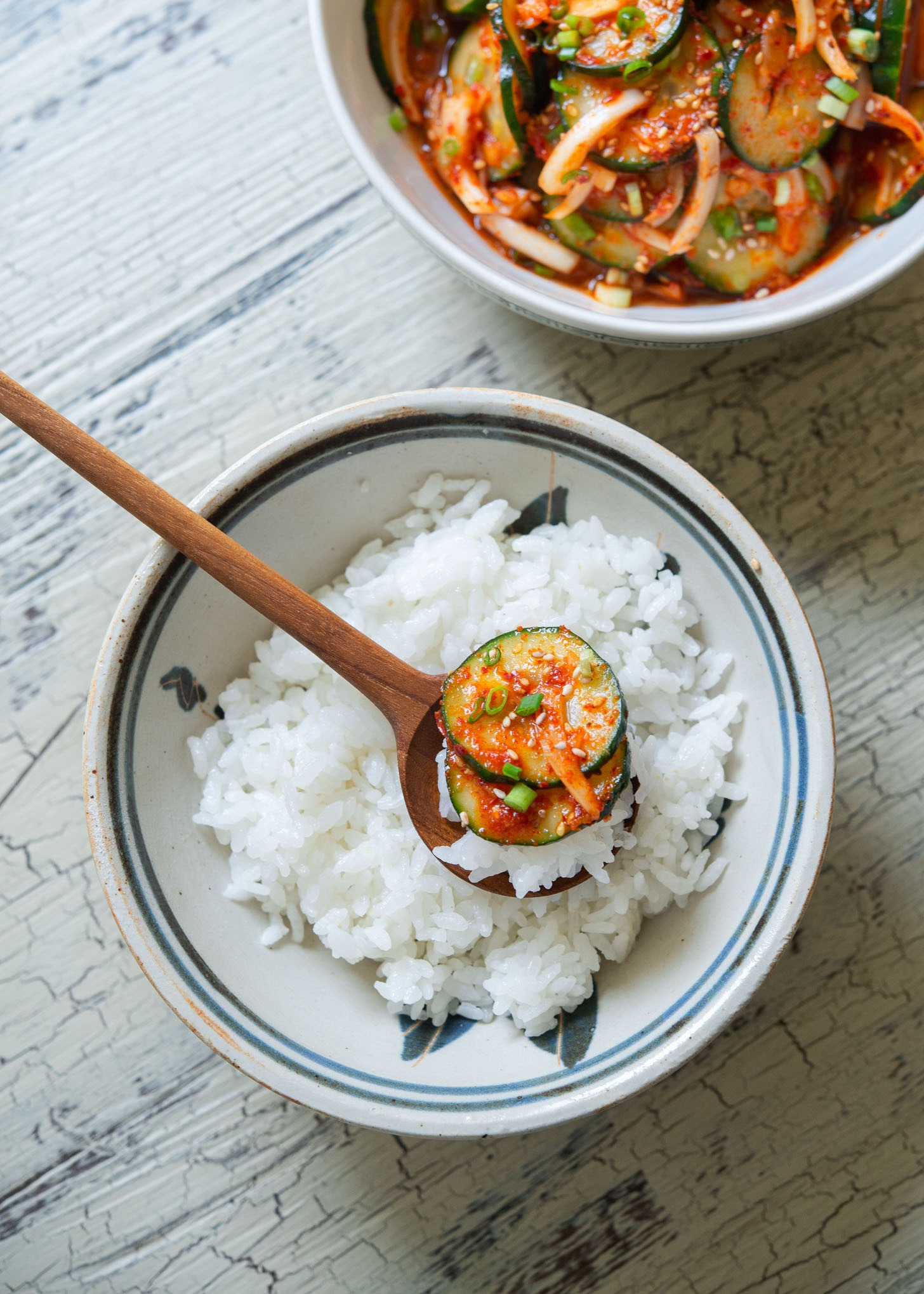
Oi Muchim (오이무침), the Cucumber Bite That Punches Up Any Meal
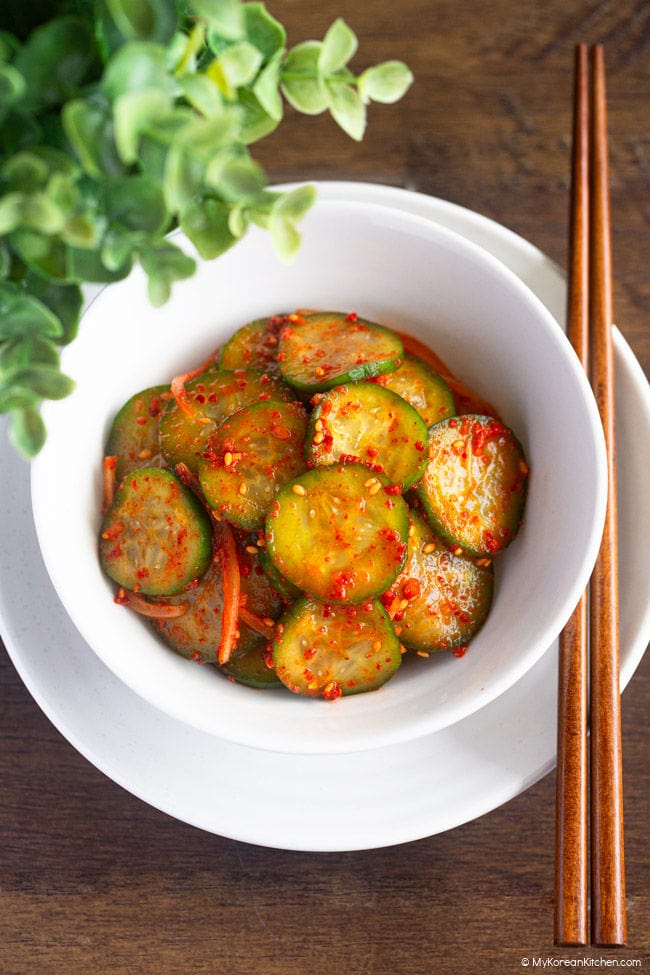
If you only make one muchim in your life, make oi muchim. Cucumber, sliced thin, salted briefly to draw water out, then tossed with gochugaru, minced garlic, a splash of vinegar, sesame oil, sesame seeds, and a touch of sugar. Ten minutes start to finish. The appeal is textural. Korean cucumbers, or the Kirby and English cucumbers most Westerners can find, stay crunchy even after the seasoning goes on, and you get this bright, clean, spicy-sweet hit that resets your palate between bites of grilled meat.
What makes oi muchim specifically Korean rather than just a spicy cucumber salad is the gochugaru itself. Substituting regular chili flakes gives you heat but flattens the flavor into something one-note. Real Korean chili powder brings a slightly smoky, fruity depth that carries the whole dish. This is why every Korean home cook I know keeps a bag in the freezer, and no one substitutes.
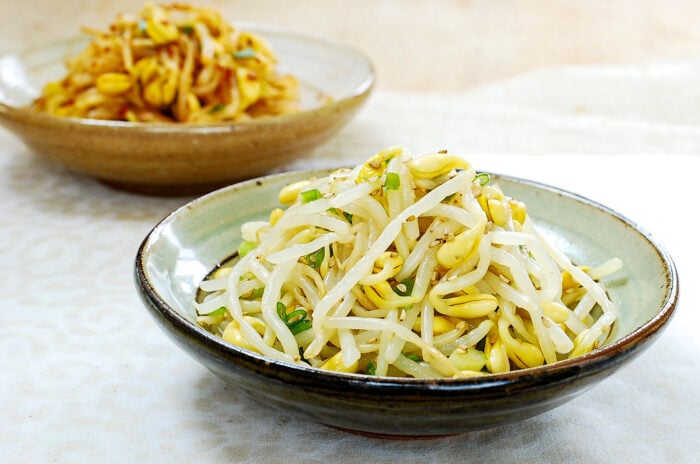
Kongnamul Muchim (콩나물무침), Korea's Actual National Side Dish
Koreans call kongnamul muchim the 국민 반찬 (gukmin banchan), the "national side dish." Every household eats it at least once a week, my grandmother's home in Busan included. It is soybean sprouts, blanched briefly, then tossed with garlic, scallion, sesame oil, sesame seeds, and either a pinch of salt or a mild splash of soup soy sauce. The southern regions, Gyeongsang province in particular, tend to add gochugaru for a little heat.
The thing Western cooks miss is how much technique matters for such a plain-looking dish. You cannot open the pot lid while the sprouts are steaming, otherwise the raw bean smell locks in and never leaves. Overcook by even a minute and they turn mushy, losing the crisp bite that made them worth eating. Every Korean mom has an opinion about this. It is one of those dishes where the difference between passable and beloved comes down to fifteen seconds of cook time.
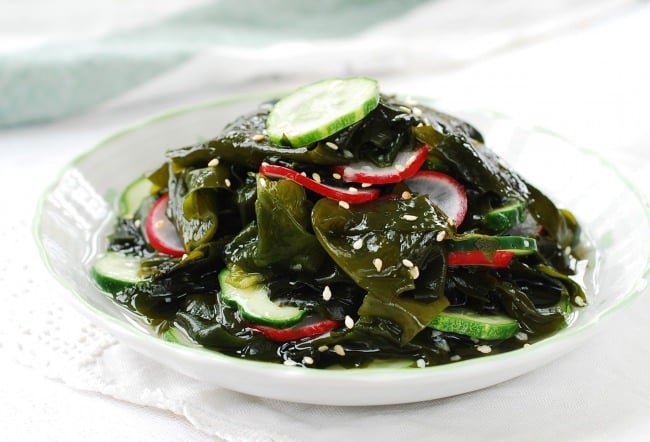
Miyeok Muchim (미역무침), Summer's Cold Fix
Miyeok, or wakame if you know it from Japanese soup, gets a completely different treatment in Korean cuisine when it is not simmering in a birthday broth. Rehydrated dried miyeok, blanched for one minute, then tossed with rice vinegar, sugar, garlic, salt, and a splash of soy sauce, plus thinly sliced cucumber and radish for crunch. The result is sweet, sharp, and cold, and it is the side dish every Korean grandmother pulls out when the summer humidity gets brutal.
The nutrition angle is genuine. Miyeok is loaded with iodine, calcium, and iron, which is why Korean women eat miyeok guk (seaweed soup) for weeks after giving birth. But muchim is where seaweed becomes something you actually want to eat every day, not just as postpartum medicine. This is the dish I would push at any American reader who thinks seaweed is only for sushi rolls.
The Korean Slaw Question: When Muchim Meets Cabbage
Musaengchae (무생채), the Korean radish "slaw," is what happens when muchim technique meets a raw root vegetable. Julienned Korean mu (a fat white radish, sweeter than the Japanese daikon), tossed with gochugaru, garlic, fish sauce, vinegar, and sugar. Give it fifteen minutes to marinate and you get something that fills the same role at a Korean BBQ table that coleslaw fills at an American cookout. Same brief, wildly different flavor profile.
The reason "Korean slaw" has become a menu item at Korean-American fusion places, from Roy Choi's early Kogi truck days through today's healthier bowl-shop concepts, is that it converts easily. It looks familiar, it slices cleanly onto a taco or a rice bowl, and the gochugaru punch gives non-Korean diners an obvious signal that this is Korean without requiring them to develop a taste for fermented cabbage first. Musaengchae has quietly done more diplomatic work for Korean food abroad than most people credit it for.
Why 무침 Travels So Well: The Health-Food Industry Read
Korea's side-dish category is worth around 1.5 trillion won (roughly $1.1 to $1.5 billion) at retail per aT Center food industry reports, and ready-to-eat muchim packs have been the standout growth SKU for CJ, Pulmuone, and Ottogi over the past few years. That is not an accident. Bibigo, CJ's global brand, pivoted hard around 2020 to reframe Korean side dishes as "Korean superfoods," leaning on the fermentation science and low-calorie numbers. The pitch works in Los Angeles and Berlin because it lines up with what health-conscious Western consumers already believe about Korean food.
The industry mechanic here is worth naming. Kimchi got its global moment, but kimchi requires commitment, both to the fermented flavor and to the smell. Muchim is the gateway. Familiar vegetable base, quick prep, spice level you can dial in, high fiber, low fat, zero dairy. It is the Korean dish that translates without translation, and it is why a growing shelf at your local H Mart or Assi Market is now dedicated to plastic tubs of the same muchim your Korean neighbor's grandmother has been making by hand for fifty years.
Explore Korean Snacks with Daebak
Love Korean food? Get authentic Korean snacks and ramen delivered straight to your door with the SnackFever Box by Daebak.


