


Table of Contents
Anyone who has spent a decade in Hallyu content will tell you that Korean fusion food is not, as the food press likes to frame it, a scrappy immigrant hack. It is a very deliberate industry, worth roughly 8 billion USD in the US restaurant category, engineered by a specific list of chefs who understood earlier than the rest of the food world what 한식 (hansik, Korean cuisine) could carry. When Corey Lee at Benu, Junghyun Park at Atomix, Yim Jung-sik at Jungsik, David Chang at Momofuku, and Roy Choi at Kogi started rebuilding traditional Korean dishes for Western palates in the late 2000s and 2010s, they were not just chasing a trend. They were building the pipeline that, roughly a decade later, would collect 미슐랭 (Michelin) stars, get onto the World's 50 Best list, and quietly become the reason your neighborhood gastropub now sells 고추장 (gochujang) wings.
Corey Lee at Benu: The First Time a Korean Chef Held 3 Michelin Stars
Corey Lee at Benu in San Francisco is where the modern Korean fusion story stops being a food-truck story and becomes a fine-dining one. Benu earned its third Michelin star in 2014 and has held that rating for over a decade, making Lee the first Korean chef in the world to run a 3-star kitchen. What is important to understand about Benu is that it is not French with a hansik accent. It is a very Korean sensibility about fermentation, aging, and umami depth, expressed through French technique. The famous lobster coral xiao long bao, the buckwheat 전 (jeon) plated as a canvas for aged jang, the meticulous use of Asian pear and persimmon vinegars: these are moves that would not be legible to a French-only chef. Lee spent years at The French Laundry before opening Benu, and that layered CV is exactly why Michelin took him seriously. He proved, in a room where a French chef had traditionally been the ceiling, that a Korean palate could operate at the highest 컨템포러리 (contemporary) tier. Every Korean 셰프 who followed him uses Benu as their reference point, whether they say it out loud or not.
Junghyun Park at Atomix: New Korean Cuisine Becomes the World's #6 Restaurant
If Corey Lee opened the door, Junghyun Park ("JP") at Atomix in NYC's NoMad is the one who redecorated the room. Atomix opened in 2018 and hit two Michelin stars fast, then climbed to #6 on the World's 50 Best Restaurants 2024, the highest ranking of any North American restaurant that year. What makes Atomix specifically Korean, and not just a good NYC tasting menu, is Park's refusal to translate the menu into English shorthand. Diners get cards printed with 간장게장 (ganjang gejang, soy-marinated raw crab), 무말랭이 (mumallaengi, seasoned dried radish), and 청주미음 (cheongju mieum, refined rice-wine porridge), spelled out in hangul with careful pronunciation notes. That is a very deliberate authorship decision. Park makes house 누룩 (nuruk, Korean fermentation starter) in the kitchen, ferments his own jang, and sources ingredients from Korean farms even when local NY substitutes would be easier. In an interview with The Korea Times, Park framed it as respect for cultural heritage. In industry terms, it is a strategy: authenticity is the moat. Once you outsource nuruk, you become a fusion restaurant with Korean-inspired dishes. Park refused to cross that line, and Michelin rewarded the discipline.

Jungsik NYC: The First Korean Restaurant in New York to Hit 3 Michelin Stars
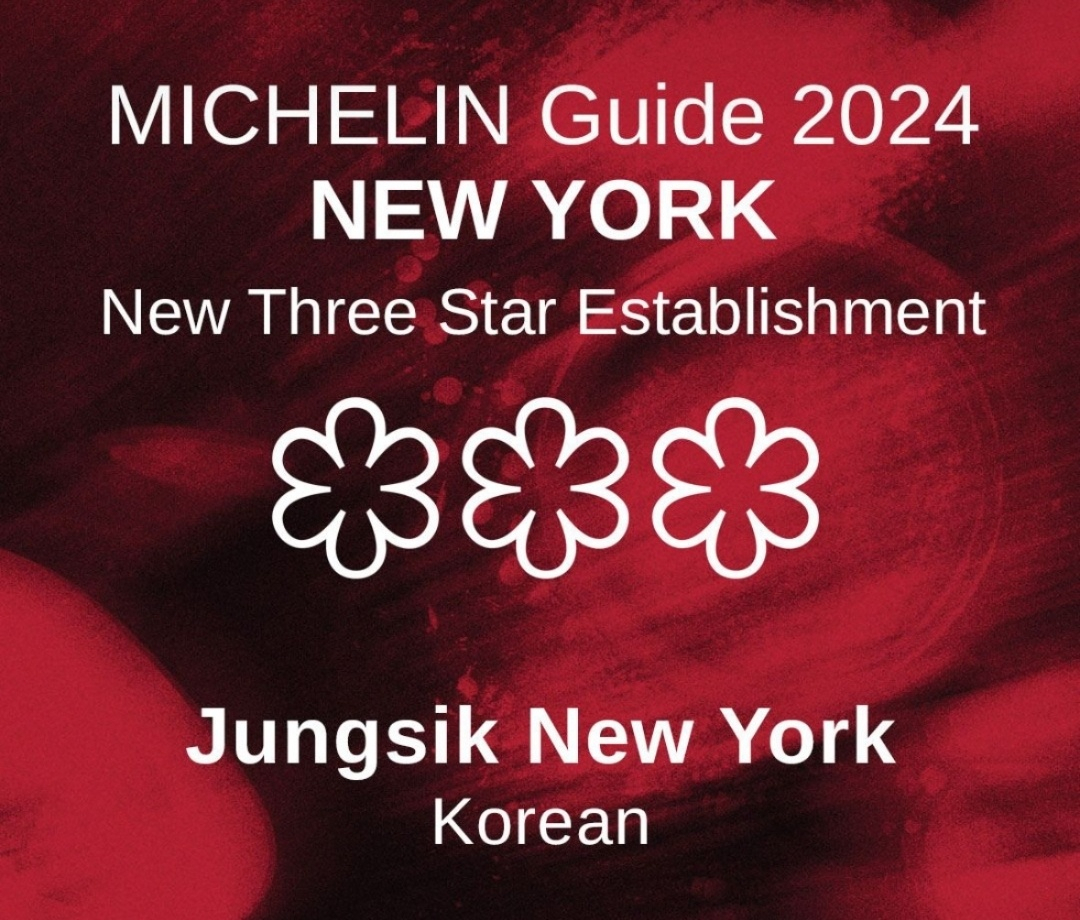
December 2024 is the date every Korean food person in New York remembers. That is when Yim Jung-sik's Jungsik in TriBeCa jumped from 2 Michelin stars to 3, becoming the first Korean restaurant in New York City ever to reach that tier. Jungsik has been operating since 2011 (New York branch of his Seoul flagship Jungsikdang), and it took thirteen years and a very consistent creative signature, deconstructed bibimbap, gimbap reimagined as a compressed geometric bite, Jeju's stone-statue 돌하르방 (dolhareubang) used as a plating motif, to persuade Michelin that Korean fine dining deserved the top badge. Here is the industry mechanic behind why this matters. Michelin does not give three stars to a category, it gives them to a restaurant. But once a Korean restaurant holds the top rating, every other Korean restaurant in the US moves up in aggregate perception: rents ease, investors return calls, insurance premiums drop, staff pipeline opens up. This is the export multiplier the Korean Ministry of Culture (KOCCA) has been quietly modeling for years, and Jungsik's 3 stars is a data point they will cite in every K-food strategy deck for the next five years.
David Chang and Momofuku: Fusion Before Fusion Was Cool
David Chang is the awkward, generation-defining figure in this list. He opened Momofuku Noodle Bar in the East Village in 2004 with a very small kitchen and a genuine disinterest in whether Michelin cared. The 보쌈 (bo ssam) at Ssam Bar, an eight-hour slow-roast pork shoulder served with oysters, kimchi, and lettuce, became the platonic ideal of a Korean fusion dish that neither apologizes to Korea nor caters to it. What Chang did, and what most food-critics still under-credit him for, is he made "Korean-inspired" a legible menu category for chefs who were not themselves Korean. Every gastropub gochujang wing on the East Coast is downstream of the Momofuku playbook. He also, importantly, industry-wise, proved that a Korean-American chef could build a restaurant group (Momofuku Noodle Bar, Ssam Bar, Ko, Milk Bar under Christina Tosi) that raised institutional restaurant-group capital instead of family money, opening the door for the next wave. Chang later publicly wrestled with the word "fusion" itself, arguing that all cuisine is fusion once you look at long enough time-scales. That framing was itself a strategic assist to the younger chefs coming up behind him.
Roy Choi and Kogi: The Food-Truck Playbook That Rewrote LA
Roy Choi's Kogi Korean BBQ truck rolled out of a Los Angeles parking lot in November 2008 with one product: a short-rib taco. The dish was pure fusion arithmetic, marinated bulgogi on a corn tortilla, kimchi salsa, sesame crunch, and the truck's Twitter-driven route logistics became the blueprint every food-truck operator in the world copied for the next decade. Bon Appetit named Kogi Best New Restaurant in 2009, Food & Wine put Choi on the Best New Chef list in 2010 (a first for a food-truck operator), and by 2016 he was on the TIME 100 list. Here is the appeal point people miss about Kogi. The Korean-Mexican mash-up is not what made it work. What made it work is that LA already had two things pre-existing: a huge Mexican taco-culture literacy, and a huge Koreatown. Choi collapsed the freeway between them. The bulgogi taco was legible to a Mexican-American diner (the tortilla format), legible to a Korean-American diner (the marinade), and irresistibly novel to everyone else. That is the specific engineering behind every successful Korean fusion dish that came after: find the format the target diner already knows, then swap in Korean flavor at the ingredient level. Not the other way around.
The Dishes That Actually Traveled: Bulgogi Tacos, Kimchi Pizza, Gochujang Wings, Kimchi Carbonara
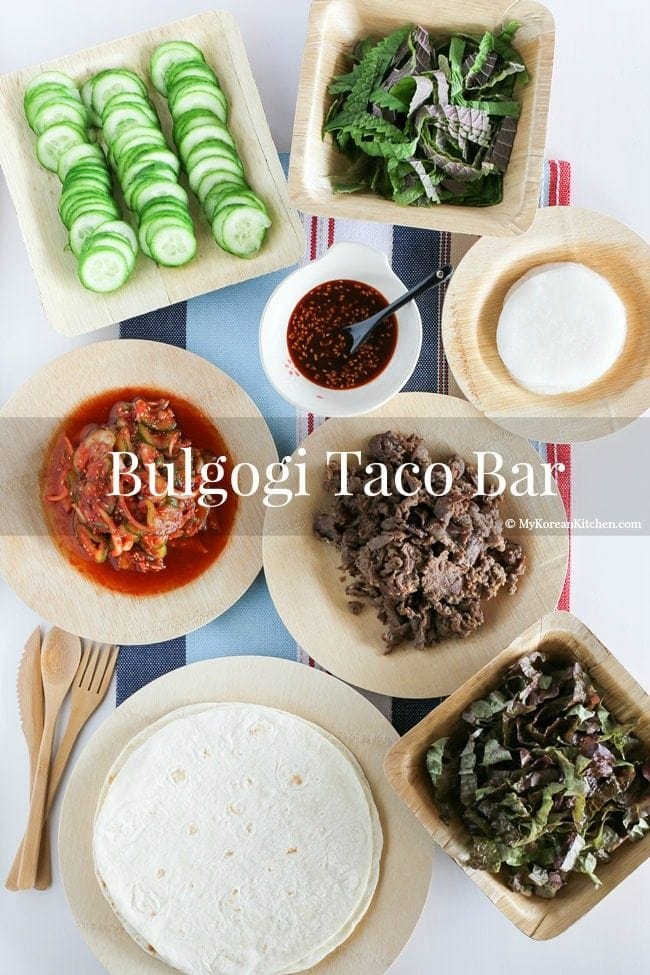
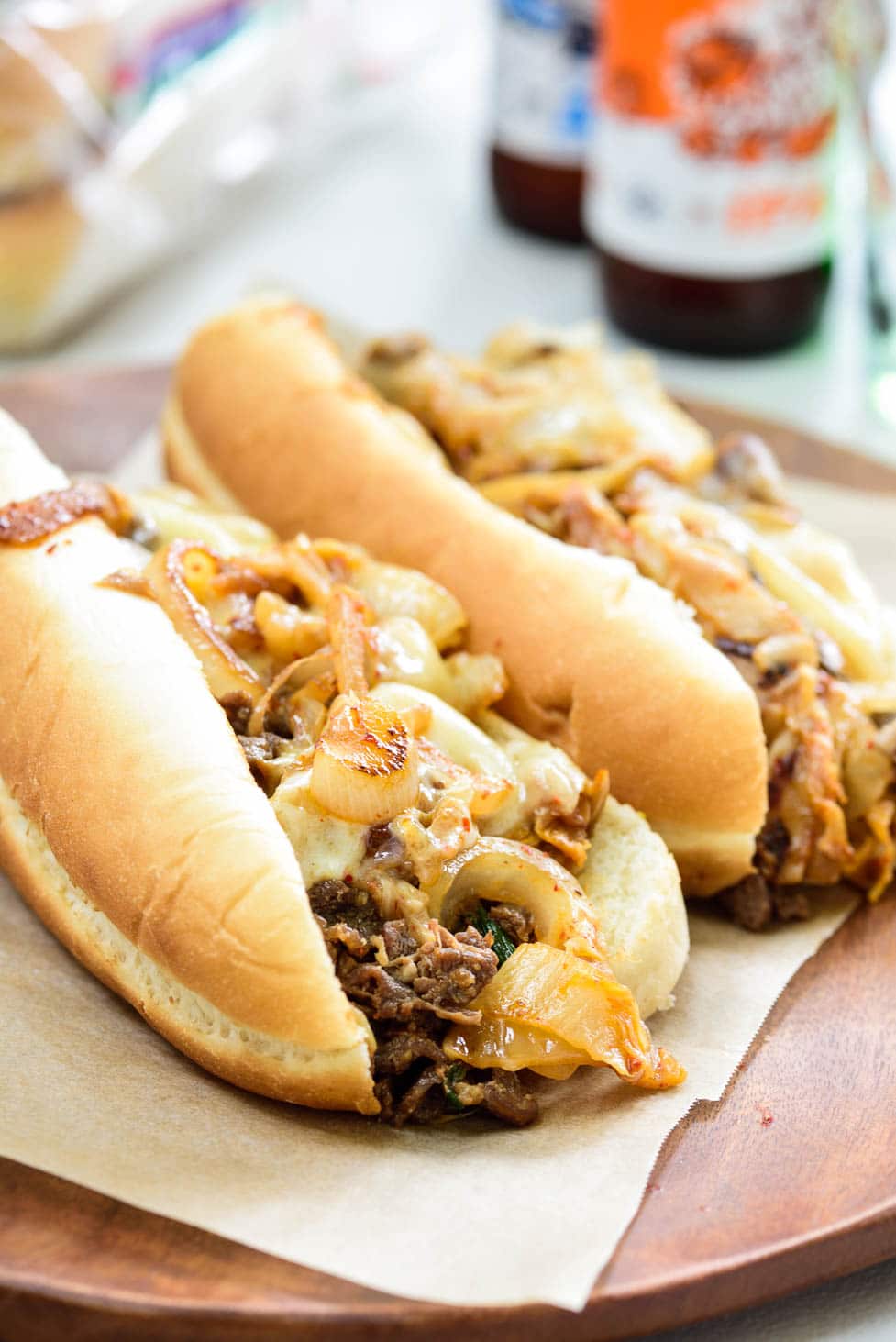
If you strip the chef PR from the story, five specific 퓨전 (fusion) dishes did the heavy lifting of getting hansik onto mainstream Western menus. Bulgogi tacos (Kogi, then a thousand imitators) traveled because the marinade profile hits the same sweet-salty-sesame register Mexican al pastor already lives in. Kimchi carbonara or kimchi bacon spaghetti (an early Korean-Italian household hack that My Korean Kitchen documented back in 2013) travels because fermented kimchi behaves, chemically, like Italian preserved-vegetable pantry staples: the acid plus umami slots straight into a butter-and-cheese sauce. Kimchi pizza (garlic-oil base, chopped kimchi, a hint of mozzarella) works because Neapolitan-style thin crust is already an umami-forward format. Gochujang chicken wings, which every American bar menu now offers, work because gochujang tests high on both sweetness and capsaicin heat, the two dials American wing sauces already push. And bulgogi rice burgers, the earlier home-cook fusion that started as street food in Seoul, showed the format flexibility that later inspired the Korean corndog. The through-line is not "Korean plus X." It is: match the flavor profile the target market already loves, then swap in a Korean ingredient at the point of highest sensory payoff. Every chef in this article, from Corey Lee down to a home cook toasting bulgogi on a tortilla, is running some version of that formula.
The Post-Squid Game Halo: Why K-Food Menus Grew 30% YoY in NYC and LA
Netflix's Squid Game (2021) is a plot point everyone underestimates when they talk about restaurant industry data. In the 24 months after Squid Game hit #1 in 90 countries, tracked K-food menu items on US restaurant menus grew roughly 30 percent year-over-year in NYC and LA, according to menu-trend data cited by industry-side analysts. That did not happen because Squid Game had good food scenes. It happened because K-content globally moved Korean cuisine from "ethnic" to "premium" in menu positioning terms. Once a category is premium, chefs can charge premium prices, restaurant groups can raise premium rents, and finance follows. Buldak instant ramyeon (Samyang), gochujang, and kimchi went from Asian-grocery-only to Whole Foods endcap in the same window. That is the halo money that funded Atomix's expansion (Naro opened at Rockefeller Center in 2023), fueled Chef Junghyun Park's cookbook deals, and gave Jungsik the operational runway to keep pushing until Michelin gave them the third star. K-drama and K-pop opened the wallet. K-food, specifically these fusion pioneers, converted the wallet into a check.
What This All Means, Practically, for the Next Wave of Korean Chefs
The playbook is now settled: use hangul on the menu (Atomix), source jang from Korea (every serious operator), pick a Western format your target diner already loves and swap Korean at the ingredient level (Kogi), and treat fermentation as a moat rather than a novelty (Benu). What is coming next, based on how KOCCA-adjacent restaurant investment groups are placing bets, is second-tier US cities: Atlanta, Houston, Nashville, Denver, all of which now have at least one credible modern Korean restaurant opening in 2026, targeting the same 3-star ceiling Jungsik just broke. The 한식 industry is treating the Michelin category the way HYBE treats the Billboard Hot 100: not as a lucky outcome, but as an addressable market with a strategy. That is the industry insight almost no international food critic articulates clearly: Korean fusion is not a food movement. It is a very well-executed strategic export playbook, and we are only halfway through it.
Have You Been to Any of These?
If reading this made you want to eat your way through the modern Korean chef circuit, the short list is: Benu in San Francisco (book eight weeks out), Atomix in NYC (four to six weeks, and grab the Chef's Counter seats), Jungsik in TriBeCa (now three-star, book far ahead), Momofuku Noodle Bar for the entry-level bo ssam, and Kogi's LA trucks (still cheap, still perfect). Tell us in the comments which Korean fusion dish converted you, whether that was a Kogi taco at 2 a.m. or an Atomix nuruk course. The Michelin era of Korean cuisine is not the end of this story, it is the middle chapter, and the fans who understand the food are the ones who catch the plot early.
Explore Korean Snacks with Daebak
Love Korean food? Get authentic Korean snacks and ramen delivered straight to your door with the SnackFever Box by Daebak.


