


Table of Contents
Seoul runs on its subway. With 23 lines, more than 320 stations, and trains that pull into the platform every two to four minutes during the day, the Seoul Metropolitan Subway moves the city's seven million daily riders with an efficiency that has long been considered a global benchmark. For tourists, the system can feel intimidating on day one and effortless by day three. The key to that transition is a small plastic rectangle called T-money.

The T-money Card and How to Get One
T-money (티머니) is Korea's universal prepaid transit card. A single tap pays for the subway, city buses, intercity buses, most taxis, and many convenience store purchases across the country, including Busan, Daegu, Daejeon, Gwangju, and Jeju. The plastic card itself costs between 3,000 and 5,000 won as a one-time purchase. The balance must be loaded separately with cash.
The easiest places to buy a T-money card are the convenience stores that operate inside almost every subway station and on nearly every Seoul block. GS25, CU, 7-Eleven, and Emart24 all stock them at the counter. Ticket vending machines inside subway stations and tourist information centers, including the ones at Incheon International Airport, also sell the cards. A tourist-focused variant called the Tmoney Travel Card layers in discounts at participating attractions, shops, and cultural sites in Seoul, Gyeonggi, and Busan.
Recharging, Refunds, and Daily Use
Recharging is straightforward. Every subway station has a self-service kiosk near the turnstiles that accepts 1,000, 5,000, and 10,000 won bills, though most machines only take cash. Convenience store cashiers can top up cards with cash or, at most chains, a credit card. Tap the card on the turnstile reader to enter, tap again to exit, and the fare is deducted automatically. Base subway fare for adults sits at 1,550 won with a transit card, slightly less than buying a single-journey ticket at the gate.
Unused balance up to 20,000 won can be refunded in cash at most convenience stores, minus a small service charge. Larger amounts require a visit to a T-money customer service center.
The Climate Card: Seoul's Unlimited Monthly Pass
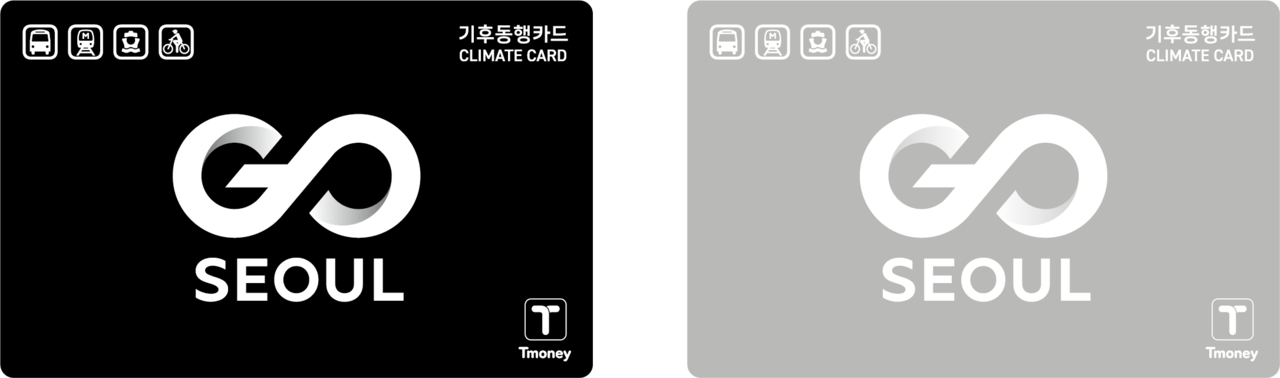
Launched in January 2024, the Climate Card (기후동행카드) is a rechargeable monthly pass offering unlimited rides on Seoul's subway and city buses for 30 days. The standard pass costs 62,000 won, with a 65,000 won version that also covers Ttareungi public bicycles. Short-term Climate Cards for tourists are sold in one to seven day increments and are the better choice for visitors who plan heavy daily use. The pass is accepted at all stations on Lines 1 through 9 within Seoul and now extends into nine neighboring Gyeonggi cities, including Gimpo, Goyang, Seongnam, and Hanam.
The physical card can be purchased at customer safety rooms inside Line 1 through 8 stations and at nearby convenience stores. A digital version is available through an app for Android users.
Color-Coded Lines and What They Connect
Every Seoul Metro line has a distinct color, and station signs follow a three-digit code where the first digit names the line. Line 1 (dark blue) runs the original north-to-south corridor through Seoul Station and Jongno. Line 2 (green) is the city's busiest, a circular route that loops through Hongdae, Gangnam, Sinchon, and Jamsil. Line 3 (orange) crosses the city through Apgujeong and Anguk and links to Gimpo Airport. Line 4 (sky blue) hits Myeongdong, Insadong via Chungmuro, and Dongdaemun. Line 5 (purple), Line 6 (golden brown), Line 7 (olive), Line 8 (pink), and Line 9 (yellow gold) fill out the rest of central Seoul.
Beyond the numbered lines, the Airport Railroad (AREX) provides express and all-stop service from Incheon Airport to Seoul Station. The Shinbundang Line and Bundang Line connect to satellite cities south of the river. The GTX-A, opened in March 2024 and extended to Paju in December 2024, is Korea's first high-speed commuter rail and trims the Suseo to Dongtan run to about 20 minutes.
Subway Etiquette Tourists Should Know

Korean subway carriages are remarkably quiet. Phone calls are considered rude, and most passengers keep conversations low or use headphones. Eating and drinking are generally avoided on board. Two seat types should be left empty even when a train is crowded. Yellow priority seats at each end of the car are reserved for elderly, disabled, injured, and pregnant passengers. The pink seats in the middle of the car are designated specifically for pregnant women, who often carry a pink "pregnant" badge on their bag.
On escalators, riders stand on the right and walk on the left, though officials have begun discouraging walking for safety reasons. Lining up neatly to the side of doors and letting passengers exit before boarding are unspoken but universally observed rules.
Transfers, Buses, and Apps
Korea's integrated transfer system rewards multimodal trips. Riders can change subway lines without leaving the gates and can tap onto a city bus within 30 minutes of exiting the subway for a discounted continuation fare rather than a new full fare. T-money works on city, intercity, and express buses across the country, which is useful for day trips outside Seoul.
Three apps make navigation simple. Subway Korea is the most popular tourist-facing option and works offline. Naver Map and KakaoMap, the two leading domestic platforms, give real-time routing that combines subway, bus, and walking directions, often with more accurate exit numbers and English search.
Korail, KTX, and Travel Beyond Seoul

Seoul Metro covers the capital area, while Korail runs intercity rail across the country. The KTX bullet train connects Seoul to Busan in roughly two and a half hours, and slower ITX and Mugunghwa services reach smaller cities. T-money is accepted on Korail's commuter lines, including the Gyeongui-Jungang and Suin-Bundang lines, although KTX tickets must be purchased separately at counters, machines, or through the Korail Talk app.
Late-Night Trains, Taxis, and Practical Tips
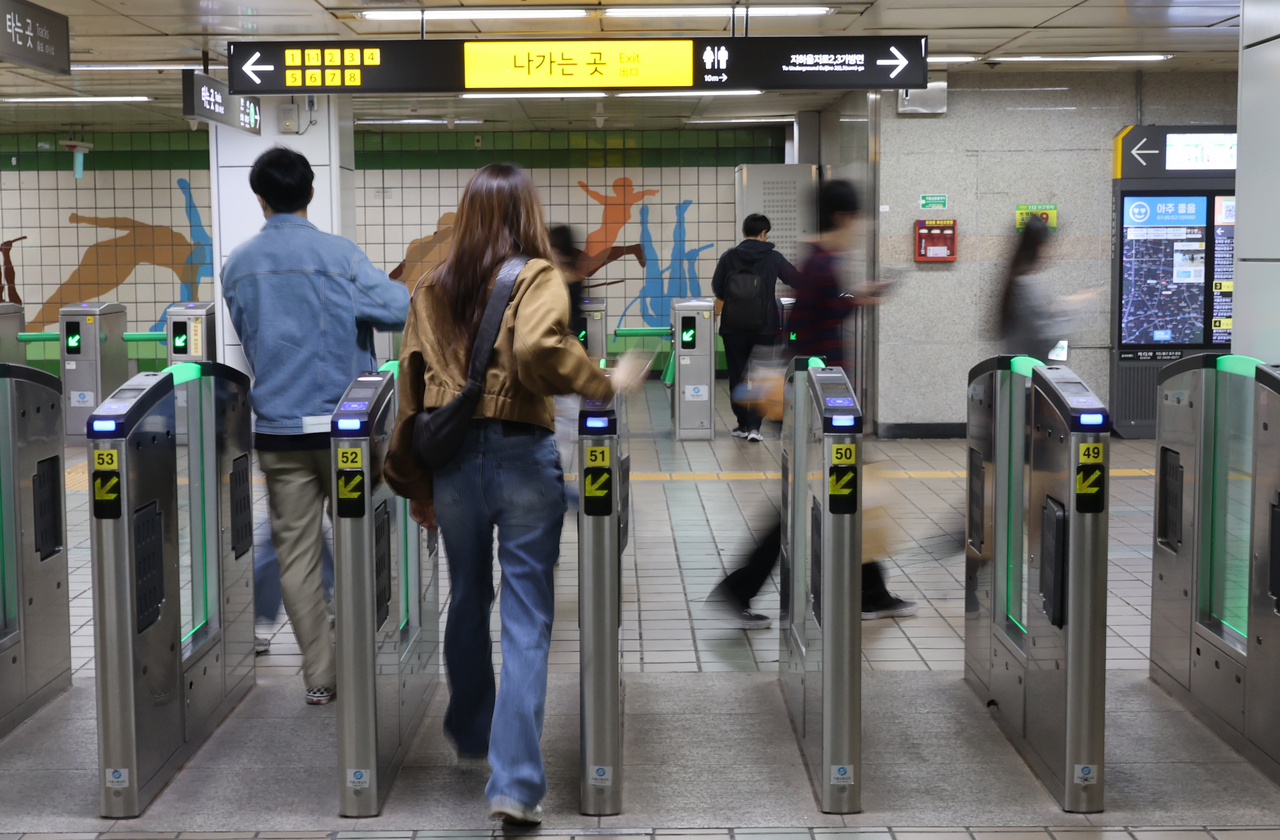
The subway runs from roughly 5:30 a.m. to midnight, with last trains slightly earlier on some lines. Korea does not operate 24-hour subway service, in part because the entire network undergoes nightly cleaning and maintenance. After midnight, the standard fallback is a taxi. T-money works in most Seoul taxis, as do credit cards. Tipping is not expected and tipping a driver is genuinely unusual. The KakaoT app, Korea's dominant ride-hailing service, hails regular and premium taxis with English support.
One last practical note: convenience stores inside many stations sell cheap private-label meals, gimbap, and the soft pretzels that have become a fixture of busier transfer hubs. Eating these on the platform before boarding is fine. Eating them inside a moving train, less so.
Explore More of Korea with Daebak
Want to bring a little piece of Korea into your life? The Daebak Box is packed with the best Korean snacks, ramen, and cultural goodies delivered monthly to your door.


