


Table of Contents
Here is the fastest way to understand how Seoul's coffee culture actually works. Walk into any cafe in Hongdae, Gangnam, or Ikseon-dong, and the drink is not really the point. The photo of the drink is the point. Nowhere does this get more literal than at the wave of selfie latte cafes that swept through Seoul from 2015 onward, where the barista takes your face, sends it to an edible-ink printer, and lays it on the milk foam of your latte inside 30 seconds. I have been tracking Korean cafe trends for over a decade, and this one still gets me. It is the purest possible expression of the fourth-wave coffee shift in Korea, where the coffee itself has been commoditized down to a 2,500 won Americano, and the margin has quietly migrated to the layer sitting on top of the cup.

The Cafacé Blueprint: Where Seoul First Printed Faces on Foam
Cafacé opened its first Hongdae location in Mapo-gu (마포구) in 2015 and turned selfie coffee from a novelty into a category. The premise was mechanical and, for the customer, magic. Step into a small photo booth at the counter, snap a 셀피 (selpi, selfie), hit send, watch the barista pull a hot or iced latte and lay a paper-thin edible foam sticker printed with your face on top of the milk foam. Base drink ran roughly 5,500 to 6,000 won, plus a 2,200 to 2,500 won selfie print add-on, which sits comfortably at Seoul cafe premium pricing without triggering sticker shock. Cafe.show variants in Gangnam followed a similar template soon after, and by 2017 the concept had franchised through pop-ups in Ikseon-dong and Garosu-gil.
What made Cafacé the origin story rather than a one-off gimmick is that they engineered the workflow. Photo booth to POS to printer to foam in under 30 seconds, at Korean 빨리빨리 (bballibbali, hurry hurry) pace. The copycat pop-ups that failed within a year all skipped that step and asked customers to Bluetooth or KakaoTalk their photo from a phone, which added two minutes of friction and killed the anticipation loop that makes the concept work. The insider read on Cafacé is that they were not really selling a printed selfie. They were selling a compressed 30-second theater, tightly staged, that ends with a photograph your friends have never seen before. The margin lived in the theater, not in the coffee.
How the Machine Actually Works, and Why 30 Seconds Matters
Almost every Seoul selfie cafe runs some variant of a food-grade inkjet printer with edible food coloring cartridges, printing on translucent rice paper or edible starch film. The GNFEI and Cino-style Chinese-import machines cost between 3 and 5 million won upfront, and the running cost per print sits at roughly 200 to 400 won on ink and paper. So the 2,500 won selfie add-on is around 85 percent margin on the print step alone. That is why any cafe with a bit of counter space and Instagram ambition can retrofit the concept quickly.
Beyond the hardware math, the 30-second timing is what makes the customer experience click. Long enough for the barista to steam milk and pour, short enough that the customer's phone is still out and the anticipation of the reveal has not collapsed into boredom. The printer sits behind the counter, out of view, which is deliberate. If the customer watches the print roll out, the magic evaporates. Once the printed edible film is placed on the crema or foam, it locks in with the surface tension of the milk and stays legible for about four to seven minutes before the ink starts to bleed. Which is exactly the window the customer needs to shoot the photo, post to Instagram Story, and drink the coffee before it goes cold. Every part of that ecosystem is engineered.
100,000 Cafes and the Math of Seoul's Differentiation Arms Race
To understand why Seoul cafes reach for edible-ink printers in the first place, you have to look at the density number. South Korea passed 100,000 registered cafes at the end of 2022, or roughly 2,000 cafes for every one million residents, which is one of the highest per-capita cafe densities on earth. Seoul alone runs over 20,000 registered coffee shops. The average Seoul adult drinks around 405 cups of coffee a year, more than double the world average of 132 cups. What this creates is a brutally thin margin environment where the coffee itself has been commoditized: a 2,500 to 3,500 won Americano is the effective floor price, and franchise competition from Ediya, Mega Coffee, Compose Coffee, and Paik's Coffee has kept it there for close to five years.
Independent cafes have exactly two moves left. Either climb into third-wave specialty coffee at 6,000 to 8,000 won a cup (Momos Coffee, Anthracite, Fritz, Ruli Coffee), where you compete on bean origin and slow-drip precision. Or add a photo layer product on top of a standard drink and charge for the differentiation. The selfie latte is the archetype of the second move, played at scale. The 100,000-cafe density is not an anomaly. It is the market that produced the selfie latte, the cream art latte, the character latte, and eventually the hologram cafe. Every one of those categories is an answer to the same margin question. If your Americano is 2,500 won and everyone else's Americano is 2,500 won, what can you sell on top of it that costs you 400 won and moves for 2,500?

Tourist-First Product, Now Instagram and TikTok Pilgrimage
The selfie latte's early product-market fit was Chinese and Southeast Asian tourists, not Korean office workers. When Cafacé first went viral between 2015 and 2017, the peak Hallyu Wave 2.0 tourism era was driving hundreds of thousands of Chinese visitors per month through Hongdae, Myeongdong, and Gangnam. The selfie coffee concept was tailor-made for their WeChat, Weibo, and Xiaohongshu posting habits, where a novel visual object at a low local price point converts into a share almost automatically. Korean domestic customers came slightly later, mostly as couples on 100일 and 200일 anniversary dates who wanted a two-face photo on the foam, and college students photographing their friends' faces as a birthday gift.
Then Instagram in the late 2010s, and TikTok from 2020 onward, took the concept global. The #selfielatte and #얼굴라떼 hashtags now pull millions of posts across both platforms, and Korea Tourism Organization has quietly built the category into its Seoul cafe promotion materials for the Vietnamese, Thai, and Malaysian markets. When I talk to friends who run cafes in Gangnam and Hongdae, the current customer split is roughly 40 percent international tourists (with Southeast Asian shares climbing since 2022), 40 percent Korean couples and small friend groups, and 20 percent K-pop fandom clusters doing cafe tours where the trick is printing a favorite idol's face on the latte for the fan-cafe photo post. That last segment is why some cafes near JYP, HYBE, and SM buildings quietly stock idol reference photos behind the counter. The economics are simple. A fan tour of 6 people, each ordering one selfie latte and one add-on print, is a 60,000 won ticket per group that turns over in 15 minutes.
The Follow-Ups: Cream Art, Character Lattes, and Hologram Cafes
What came after the selfie printer wave was the character and cream art movement, which is the current live expression of the same design logic. Cafe C.Through in Itaewon, run by barista Lee Kang-bin (@leekangbin91), built a following of hundreds of thousands on Instagram by hand-piping colored cream art onto cappuccino foam, reproducing Van Gogh's Starry Night, Munch's Scream, and the Mona Lisa on top of the drink. That is the artisanal counter-move to the mass-market selfie printer. Instead of a machine, a barista as an Instagram-native fine artist. Cream art coffees take up to an hour each, so C.Through runs three per day by reservation only. The scarcity is the pricing lever, not the coffee.
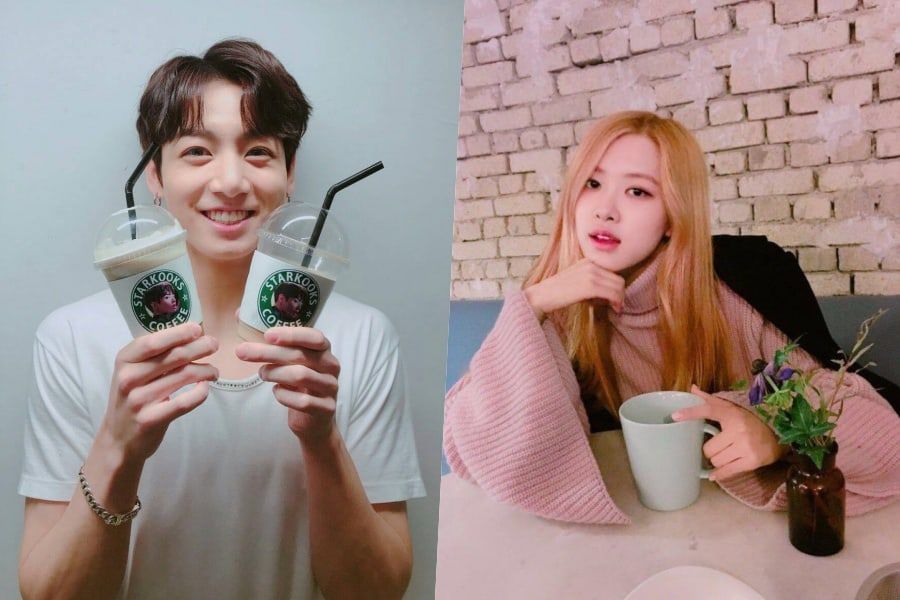
Then the character IP tie-ins arrived. BT21 pop-up cafes (BTS's line with Line Friends) started running limited engagements in Hongdae from 2018, with character-shaped latte art, tteok cake pops in the shape of Chimmy and Tata, and merchandise gates that pushed the ticket to 30,000 won per fan visit. Kakao Friends Concept Museum in Hongdae layered an entire cafe under the Ryan, Apeach, and Frodo universe, with a Ryan-shaped chandelier and IP-licensed drinks. SM Entertainment's Kwangya@SEOUL cafe near Seongsu built a rotating menu that shifts with each of its artists' comeback cycles, so the same physical cafe becomes an aespa cafe, then an NCT cafe, then a Riize cafe on a six-week rotation. Hologram cafes have surfaced too. Small pop-ups in Seongsu-dong and Hannam-dong project 3D animated Hallyu content into the space above the drink, sold as an interactive art installation with a cup of coffee attached at 15,000 won a ticket.
Why Seoul Made Coffee About the Photo, Not the Bean
Zoom out and Korea's coffee culture has slipped past what industry types call third wave (bean origin, brewing precision, terroir) into what I would honestly describe as a fourth wave centered on experience packaging. The coffee is the ticket, the cup is the stage, and the moment you photograph and share is the actual product. This is deeply Korean in a specific way. Cafes have functioned as 제3의 공간 (jesamui gonggan, third spaces) in Seoul since the mid-2000s Starbucks boom, meaning they are neither home nor office, but the social layer where friendships, dating, informal meetings, and remote work all happen. When 20,000 cafes compete for that role in one city, you differentiate on the moment, not the bean.
The selfie latte and its descendants are a direct answer to that question. What is the cheapest, most viral way to make the customer's next five minutes memorable enough to share on Instagram Story, KakaoTalk group chat, or Xiaohongshu? Print their face. Draw a Mona Lisa in cream. Project a hologram of their bias above the drink. The bean is still just the bean. This is also why the selfie latte concept has not translated one-for-one to New York or London despite multiple attempts. The Seoul version worked because the density of competition and the density of camera-first culture were both extreme. You need both variables at maximum for the concept to make economic sense.
If you are planning a Seoul cafe tour on your next trip, I would honestly add one selfie latte stop and one cream art reservation. The original Cafacé location has closed and reopened in different formats over the years (check current status before you go), but successor cafes in Hongdae, Ikseon-dong, and Garosu-gil have all picked up the same edible-ink printer setup and the price point still lands at around 8,000 to 12,000 won total. For cream art specifically, Cafe C.Through in Itaewon still runs by reservation only, three drinks per day. Book at least a week ahead through their Instagram DMs. And if the whole ritual is starting to feel more like a photoshoot than a coffee break, that is not a bug. That is Seoul cafe culture in 2026, running exactly as designed.
Bring the Seoul Cafe Snack Shelf Home
If you want to bring a piece of Seoul's coffee-and-snack shelf home with you, the SnackFever Box is where our Seoul curators pack the Korean snacks that pair with a good latte the way Koreans actually consume them at a cafe: 초코송이 (Choco Songi mushroom chocolates), 뻥이요 (Ppeongiyo puffed rice snacks), potato chips, 새우깡 (Saewookkang shrimp crackers), plus rotating seasonal Pepero flavors, tteokbokki chips, and the specific cafe-shelf snacks that show up next to your Americano at any Seoul convenience store. It is not the selfie latte itself, but it is the snack layer that Koreans reach for whenever they sit down with one.


