


Table of Contents
GOT7 (갓세븐) is the JYP boy group where food is not fandom trivia, it is the actual product differentiation. Three nationalities (Korean, Chinese, Thai, plus a Taiwanese-American in Mark Tuan), seven very different palates, and one shared dorm fridge that Jackson once opened on national television. As someone who has watched the multinational K-pop group format evolve since 2PM's Nichkhun basically wrote the playbook in 2008, I can tell you GOT7 is the case study every A&R exec at HYBE and SM quietly bookmarks when they build a new global-facing lineup. And the reason iGOT7 has stayed one of the most food-obsessed fandoms in K-pop for over a decade is not accidental. When your members literally cannot eat the same thing for dinner, food becomes the fastest, most human way to signal who you are.

The Multinational Setup Is the Whole Point
Let's get the roster straight, because half the food conversation only makes sense once you internalize the passports. Mark Tuan is Taiwanese-American, raised in LA, English-first. Jackson Wang is Hong Kong-born Cantonese, fencing-scholarship kid who moved to Seoul as a teenager. Jinyoung, Jay B (leader), Youngjae, and Yugyeom are all Korean nationals. BamBam is Thai, Bangkok-born, and moved to Korea at 14 as a JYP trainee. That is four native cultures rotating through one dorm kitchen. It is also the exact reason JYP built GOT7 the way they did in 2014. Park Jin Young's whole international expansion strategy from 2PM through GOT7 through TWICE assumed that having a member the local market could point at and say "that's ours" was worth more than any marketing spend. Jackson unlocked Greater China. BamBam unlocked Southeast Asia. Mark unlocked North American K-pop conventions. That casting logic works because the members eat differently, live differently, and (crucially) advertise differently in their home markets.
Here is the industry read that never quite makes it into the fandom explainer videos. Multinational K-pop is genuinely hard to run internally. Different food preferences, different religious or dietary restrictions, different alcohol tolerance, different 회식 (회식 hoesik, team dinner) rhythms. First-generation groups mostly avoided the problem by staying almost entirely Korean. Second-gen groups (2PM, Super Junior-M, f(x)) started experimenting. GOT7 was the third-gen group that ran the multinational format at full seven-member scale with almost no member turnover for eight straight years, which is the operational stat that impressed me most when I was working adjacent to JYP-model labels. Food was the pressure valve. If you cannot get a Cantonese kid, a Thai kid, an LA kid, and four Koreans to agree on what to order for late-night practice room delivery, you cannot run the group. So the members learned to accommodate each other's food, and the fans learned to track it, and "who eats what" became one of the sturdier group-bonding narratives in K-pop history.
Jackson: Cheese, Green Tea, and the Chinese Dorm Fridge

Jackson has always been the group's most identifiable food POV, and the 2016 Please Take Care of My Refrigerator episode is basically the founding document. He opens the GOT7 dorm fridge and it is instantly readable: Chinese 반찬 (banchan side dishes) sent from Hong Kong, packets of pear juice that all belonged to Jinyoung and everyone had already drunk, cabbage juice (organic, of course), cheese (Jackson's stated favorite), and separately labeled ice cream because all seven members refused to share theirs. Jackson said on air that when the other members eat 매운음식 (매운음식 spicy food), he gets left out. He can eat it, but it makes him sweat. That is not a throwaway variety-show line. That is a Cantonese kid, raised on lighter, less capsaicin-forward food, quietly telling the Korean audience that the group's default 야식 (야식 late-night snack) plans do not automatically work for him. Every multinational group figures this out. Most do not put it on TV.
The industry follow-through is where this gets interesting. Jackson took the food-and-lifestyle POV he had already developed in GOT7 and built Team Wang, his solo fashion-and-brand company, around it. Team Wang Design (2020) is the fashion arm, but the extension into hospitality (Team Wang bars in Hong Kong and Shanghai, the very-thoughtful drink lists that pull from both his Hong Kong upbringing and his adopted-Seoul years) is a masterclass in taking a K-pop food persona and turning it into a real product line. Compare that to how many other post-group idols try to launch a personal cafe, sell one branded macchiato, and quietly close within eighteen months. Jackson understood the food-persona-to-business pipeline because he had already spent seven years using food as his primary self-signal on Korean variety.
Jay B: Soy-Sauce Crab Bibimbap and the Traditional Korean Anchor

Jay B (제이비, born Lim Jae-beom), the leader, is the traditional Korean palate anchor of the group. His 2021 Harper's Bazaar daily-diet video is the piece of tape I always cite when someone asks me what a modern Korean idol actually eats when nobody is watching, and it is worth pulling apart. Breakfast is one apple, one chicken breast, one sweet potato (that is the Korean idol clean-eating template pretty much verbatim). Lunch is 제육볶음 (제육볶음 spicy stir-fried pork) mixed with dried seaweed, sesame oil, and perilla powder, or 된장찌개 (된장찌개 fermented soybean paste stew) with beef. Dinner is Korean BBQ or spicy fish stew. When Jay B is drinking with friends, his go-to is 간장게장 (간장게장 soy-sauce marinated crab) 비빔밥 (비빔밥 bibimbap), which is a real Korean regional dish that only tastes right if the crab is marinated for exactly the correct number of hours, and which Jay B specifically explained to Harper's is his favorite because he grew up close to the sea and loves fishing.
The appeal for foreign viewers is not the ingredient list. The appeal is that Jay B is describing his food the way a Korean uncle describes his food. Perilla powder in kimchi stir-fry is not a fusion move, it is the exact tweak a Korean home cook makes on a Wednesday. This is where the WHY of Korean traditional food lands for international audiences. Compare Jay B's palate to the fusion-heavy content Western food creators tend to make about Korean food (kimchi tacos, gochujang butter chicken, etc.), and you can feel the difference. Jay B's version is the actual baseline. That authenticity is why iGOT7 members abroad have collectively spent years trying to source good-quality soy-sauce crab from Korean grocers in New York and LA. The demand was created by a Harper's Bazaar YouTube video.
BamBam: Thai Roots, Bangkok Endorsements, and a Family Restaurant Chain

BamBam (뱀뱀, born Kunpimook Bhuwakul) is where the food conversation gets genuinely interesting on a business-strategy level. In Thailand he is not a K-pop idol who happens to be Thai, he is one of the top three most valuable individual endorsers in the entire country. AIS 5G, food brands, motorcycles, clothing lines, bedding, e-commerce platforms. Reigning top brand ambassador since 2017. His 2019 solo fan-meeting tour sold out five major Thai cities. Twitter Thailand's own 2019 recap put him at #1 most-mentioned entertainment account, and the second-most-tweeted hashtag in the country that year was literally "bambam." That is not fan-hype math, that is Twitter's own aggregation data. What that means in practice: BamBam is the specific mechanism by which GOT7 as a group monetized Southeast Asian food and lifestyle markets in ways JYP's competitor labels quietly wish they had solved for.
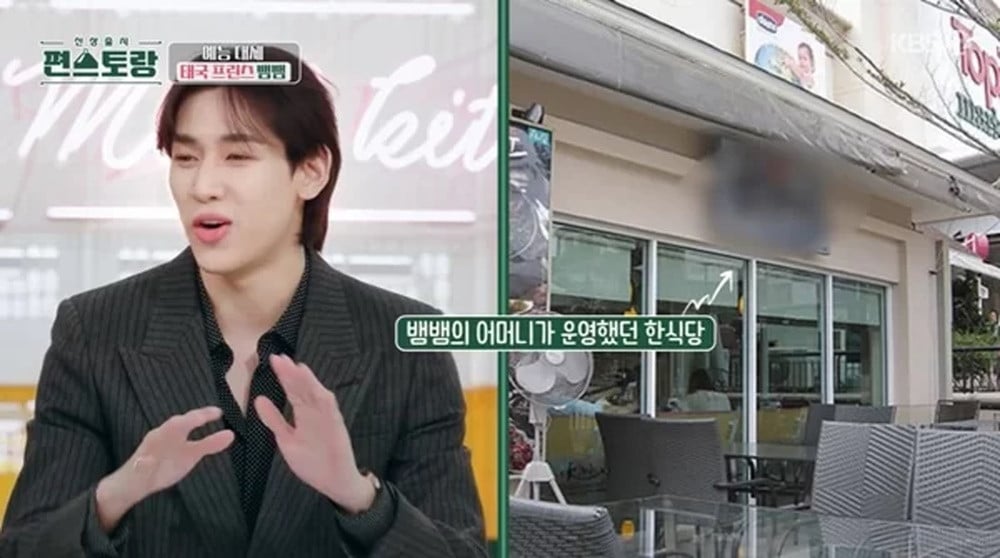
The family-restaurant detail is the one that reframes how you should read BamBam's food-adjacent solo brand. His mother runs a restaurant chain in Bangkok, which BamBam grew up inside. When he was 19 he bought his mom a house, financed by his GOT7 earnings, and the ripple effect on how the Thai media covers him has been real for almost a decade. That backstory is why BamBam's Thai food content on his solo YouTube ("BamBam's House," his own show format) plays as authentic instead of exoticizing. He grew up in the exact food environment he is now documenting for a global fandom, and the fandom trusts that. Fandom trust is the single hardest thing to fake in Southeast Asian markets, and the diaspora-identity read is why Somtam (Thai green papaya salad) references from BamBam land the same way soy-sauce crab references from Jay B do. It is not a curiosity, it is somebody's actual dinner.
Mark, Yugyeom, and the Convenience-Store to Family-Restaurant Pipeline
The remaining four members each earn their own micro-food-lore inside the fandom, and if you are new to GOT7, these are the fastest hooks in. Mark Tuan has the "Mark Meal," a viral convenience-store rabokki (ramyeon plus tteokbokki) that got named after him after a Giant Spicy Rice Cake company recipe contest and then physically appeared as a cameo food item inside the Korean Netflix sitcom So Not Worth It in 2021. That is the K-pop food merchandise-loop closing perfectly. Fan-created recipe becomes a real product, product becomes TV product-placement, TV placement drives real-world convenience-store sales, and Mark himself posts the meal on his personal Instagram every time he is back in Seoul. When Mark tweeted "반갑다" (반갑다 nice to see you again) at the meal in 2022, leader Jay B replied with laugh emojis. The fandom immediately screenshotted both tweets. That is Ahgase currency.
Yugyeom, the maknae, is the emotional-eater story. His mother runs Steak Box, a family restaurant that has become a low-key GOT7 fandom pilgrimage site in Seoul. He celebrated his 24th birthday there in November 2021 and a group of Ahgases showed up and threw him a surprise cake party, which his mom fully allowed because she is one of the more famously fan-friendly K-pop parents in the industry. Steak Box's Instagram routinely posts the group's signed selfies. Yugyeom's stated food identity is spicy comfort food (his AOMG label debut era leaned heavily on nightlife food culture in the MV visuals), and Ahgase has been busy for years correlating his spicy-food tolerance to Jackson's non-tolerance and building fan-fic around it. Jinyoung is the traditional-Korean-side-dish member (김치 kimchi from his mom, sent so often that fans thanked GOT7 for delivering food trucks to him during filming), and Youngjae is the comfort-food-and-hosting personality whose current MBC FM4U radio hosting slot regularly features food segments. Every member has a slightly different food anchor. Multiply by seven, and you have why iGOT7 has content to make about food essentially forever.
Why Food Content Is GOT7's Most Durable Post-JYP Asset
Here is the strategic read that ties the whole thing together. When GOT7 left JYP Entertainment in January 2021, the seven members kept the group trademark rights (a genuinely rare arrangement in K-pop, and the reason they were able to release the 2022 self-titled EP as a full-group project without a label handling it). Each member then signed with a different agency. Mark went independent in the US. Jackson runs Team Wang. BamBam signed with Abyss Company. Jay B went to H1ghr Music and then Cdnzn. Youngjae went to Sublime. Jinyoung joined BH Entertainment (Lee Byung-hun's agency). Yugyeom joined AOMG. Seven different labels, seven different geographic focuses, and no shared calendar. The one thing that still binds them together for a foreign fan trying to keep up is food content. Everybody's mukbang, everybody's home-cooking Instagram, everybody's collab with a food brand. It is the shared narrative that survives fragmentation.
The reason food specifically works this well is a diaspora-identity mechanic that other multinational K-pop groups (ENHYPEN, NCT, KATSEYE) are quietly replicating right now. Food is the least-scriptable, most personal, hardest-to-fake content a global-facing idol can share. A Chinese member eating jajangmyeon in Seoul, a Thai member cooking his mom's chicken rice on livestream, an American member missing In-N-Out at 3 a.m. and posting about it, are all authentic in a way that a label-produced concept photo shoot never will be. GOT7 basically wrote the playbook for that mechanic between 2014 and 2020, and every current multinational group is running variations on it. If you are trying to understand why the food-tour format works for K-pop specifically, GOT7 is the case study.
Which Member Do You Cook With?
The comment section on any GOT7 food video always resolves into some version of the same question: who would you actually want to eat with? Jackson if you want cheese and Cantonese seafood. Jay B if you want the traditional Korean home-cook experience with a beer chaser. BamBam if you want authentic Thai from someone who grew up in his mother's restaurant kitchen. Mark for late-night rabokki. Yugyeom for Steak Box. Jinyoung for whatever his mom sent that week. Youngjae for the food you did not know you needed until he mentioned it on radio. Seven members, seven answers, and no wrong ones. Which member's food would you want to try first? Drop it in the comments.
Try a Piece of GOT7's Snack World at Home
If reading about Mark Meal rabokki, Jackson's fridge cheese, and Yugyeom's convenience-store spicy runs has you hungry for Korean snacks you can actually order to your door, the SnackFever Box by Daebak is the closest we can get you to the Seoul convenience-store aisle. Every month it is curated by people who live in that aisle. Consider it an iGOT7 food-tour starter kit.


