


Table of Contents
In Korea, a night out rarely stays quiet for long. Once the soju arrives and the second round of somaek hits the table, somebody is almost certain to clap their hands, point across the circle and start a chant. Korean drinking games, or sul geim (술 게임), are the social engine of nights out, threading together everything from corporate hoesik (회식) dinners and college membership training retreats to the variety shows that dominate Korean television.
This guide covers the most popular Korean drinking games, the cultural context that gave rise to them and the ways the tradition is shifting in modern Korea.
Titanic: The Floating Soju Shot Glass
The Titanic game (타이타닉) is one of the most visual Korean drinking games. Players fill a beer glass roughly halfway, then place an empty soju shot glass so it floats on the surface. Going around the circle, each person pours a small amount of soju into the floating shot glass. The player whose pour sends the shot glass sinking to the bottom must drink the entire mixture, which by that point is a powerful homemade somaek.
Named after the 1997 film, Titanic is a staple at college bars and pojangmacha tents because it requires nothing beyond what is already on the table. It also doubles as a quick lesson in the golden ratio of beer and soju that defines Korean drinking culture.
3-6-9: Korea's Most Famous Counting Game
The 3-6-9 game (삼육구) is the entry point most newcomers learn first. Players count aloud in sequence starting from one, but anyone landing on a number containing a 3, 6 or 9 must clap instead of saying it. Double-digit numbers with two of those digits, such as 33 or 36, require two claps. A missed clap, a hesitation or a wrong number means a penalty shot.
The rhythm is fast and unforgiving, which is exactly why it appears so often on variety programs. The chant from Rose and Bruno Mars' 2024 hit APT., which features rapid 3-6-9 style timing, helped reintroduce the game to a global audience.

Bunny Bunny and Cham Cham Cham
The Bunny Bunny game (바니바니) has players hold up two fingers like rabbit ears beside their head. Each round, one player chants "Bunny bunny, bunny bunny" while moving their ears, then calls out another player's name twice. The named player must immediately respond with their own "bunny bunny" while everyone else on either side shakes their hands like carrots. Lag, freeze or break the rhythm and you drink.
The related Cham Cham Cham game (참참참), often called the face slap game, involves one player chanting "cham cham cham" while their opponent turns their head left or right at the last beat. If the opponent's head turns toward the direction the leader points, they take the penalty.
Son Byeong-ho: The Finger-Counting Confessional
Named after the Korean actor of the same name, the Son Byeong-ho game (손병호 게임) is part drinking game, part group therapy. Every player holds up five fingers. Taking turns, each person announces a condition, such as "fold a finger if you have ever dated a coworker" or "fold a finger if you cried at your last hoesik." Anyone matching the condition folds one finger. The first person to fold all five must drink.
The game is famous for the unexpected confessions it surfaces, which is why it remains popular among older drinkers at company dinners.
Baskin Robbins 31 and the Image Game
Baskin Robbins 31 (배스킨라빈스 31), named after the ice cream chain's 31 flavors, is a simple subtraction-style counting game. Players take turns calling out one, two or three consecutive numbers in ascending order. The player forced to say 31 loses and drinks.
The Image Game (이미지 게임) flips the dynamic. The leader poses questions such as "Who in this circle looks like they could win a fight?" or "Who looks like they would text their ex first?" Everyone points at one person on the count of three, and the player who collects the most fingers must drink. It rewards quick reads of the group and produces the kind of teasing banter that powers Korean variety shows.

Nunchi Game: Reading the Room
The Nunchi Game (눈치 게임) is built on the Korean concept of nunchi, the social skill of reading a room. Players count aloud from one, but the next number can be called by anyone. Two players calling the same number at the same time both lose. Whoever is left without saying the final number also loses. The game requires sensitivity, eye contact and timing, which is why it is a favorite icebreaker at college MT retreats.
Apartment: Stacking Hands With Rose
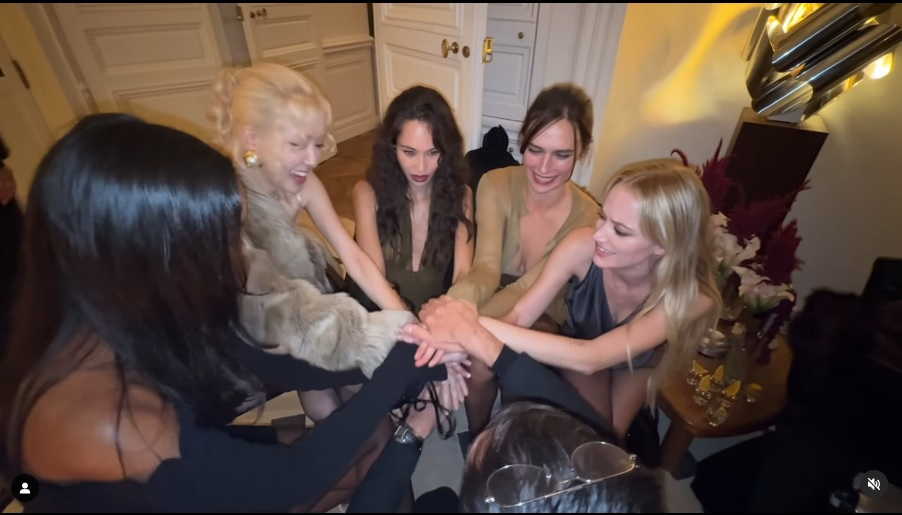
The Apartment Game (아파트), now globally known thanks to APT. by Rose and Bruno Mars, has players form a circle and stack their hands like floors of an apartment building. The leader chants "apateu, apateu" three times before calling out a number. Players then move hands one at a time from the bottom of the stack to the top until the stack count reaches that number. Whoever is on top at the end drinks.
The Korea Herald reports more than 51.9 percent of Koreans lived in apartments by 2022, which is partly why the game's imagery resonates so strongly. Rose has said it is her favorite drinking game from home and the inspiration for the song's chorus.
Poktanju: The Construction Games Around the Soju Bomb
Many Korean drinking games center less on rules and more on the spectacle of preparing the drink. Poktanju (폭탄주), literally "bomb drink," is a shot of soju dropped into a glass of beer, also called somaek when mixed gently. According to the Korea Herald, the modern poktanju tradition dates to the 1970s, when binge drinking became a workplace norm.
The construction games include balancing a soju shot between two chopsticks across a beer glass, then striking the table so the shot drops in. Another version stacks empty shot glasses into a pyramid that the next drinker must topple. These rituals turn the simple act of mixing a drink into a group performance.
Hoesik, MT and Why Drinking Games Matter
Korean drinking games are inseparable from the social settings that produced them. Hoesik, the after-work company dinner, has long been considered an extension of office hours. Drinking games at hoesik function as social levelers, briefly dissolving the strict hierarchy between juniors and seniors. A team lead who loses at Son Byeong-ho still has to drink, just like everyone else.
College Membership Training, known as MT, takes this further. Groups of 30 to 40 students travel together for a weekend, and drinking games are the structured icebreaker that turns strangers into a cohort. Many of the games on this list, including the Apartment Game and Nunchi Game, are taught to first-year students by senior club members within hours of arrival.
K-pop Variety and the Global Spotlight
Korean variety shows have spread these games far beyond the country's bars. Knowing Bros (아는 형님) on JTBC regularly features 3-6-9, Baskin Robbins 31 and Image Game segments with K-pop idol guests. New Journey to the West (신서유기), the tvN franchise hosted by comedian Kang Ho-dong, weaves drinking games and word games into its travel format.
Idol fans have caught on too. K-pop variety clips of stars playing Bunny Bunny or Son Byeong-ho regularly rack up millions of views, and the Apartment Game went viral worldwide after Rose released APT.
The Modern Pushback
Korean drinking culture is not what it was a decade ago. According to The Korea Times, 56 percent of Koreans aged 19 to 29 said in 2024 that they either abstain entirely or drink no more than once a month, the highest figure since the survey began in 2005. The shift accelerated during the COVID-19 pandemic, when mandatory hoesik gatherings largely paused, and many younger workers decided they did not want them back.
A survey by the pharmaceutical company Handok found that 26.5 percent of college students consider people "focused solely on drinking games" the type they most want to avoid at semester gatherings. Drinking games have not disappeared, but the pressured, finger-pointing penalty culture is fading. Many younger Koreans now play these games with low-ABV soju, highballs or even non-alcoholic drinks.
How to Play Korean Drinking Games Respectfully
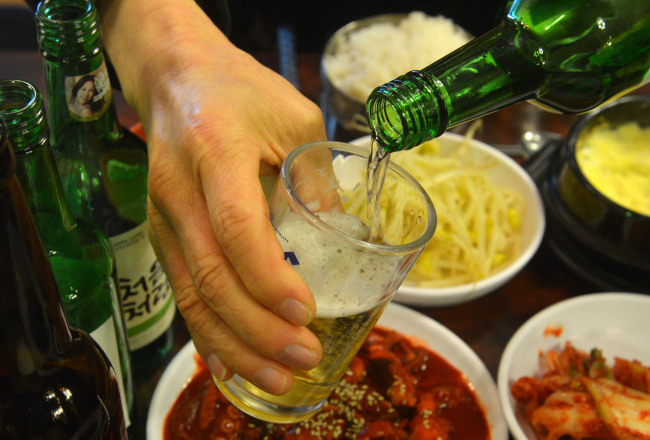
If you are joining a hoesik or MT as a guest, a few etiquette notes go a long way. Always pour for elders before yourself, holding the bottle with both hands. Turn your head away from older drinkers when taking your shot. If you do not want to drink, say so early. Modern Korean drinking culture broadly accepts non-drinkers, and most groups will let you sip soft drinks during the penalty rounds without comment. The point of the games has always been the bonding, not the alcohol.
Explore More of Korea with Daebak
Want to bring a little piece of Korea into your life? The Daebak Box is packed with the best Korean snacks, ramen, and cultural goodies delivered monthly to your door.


