


Table of Contents
Most countries treat camping food as a downgrade, granola bars, instant oatmeal, maybe a sad hot dog if you're feeling ambitious. Koreans inverted that logic about two decades ago, and I've watched the industry chase it ever since. A Korean weekend camp meal is closer to a restaurant 한 상 차림 (han-sang charim, a full table setting) than to a backpacker's calorie-loading session, and the gear, the retail aisles, and the YouTube algorithm have all bent around that fact.
What follows is less a recipe roundup and more a field report on why Korean camping food culture looks the way it does, and what makes it specifically Korean rather than a translated version of American RV cooking.

The 부탄가스 Stove Is Why Everything Else Works
Before the food, the gear. The pillar of every Korean campsite, glamping pad, or in-law's tent in Gangwon-do is the portable butane stove (부탄가스 버너), the blue-canister single-burner that sells for about ₩20,000 at any Daiso. This thing is the unlock. Without it, Korean home cooking at a campsite is impossible, because Korean meals are pot-and-pan-based, not foil-packet-based. With it, you can run a kimchi jjigae for two hours and still have heat left for ramyeon.
I've seen Koreans bring three of these stoves on a single trip, one for the stew, one for the grill pan, one for boiling water for ramyeon and coffee. American outdoor brands tried to enter this market with white-gas stoves and got eaten alive by Korean OEMs (Iwatani, Mass, Sanyang) who already owned the butane-canister supply chain. Coleman Korea quietly pivoted to selling Korean-style grill plates that fit on top of the butane burner. That's how dominant this format is.
Camping Stews: Why a 김치찌개 Outdoors Hits Different
The marquee Korean camping dish is a bubbling stew. Kimchi jjigae, doenjang jjigae, and the camping-specific king, 부대찌개 (budae jjigae, army base stew), packed with Spam, sausages, ramyeon noodles, and rice cakes. The army stew origin story (post-Korean War, rations smuggled out of US bases in Uijeongbu) is what gives it the cultural permission to be a camping food: it's already an improvised, anything-goes, communal pot. That matches the chaos energy of a campsite better than a delicate banchan.
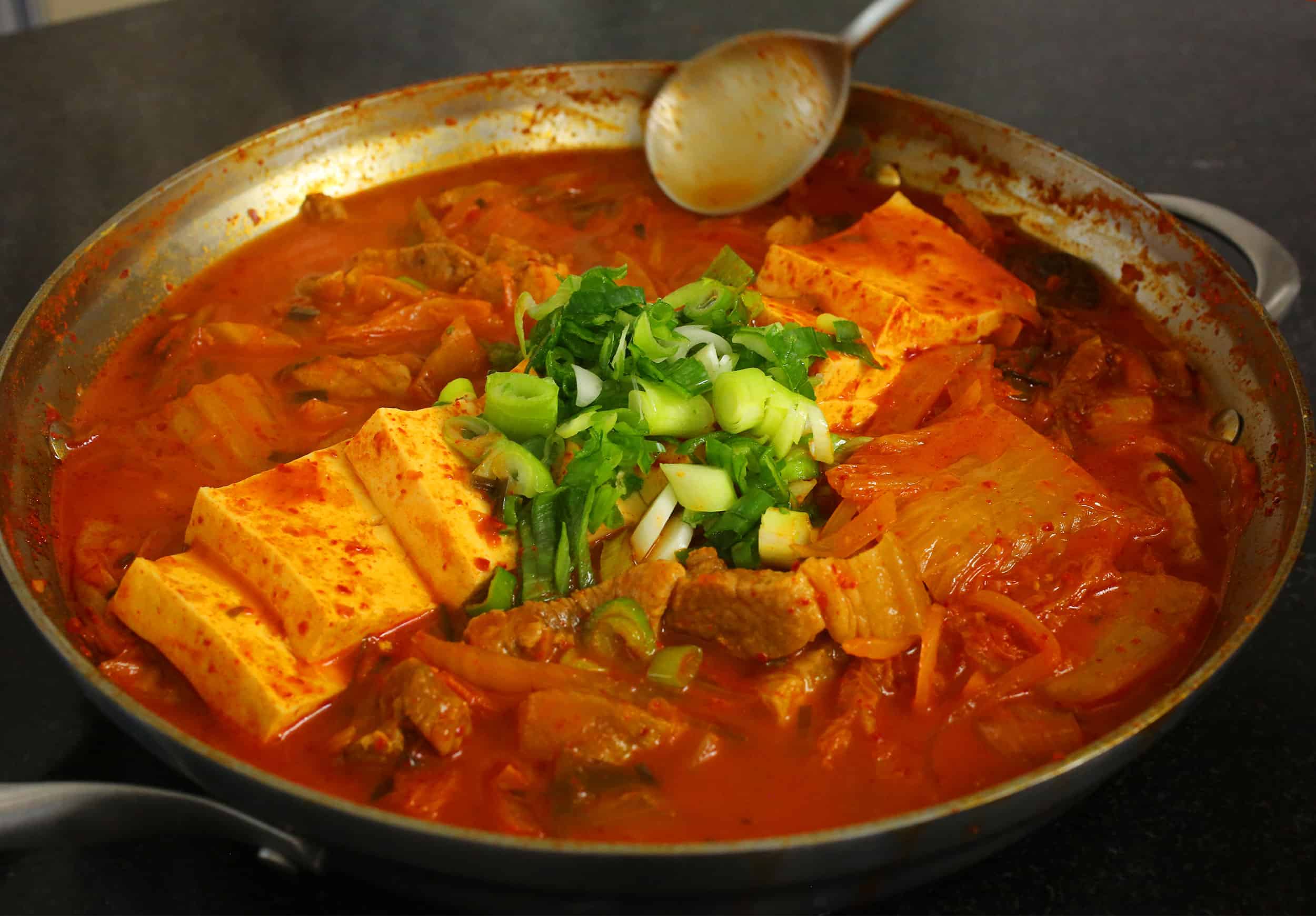
The appeal point fans miss: a Korean stew on a campsite burner isn't just dinner, it's a heat source you sit around. The pot stays bubbling for forty-five minutes while everyone refills soju glasses, and the broth keeps reducing into something darker and meaner than what you'd ever cook at home. Maangchi mentions making kimchi and mackerel stew on camping trips during her university years in Seoul, and that detail tells you this is a multi-generational habit, not a recent influencer trend.
Vacuum-Packed Samgyeopsal: The Industrial Backbone
This is the part Western coverage of Korean food usually misses. Walk into any E-Mart or Costco Korea on a Friday afternoon and you'll find a dedicated chilled aisle for camping meat sets, pre-marinated bulgogi packs portioned for four people, vacuum-sealed samgyeopsal slabs cut camping-thick (about 1cm), pre-seasoned LA갈비 in zip pouches you can throw straight onto a cast-iron pan. The packaging is engineered for cooler-bag transport: vacuum-sealed for forty-eight hours of stability, with the marinade pre-mixed so you skip the fridge-overnight step at home.
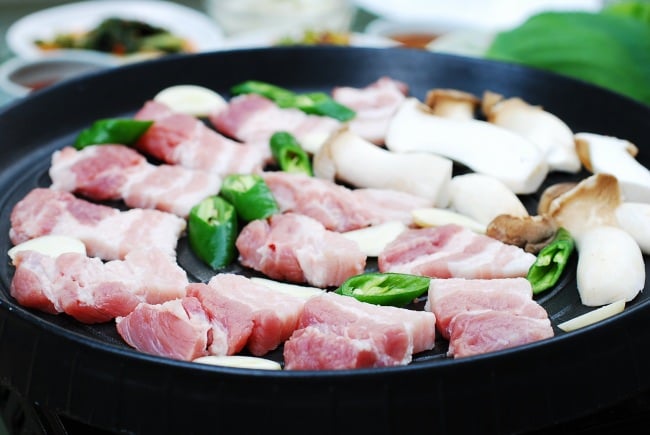
The Korean camping market hit roughly 6.3 trillion won by 2022, with about 7 million annual campers (more than doubled from pre-COVID). That scale is what justifies dedicated camping SKUs from CJ CheilJedang, Harim, and Lotte, brands you'd never see making "camping food" in the US. Hyundai Department Store added a camping-themed food court in 2023, and the recent buzzword in Korean industry trades is "편리미엄" (pyeolli-mium, a portmanteau of 편리 + 프리미엄, convenience-premium): restaurant-grade ingredients with the prep work pre-done. That's the entire camping-food category in one word.
Camping 먹방: The YouTube Engine
None of this scales without media. Camping 먹방 (camping mukbang) on YouTube is what dragged the gear-plus-ingredient market into double-digit growth. Creators like 캠핑한끼 (Camping Hanggi) and the DAdaongs channel turned the elaborate-outdoor-Korean-meal genre into a Saturday-night ASMR ritual, the sizzle of samgyeopsal on a grill pan, the spoon clinking against a metal kettle, the soju pour. These are basically slow TV with food.
What makes it specifically Korean rather than just "outdoor cooking content": the emphasis on aesthetics of the spread. The 한 상 차림 instinct shows up even in solo camping. Four banchan dishes minimum. A polished metal rice bowl. A separate soup bowl. The setup is so over-engineered for one person that the contradiction is the point, that's the appeal. Western camping content shows efficiency. Korean camping content shows abundance under inconvenience.
Roasted Sweet Potato and Other Slow Snacks
Between the stew and the BBQ comes the in-between food, and the most beloved one is 군고구마 (gun-goguma), Korean sweet potato roasted directly in the campfire embers or in a cast-iron pan over the butane stove. Korean sweet potatoes (purple-skin, golden-fleshed, much denser than American varieties) caramelize hard when slow-roasted, the natural sugar turns into sticky surface threads on the skin.
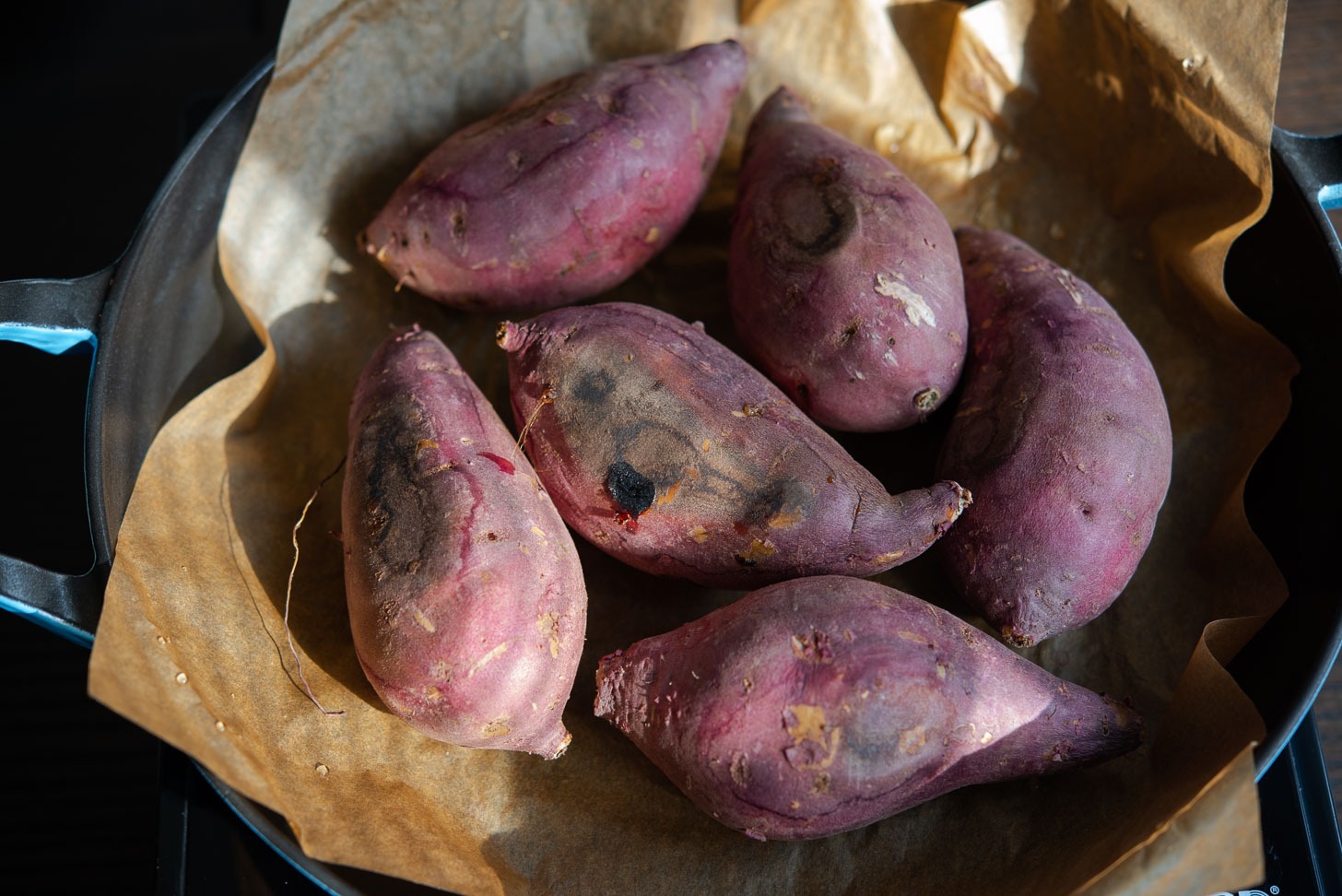
The appeal point: Koreans pair roasted goguma with a side of cold kimchi or 동치미 (dongchimi, radish water kimchi). The sweet-savory-cold-hot whiplash is the entire flavor logic. A Western camper grabbing a Snickers gets one note. A Korean camper alternates bites of caramelized goguma with crisp icy radish broth and gets four sensations on top of each other. That contrast logic, sweet vs. tart, soft vs. crunchy, hot vs. cold, is the spine of Korean cuisine, and it survives translation to outdoor cooking because the toolkit (kimchi keeps in a cooler, sweet potatoes don't need a fridge) is camp-friendly.
Choco Pie: The S'mores Workaround Nobody Asked For
Here's the moment American-style camping bleeds in. Koreans don't traditionally do graham crackers and Hershey's bars over a fire, so when the dessert moment comes, the substitute is Orion's Choco Pie, the chocolate-marshmallow-cake sandwich that already costs about ₩300 each and ships in a twelve-pack. You hold it briefly over the embers, the marshmallow center melts, you eat it warm. One package, zero assembly, identical flavor profile to a s'more.
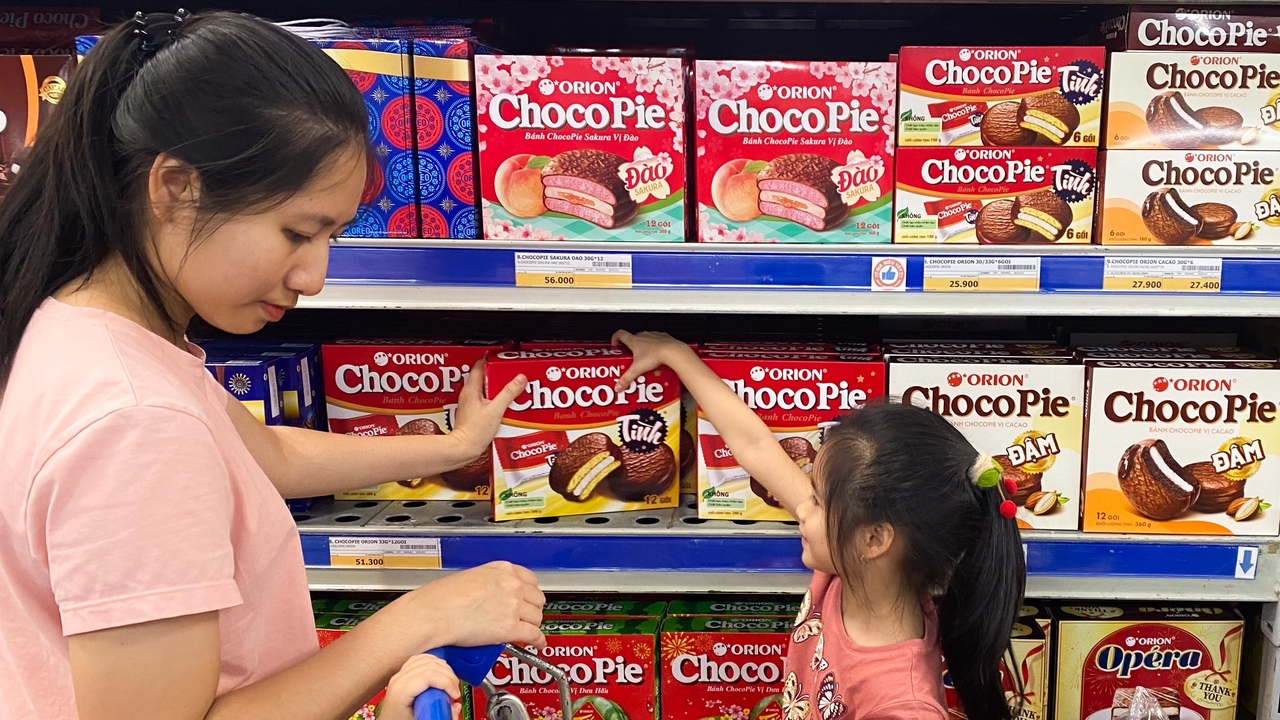
Orion's Choco Pie crossed 4 billion lifetime units sold by early 2025. That milestone is partly export (it's a phenomenon in Vietnam and Russia), but a meaningful chunk is domestic snack-aisle volume that camping demand keeps elevated. The dessert isn't an afterthought, it's the close of a meal that started with stew, moved through grilled meat, and needs something sweet-and-soft to land. Choco Pie is engineered for that exact role.
Why Western Campers Should Pay Attention
The takeaway isn't "try Korean camping food this weekend." It's that Korea figured out something the broader outdoor industry is just now catching onto: people don't actually want to suffer in the woods. They want to eat better outdoors than they do at home, and they're willing to carry a butane stove and a vacuum-packed bulgogi bag to make that happen.
If you're putting together your first Korean-style camp menu, start narrow: one butane burner, a small cast-iron grill pan, a pre-marinated bulgogi pack from a Korean grocery, one bag of kimchi, instant rice cups (Otoki's 즉석밥 is the standard), a Choco Pie twelve-pack. Cook the bulgogi first while everyone's hungry, simmer leftover kimchi with the pan juices for a quick jjigae, microwave the rice in the campfire embers wrapped in foil. That's a full Korean meal with about fifteen minutes of active cooking time. The Korean camping industry has spent two decades engineering this exact shortcut, you may as well use it.
Explore Korean Snacks with Daebak
Love Korean food? Get authentic Korean snacks and ramen delivered straight to your door with the SnackFever Box by Daebak.


