


Table of Contents
Korean traditional markets, called jeontong sijang (전통시장), are the country's living rooms. They are noisy, generous, slightly chaotic, and absolutely essential if you want to understand how Koreans actually eat and shop. In a single afternoon you can fold a freshly grilled bindaetteok into your mouth at Gwangjang, fill a brass-coin lunchbox at Tongin, hunt down vintage cameras at Namdaemun, and sip soju on a low plastic stool while the ajummas swap gossip around you. This guide walks through Seoul's seven most rewarding markets, plus the food, etiquette, and K-drama backstories you need to make the most of each one.
What Makes Korean Markets Different
A Korean traditional market is not a tidy farmers' market with chalkboard prices. It is a covered or open-air maze of small stalls, often family-run for generations, where you can buy anything from live octopus to grandmother's hand-folded mandu. Vendors call out, side dishes are sliced off whole blocks, and prices can be gently negotiated, especially if you buy in volume. The atmosphere blends commerce with community: regulars sit at the counter chatting with the owner, and a free seo-bi-seu (service) of extra banchan often arrives if you smile and ask politely. Cash is still king at the older stalls, although most accept card and T-money these days. Most markets close one day a month (typically Sunday), and food alleys run later than the dry-goods sections.
Gwangjang Market: Bindaetteok, Yukhoe and Mayak Gimbap
Opened in 1905, Gwangjang Market in Jongno was Korea's first permanent market and is now the country's most famous food destination. Roughly 65,000 visitors a day push through its food alley to try the signature trio: bindaetteok (mung bean pancakes ground on stone mills and fried in pork fat), yukhoe (beef tartare seasoned with sesame oil, pear, and raw egg yolk) in Yukhoe Alley, and mayak gimbap, the addictive bite-sized seaweed rolls whose nickname literally translates as “drug gimbap.” Enter from Jongno 5-ga Station Exit 8 to land directly in the food alley. Plan two hours and arrive hungry. Gwangjang was made globally famous by Netflix's Street Food: Asia, which featured grandmother Cho Yoon-Sun's kalguksu stall, and the market has since become a fixture in K-drama scenes whenever a script needs a bustling, authentic backdrop.
Tongin Market: The Coin Lunchbox Cafe (Yeopjeon Dosirak)
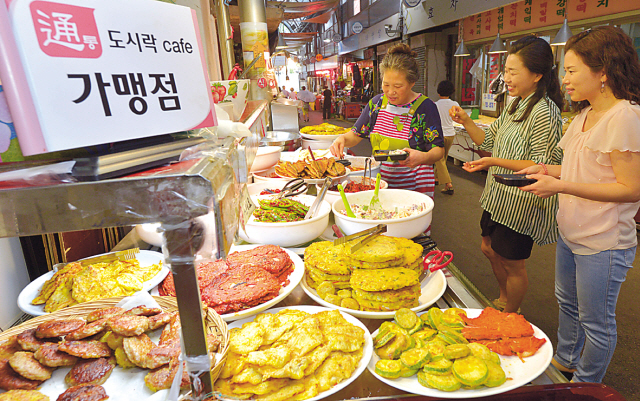
Tongin Market in Seochon, a short walk from Gyeongbokgung Palace, was founded in 1941 and is the most fun way to eat your way through a Korean market. At the Dosirak Cafe in the middle of the arcade, exchange 5,000 to 10,000 won for brass tokens shaped like Joseon-era yeopjeon coins, grab an empty dosirak (lunchbox) tray, and walk the alley dropping coins at participating stalls to fill it with your own custom meal. Most banchan and snacks cost two to four coins each. Bring the tray back to the second or third floor, buy rice and soup with your remaining coins (kimchi is free), and dig in. Unused coins are refundable. The yeopjeon program runs 11 a.m. to 3 p.m. on weekdays and 11 a.m. to 4 p.m. on weekends; the market's signature dish, oil-based gireum tteokbokki, is sold by two stalls just outside the cafe.
Namdaemun Market: 600 Years and Counting
Namdaemun is the oldest continually operating market in Korea, dating back to 1414 during the reign of King Taejong, the third Joseon king. Today it covers over 20,000 wholesale and retail shops spread across 66 blocks just inside Sungnyemun Gate (a.k.a. Namdaemun, the “Great South Gate”). The market is famous for children's clothing, eyeglasses, ginseng, kitchenware, and the surprisingly excellent galchi-jorim (braised hairtail) alley near Gate 5. It is also Korea's main camera market, with several streets devoted to lenses and vintage film bodies. In November 2025 Seoul City unveiled a long-term “Global Heritage Market” plan that includes a new hanok-style arcade, a Sungnyemun viewing path, and a walkway connecting the market to Namsan. Take Line 4 to Hoehyeon Station Exit 5 and aim for a weekday morning visit; most shops close Sunday.

Dongdaemun Market: Fabric, Fashion and Night Shopping
Dongdaemun is the fashion capital of Korea: 35,000 stores spread across 32 shopping malls and dozens of wholesale buildings around Dongdaemun Design Plaza (DDP). The Dongdaemun Shopping Complex, founded in 1970, holds the world's largest fabric and clothing-materials market, where designers source everything from silk to zipper pulls in bulk. The real magic starts after dark. From 10 p.m. to 5 a.m. wholesalers such as Nuzzon, apM, Hello apM, Migliore, and Doota Mall open their doors, and “purchasing uncles” on motorcycles ferry samples to retailers across the country. For visitors, the experience is part shopping, part theatre: catwalks of K-pop music, dumpling stalls, hotteok carts, and 24-hour jjimjilbangs to recover in. Bring cash for the wholesale buildings; the retail malls accept card. Subway: Lines 1 and 4, Dongdaemun Station Exit 8 or 9.
Noryangjin Fish Market: Live Tanks and 3 a.m. Auctions
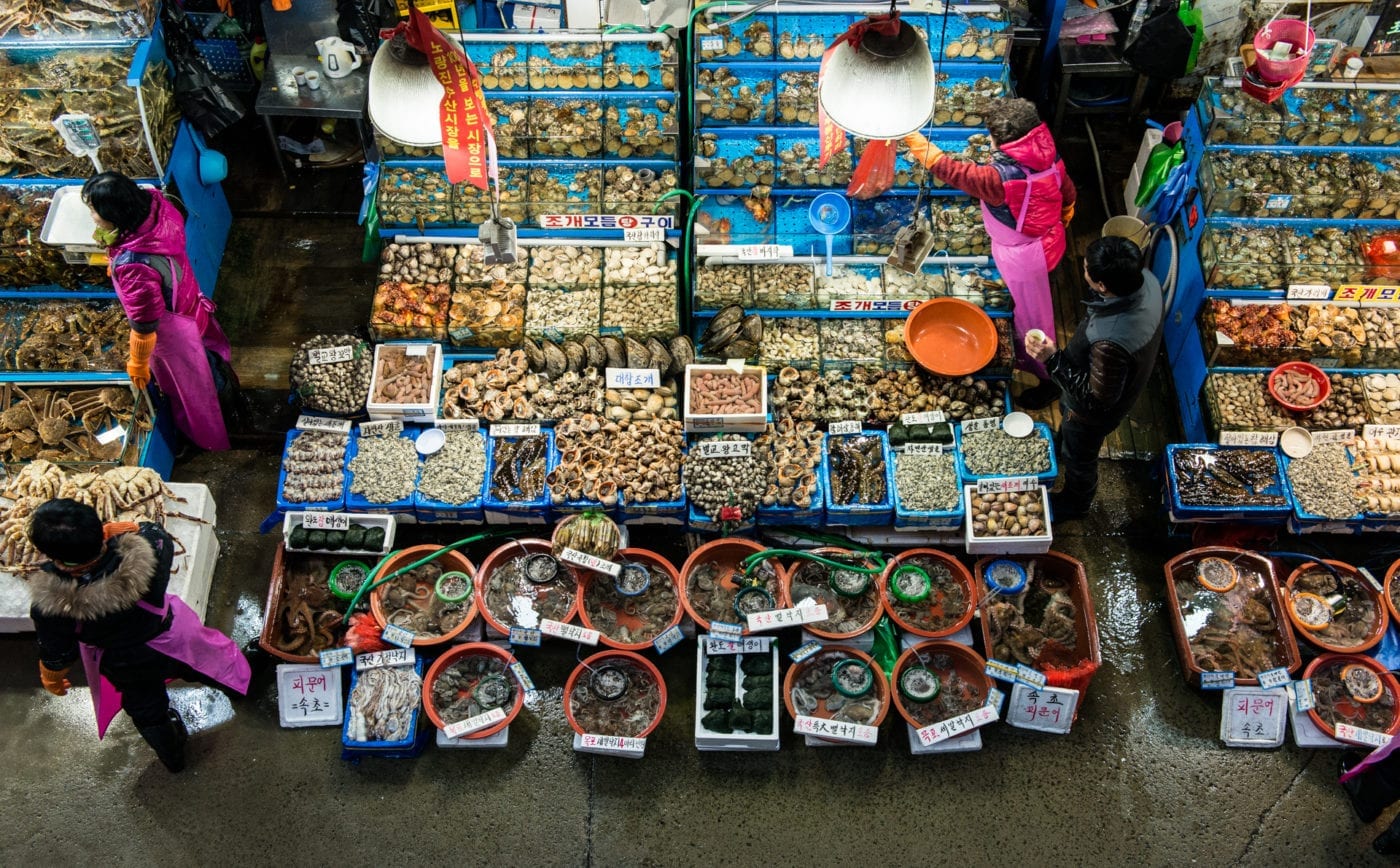
Noryangjin Fisheries Wholesale Market in Dongjak-gu first opened in 1927 and moved to its current site in 1971. It is open 24/7, with more than 700 vendors offering 800+ species of seafood. The action starts in the small hours: shellfish are auctioned at 1 a.m., fresh fish at 1:30 a.m., and live fish at 3 a.m. By daytime the floor is an aquarium of king crabs, abalone, sea cucumber, and the famously phallic gaebul (spoon worm). Point at what you want, agree a price, and take your catch upstairs to a partner restaurant on the second floor, where for a small fee (around 5,000 to 10,000 won per person) they will slice it into hwe (sashimi) or grill it. Don't miss a steaming bowl of maeuntang, the spicy fish soup made from the parts you don't eat raw. Take Line 1 to Noryangjin Station Exit 1.
Yeongdong Market in Yeongdeungpo
Yeongdong Traditional Market in Yeongdeungpo-gu, west of central Seoul, is the kind of place locals still think of as their own. Tucked behind Yeongdeungpo Station, it stretches for several alleys and is best known for its jokbal (braised pig's trotters), sundae (Korean blood sausage), and an enormous fresh-produce row that feeds the surrounding apartment complexes. Because it is less touristy than Gwangjang or Namdaemun, prices are noticeably gentler and vendors have more time to chat. Try the famous Yeongdeungpo-style mandu and pick up cheap socks, beddings, and seasonal fruit from the outdoor stalls. The market is a 5-minute walk from Yeongdeungpo Station (Line 1) and is most lively on weekday evenings when office workers stop by on their way home.
Mangwon Market: Hongdae's Local Secret
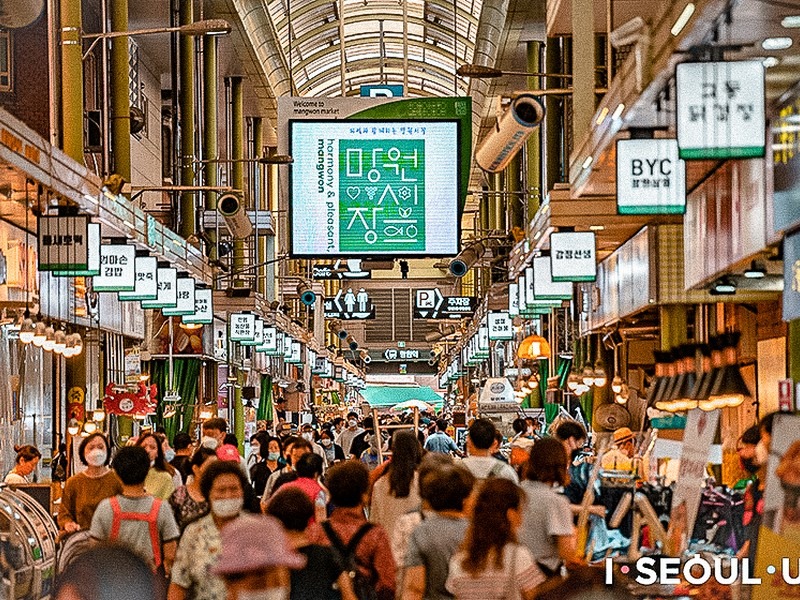
Mangwon Market in Mapo-gu has been operating for over 40 years and sits a short walk from the Han River and the trendy cafes of Hongdae and Mangnidan-gil. It is small (about 90 stalls) but punches above its weight on street food. Lines form for Kyodong Dakgangjeong and Q's Dakgangjeong, both serving glazed Korean fried chicken bites in flavours from garlic soy to honey butter. Other essentials: kalguksu hand-cut noodles made in front of you, simmering jokbal, kimchi and japchae croquettes from the duelling croquette stalls, and freshly cut tofu from the local tofu maker. Pack your finds into a cooler bag and walk five minutes to Mangwon Hangang Park for a riverside picnic, exactly what Korean families do every weekend. Subway: Line 6, Mangwon Station Exit 2.
Etiquette, Cash and the Best Time to Visit
A few small habits will make your market visits smoother. Bring cash in small denominations (5,000 and 10,000 won notes); even card-friendly stalls appreciate it, and most wholesale buildings in Dongdaemun only accept cash. ATMs are scattered through every market, but they may charge foreign cards a flat fee of around 3,500 won, so withdraw enough for the day in one go. Bargaining is acceptable for bulk purchases and clothing, but is considered rude for individually priced food. Always ask before photographing a vendor or their goods, especially in Namdaemun and Dongdaemun where some sellers strictly prohibit it to protect their designs. Weekday mornings (10 a.m. to noon) are the calmest; weekend evenings are the most atmospheric. Avoid the third Sunday of the month at Tongin and certain other markets, when many stalls close.
K-Drama and Variety Show Cameos
Korean markets show up constantly on screen. Gwangjang Market and its food alley have been featured in countless episodes of variety shows like 2 Days & 1 Night and Wednesday Food Talk, and the area appears in scenes from dramas including Vincenzo and Itaewon Class. The Ssangmun-dong alley used in Reply 1988 draws a steady stream of fans, and a nearby market was used for scenes in Squid Game. Pohang's traditional market became a tourist destination after Hometown Cha-Cha-Cha aired in 2021. If you want to recreate the on-screen experience, eat where the cameras eat: order yukhoe at Gwangjang, gireum tteokbokki at Tongin, and dakgangjeong at Mangwon. Locals will assume you saw it on TV, and they will be right.
Explore More of Korea with Daebak
Want to bring a little piece of Korea into your life? The Daebak Box is packed with the best Korean snacks, ramen, and cultural goodies delivered monthly to your door.


