


Table of Contents
There are few soups in the world as deeply comforting as seolleongtang. Its broth is a milky, unctuous white, achieved not with dairy or starches but through the slow, patient simmering of ox bones for many hours. Bland by design and humble in appearance, seolleongtang rewards the diner who understands it with a bowl that is profoundly nourishing, deeply warming, and quietly extraordinary.
What Is Seolleongtang?
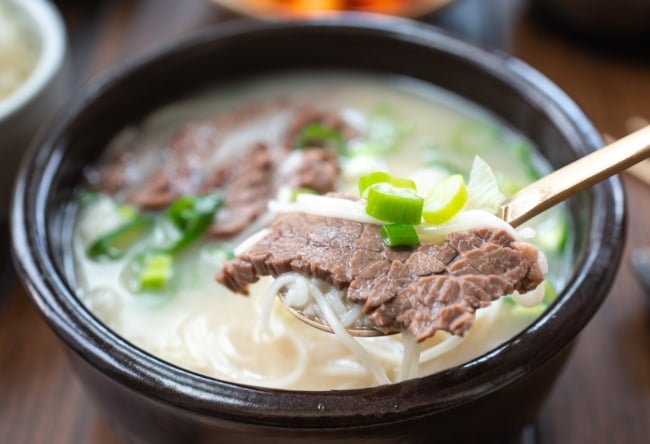
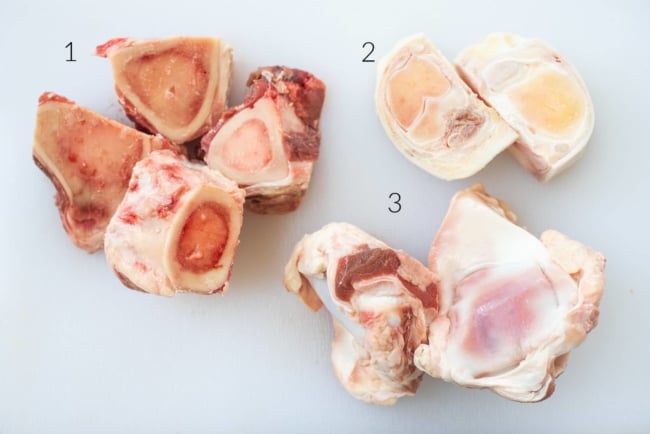
Seolleongtang (설렵탕) is a traditional Korean soup made by simmering ox bones, primarily leg bones (sagol, 사골), knuckle bones (dogani, 도가니), and often ox feet, in a large pot of water for anywhere from six to twelve hours. The result is a broth that is completely white, thick with dissolved collagen and emulsified marrow fat, and incredibly rich without tasting heavy. The soup is served in deep bowls with thin somyeon wheat noodles or rice, slices of tender boiled brisket or tripe, and a generous garnish of sliced green onion. Crucially, seolleongtang is served entirely unseasoned. A small dish of salt and a pinch of white pepper are placed beside the bowl, and each diner seasons the soup to their own taste.
A Royal Origin Story
Seolleongtang's origins are rooted in the Joseon Dynasty, and a well-known legend traces it to King Seonjong of Joseon, who presided over an ancestral rites ceremony involving a sacrificial ox. After the ceremony, the king ordered the meat and bones to be distributed to the many attendees as food. To feed the large crowd quickly, royal cooks boiled the bones with water in large cauldrons, creating a simple, milky broth that could be stretched to serve everyone. Whether or not this story is literally true, it reflects the spirit of seolleongtang: a soup born of resourcefulness and generosity, designed to nourish as many people as possible. Over the centuries, seolleongtang became one of the most iconic dishes of Seoul's food culture, with dedicated seolleongtang restaurants (some operating for over a century) that serve nothing else.
Why Is the Broth White?
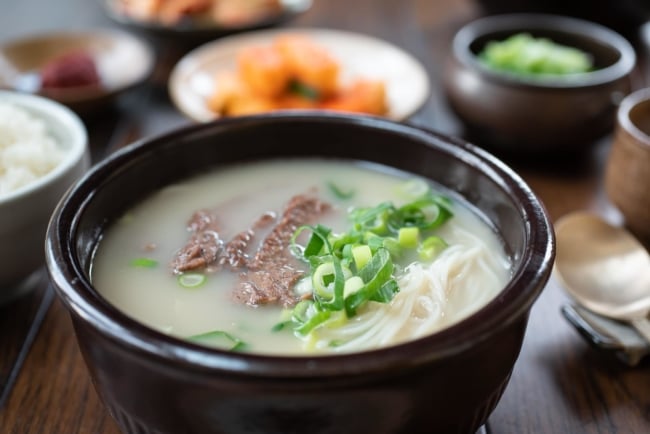
The most distinctive feature of seolleongtang is its opaque, milky-white color, which surprises many first-time drinkers who expect bone broth to be clear. The whiteness comes from a process of emulsification: when ox bones rich in marrow and collagen are boiled at a medium-to-vigorous simmer over many hours, the fat from the marrow breaks down into tiny droplets that disperse throughout the water, creating an emulsion that appears white. A clear bone broth is achieved by simmering at a gentle low temperature, which prevents the fat from emulsifying. Seolleongtang requires a more active boil, maintained consistently over many hours, to achieve its characteristic color. The first batch of broth from a set of bones is often relatively clear; experienced cooks save the bones and reboil them for a second batch, which is typically even milkier than the first.
How to Make Seolleongtang at Home
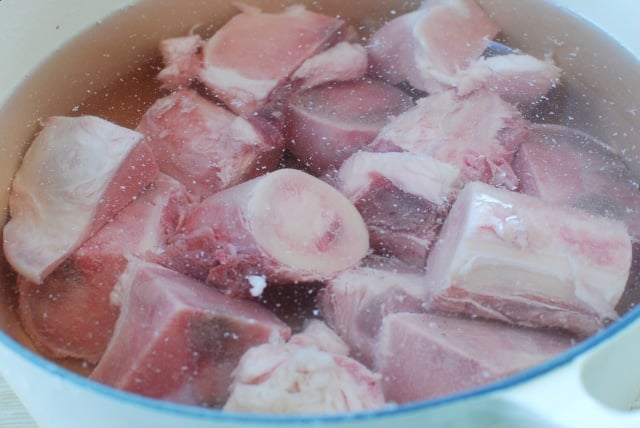
Making authentic seolleongtang is a project that takes patience. Start by soaking the ox bones in cold water in the refrigerator overnight to draw out the blood. Blanch the bones in boiling water for 10 minutes, then drain and rinse them thoroughly. Place the cleaned bones in a large stockpot, cover with 4 to 5 liters of water, and bring to a vigorous boil. Maintain this active boil, skimming any foam that rises, and cook for 6 to 8 hours, adding water as needed to keep the bones submerged. In the last two hours, add brisket to the pot and cook until tender. Remove the brisket, slice it thinly, and set aside. Strain the broth and refrigerate: a thick, white, gelatinous broth is the sign of success.
Where to Eat Seolleongtang in Seoul
Some of the best seolleongtang in Korea can be found in Seoul, where dedicated seolleongtang restaurants (many open 24 hours) serve the soup around the clock. Imun Seolleongtang in Insadong, established in 1902, is one of the oldest restaurants in Korea still in operation and serves a version of the soup that has remained virtually unchanged for over a century. Other neighborhoods like Mapo and Gangnam have their own beloved local spots with devoted regulars. When ordering at a traditional seolleongtang restaurant, diners choose between different toppings (brisket, tripe, or mixed), specify their preferred noodle type, and receive a bowl of pristine, unseasoned broth to customize at the table.
Explore Korean Snacks with Daebak
Love Korean food? Get authentic Korean snacks and ramen delivered straight to your door with the SnackFever Box by Daebak.


