


Table of Contents
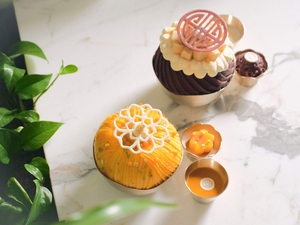
The days are getting longer and hotter, which can only mean one thing: bingsu season has arrived. Bingsu (빙수), Korea's beloved shaved ice dessert, is the country's most refreshing answer to the summer heat. A mountain of feather-light shaved ice is piled into a bowl, drizzled with sweetened condensed milk, and crowned with toppings like sweet red beans, ripe fruit, chewy rice cake, and roasted grain powder. From street carts in Busan to gilded versions at five-star hotels in Seoul, bingsu is everywhere from May through August, and its sweet, snowy charm has spread far beyond Korea.
What is Bingsu?
The word bingsu (빙수) literally means "ice water" in Korean, but the dish is much more than crushed ice in a bowl. Traditional bingsu is built on shaved ice that is fine, fluffy, and almost powdery, with a texture closer to fresh snow than slush. Modern Korean cafés and home cooks freeze sweetened milk instead of plain water, then shave it into soft "snowflake ice" (눈꽃빙수) that melts the moment it hits your tongue. On top go the toppings: sweet adzuki red beans, condensed milk, chunks of injeolmi rice cake, fresh fruit, mochi, misugaru (roasted grain powder), or scoops of ice cream.
The roots of bingsu reach back to the Joseon era, when shaved ice with fruit was a luxury reserved for royalty and the aristocracy. Once refrigeration became common in the early 20th century, ice moved from palace storerooms to neighborhood street carts. By the 1980s, patbingsu (팥빙수) had become a national favorite, and in the 2000s milk ice transformed the dessert into the airy, photogenic version known around the world today.
Patbingsu: The Classic Korean Original
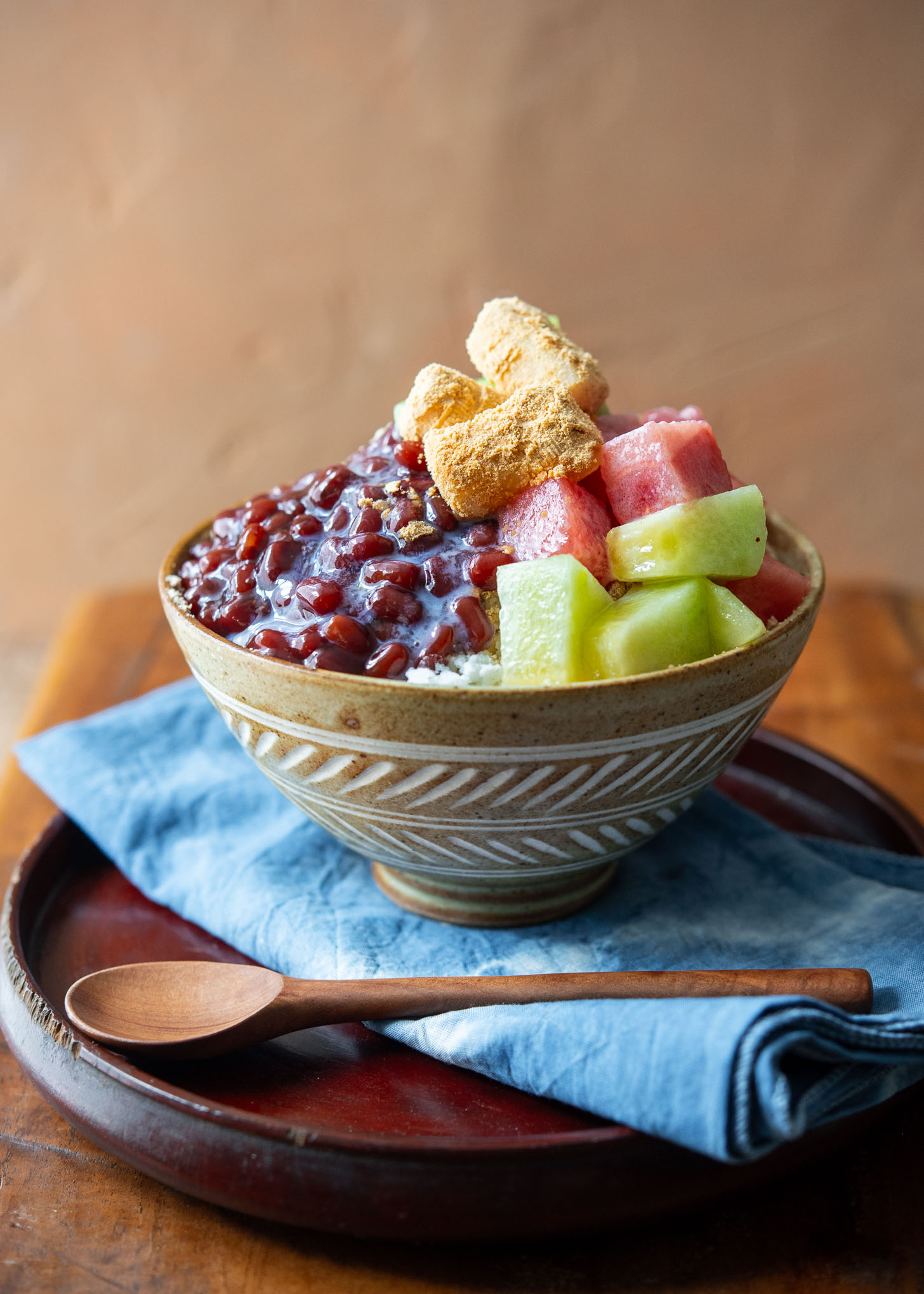
If bingsu is a category, patbingsu is its founding member. "Pat" (팥) means red beans, specifically sweetened adzuki beans cooked slowly with sugar and a pinch of salt until they are tender and glossy. Patbingsu pairs those beans with shaved milk ice, a generous drizzle of sweetened condensed milk, and small chewy rice cake pieces called bingsu tteok. Many Korean families also add a sprinkle of misugaru, a nutty multigrain powder, and a few fresh fruit slices for color.
It is the version every Korean kid grows up with, and the benchmark by which every other bingsu is judged. As Beyond Kimchee describes it, "every spoonful gives you something different: creamy ice, chewy bites, sweet beans, and fruit." Make it well at home and you will understand why patbingsu has survived more than a century of dessert trends without losing its crown.
Inside the Bowl: Pat, Tteok, and Misugaru
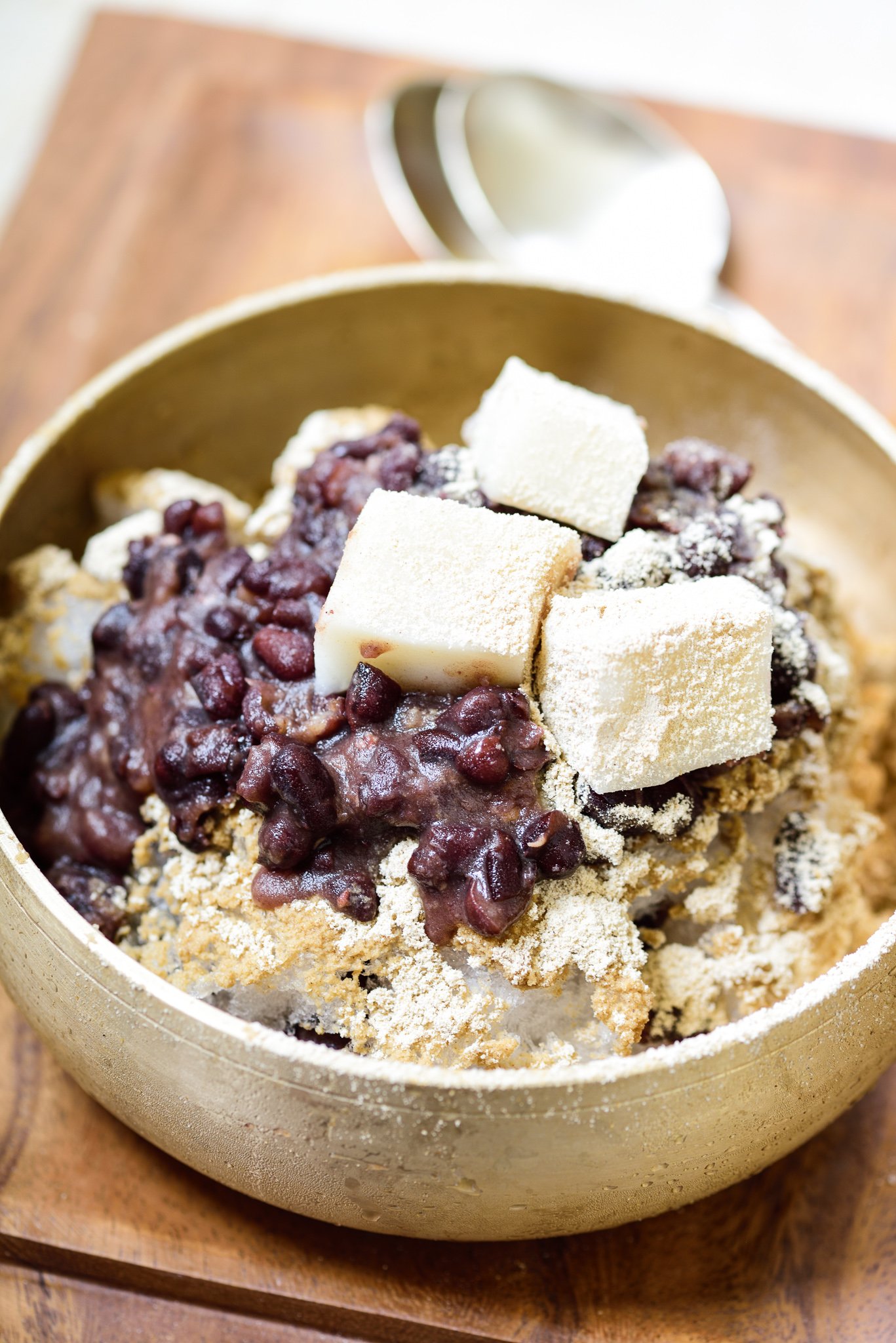
Three ingredients define traditional patbingsu. The first is the pat itself: whole sweet red beans that hold their shape, not red bean paste. A good cook simmers them low and slow, sweetening to taste, so they sit on top of the ice like little jewels. Korean Bapsang's classic recipe keeps the toppings purposely simple, layering just red beans, condensed milk, and rice cake so the snowy texture of the ice can shine.
The second is the rice cake. Injeolmi (인절미) is a chewy glutinous rice cake traditionally dusted in roasted soybean powder, and its mild, nutty flavor pairs beautifully with the cold ice. The third is misugaru, a roasted grain powder made from rice, barley, beans, and sesame, which adds a toasty depth that keeps patbingsu from feeling one-note sweet.
Mango Bingsu: The Fruit-Forward Favorite
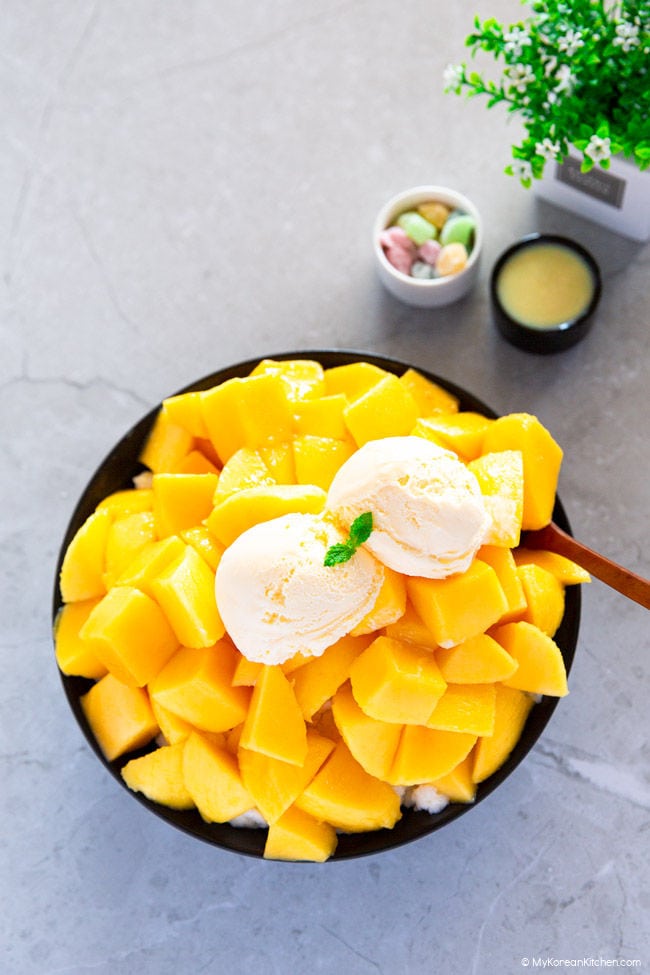
If patbingsu is the original, mango bingsu (망고빙수) is the most photographed remix. A mound of sweet Korean apple mango (a juicy variety similar to the Ataulfo or honey mango) is piled over milk shaved ice, finished with mango puree and a scoop of vanilla ice cream. Sulbing, Korea's most famous bingsu chain with more than 500 stores, helped turn mango bingsu into a nationwide obsession in the 2010s. Today, Seoul's luxury hotels compete each summer to outdo each other with versions topped with edible gold leaf, mango pearls, and mascarpone, with the Four Seasons Hotel Seoul's bowl reaching 149,000 won per serving.
At home, the dessert is much simpler. As My Korean Kitchen's Sue Pressey notes, all you need is frozen sweetened milk, a rolling pin or food processor, fresh mango, and a drizzle of condensed milk. The result is a bowl that tastes like summer in Jeju.
Injeolmi Bingsu and Other Modern Korean Twists
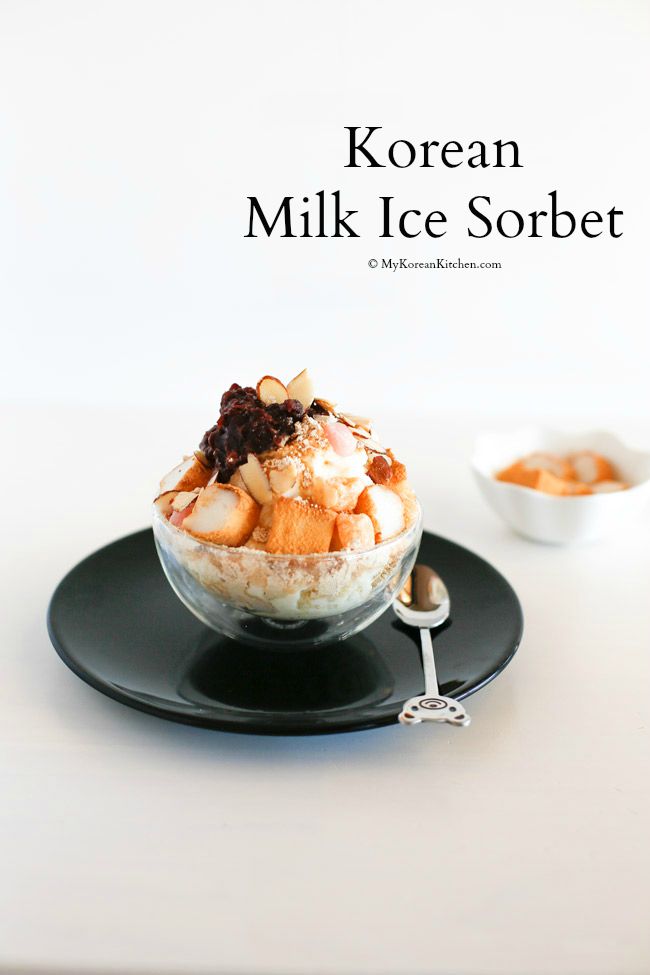
Once shop owners discovered that milk ice could carry just about any flavor, the variations multiplied. Injeolmi bingsu (인절미빙수) is one of the most beloved modern versions, swapping the bright fruit for nutty roasted soybean powder, chewy glutinous rice cake, almond flakes, and a quiet pool of red bean paste. The flavor is comforting, toasty, and slightly old-fashioned, the bingsu equivalent of a warm hug on a hot day.
Beyond injeolmi, Korean cafés now serve matcha bingsu thick with green tea powder, strawberry bingsu in winter when Korean strawberries are at their peak, melon bingsu served in a hollowed-out melon shell, and even savory-sweet corn or tomato bingsu. The format is so flexible that almost any topping works, as long as the ice underneath stays fluffy.
Bingsu's Global Cousins: A World Tour of Shaved Ice
Korea is far from the only country with a love affair with shaved ice. Travel across Asia and you will find delicious cousins of bingsu, each shaped by local fruit, sweeteners, and cultural memory. (Note: all of the dish names below translate to "shaved ice" in their respective languages, except halo-halo.)
Japan: Kakigori (かき氷). Japan's answer to bingsu is fluffy snow-like ice traditionally shaved from pure mineral-water blocks. It is doused in syrups ranging from strawberry and matcha to condensed milk, and a sub-variety called shirokuma (白熊, "polar bear") originated in Kagoshima when one café arranged the toppings into a little bear face. Kakigori is lighter and more delicate than bingsu, with the syrup, not the toppings, doing most of the talking.
Taiwan: Xue Hua Bing (雪花冰). Translated as "snowflake ice," this Taiwanese dessert is made by shaving thin layers off a block of frozen sweetened milk. The result looks coarse and spiky, but it melts instantly on the tongue. Flavors range from plain condensed milk and green tea to taro and mango, often topped with fresh fruit, boba, or sweet syrup. The texture is the closest international cousin to Korean snowflake bingsu.
Philippines: Halo-Halo. The name halo-halo literally means "mix-mix" in Tagalog, and the dish lives up to it. A glass of shaved ice gets layered with ube ice cream, sweetened beans, jackfruit, sweet potato, leche flan, evaporated milk, and a rainbow of jellies. It is denser and creamier than bingsu, more of a spoonable parfait than a snowy mountain, but it shares the same spirit of celebration.
Malaysia: Ais Kacang (ABC). Also known as ABC (ais batu campur, or "mixed ice"), this Malaysian street-food classic delivers fluffy ice topped with palm sugar syrup, sweet corn, agar-agar jellies, red beans, peanuts, and cendol (green pandan jelly). Kacang means "nut" in Malay, hinting at the roasted peanuts that often crown the bowl. It is the most playful version of the bunch.
How to Enjoy Bingsu at Home
You do not need a 100,000-won hotel reservation to enjoy bingsu. The cheat-code version takes only a freezer, a ziplock bag, and a rolling pin: freeze sweetened milk flat in a bag, smash it into snowy flakes, then pile it into a chilled bowl with whatever toppings make you happy. An inexpensive ice shaver or even a food processor will get you closer to the café texture. Beyond that, the toppings are up to you. Pile on red beans and rice cake for classic patbingsu, fresh mango and condensed milk for the summer hit, or matcha powder and mochi for a green tea twist.
However you build it, bingsu is best eaten the second it hits the table, when the milk ice is still soft and the fruit is still cold. The next time the heat refuses to break, skip the ice cream aisle and try a Korean shaved ice bowl. You may never go back.
Explore Korean Snacks with Daebak
Love Korean food? Get authentic Korean snacks and ramen delivered straight to your door with the SnackFever Box by Daebak.


