


Table of Contents
Hanji (한지) is Korea's traditional handmade paper, crafted from the inner bark of the paper mulberry tree for more than 1,500 years. Often described in the old saying that silk lasts 500 years but hanji survives a thousand, this remarkable paper has shaped Korean books, homes, clothing, and art across the Three Kingdoms, Goryeo, and Joseon eras. Today, hanji is enjoying a quiet renaissance through fashion, design, and global heritage recognition efforts.
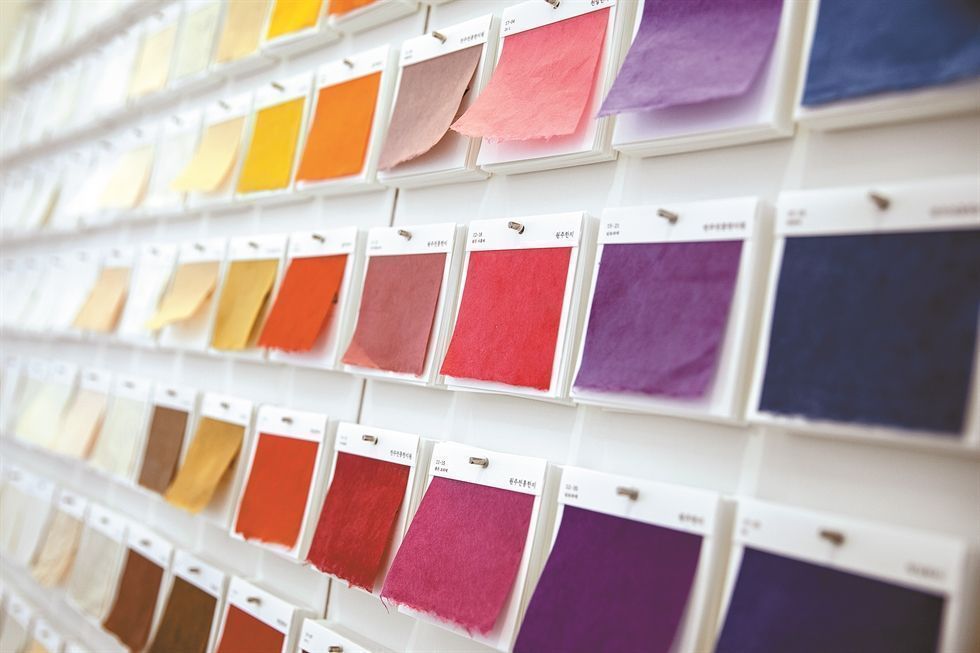
What Is Hanji?
Hanji is Korean traditional paper made from dak, the inner bark of the paper mulberry tree (Broussonetia papyrifera), which grows well on Korea's rocky mountainsides. The fibers are mixed with water and a natural mucilage from the hibiscus root, then formed into sheets on a bamboo screen. Unlike many other handmade papers, hanji is shaped by moving the screen in a side-to-side and front-to-back motion, which interlocks the fibers in multiple directions. The result is a sheet that is exceptionally strong, breathable, and resistant to aging, with finished paper often pounded again to compress the fibers and create a smooth, dense surface.
A 1,500-Year Tradition
Papermaking arrived on the Korean peninsula during the Three Kingdoms period, and by the Goryeo Dynasty (918 to 1392) Korean hanji had become so refined that it was prized in China and known as gyeryeonji, regarded as some of the finest paper in East Asia. During the Joseon Dynasty (1392 to 1910), hanji permeated daily life through books, calligraphy, fans, lanterns, tobacco pouches, and even armor reinforced with layers of lacquered paper. International seminars and conservation specialists from the National Library of Florence and the National Archives of France have praised hanji for its dimensional stability, mechanical strength, and surface fineness, qualities they consider rare among the world's traditional papers.
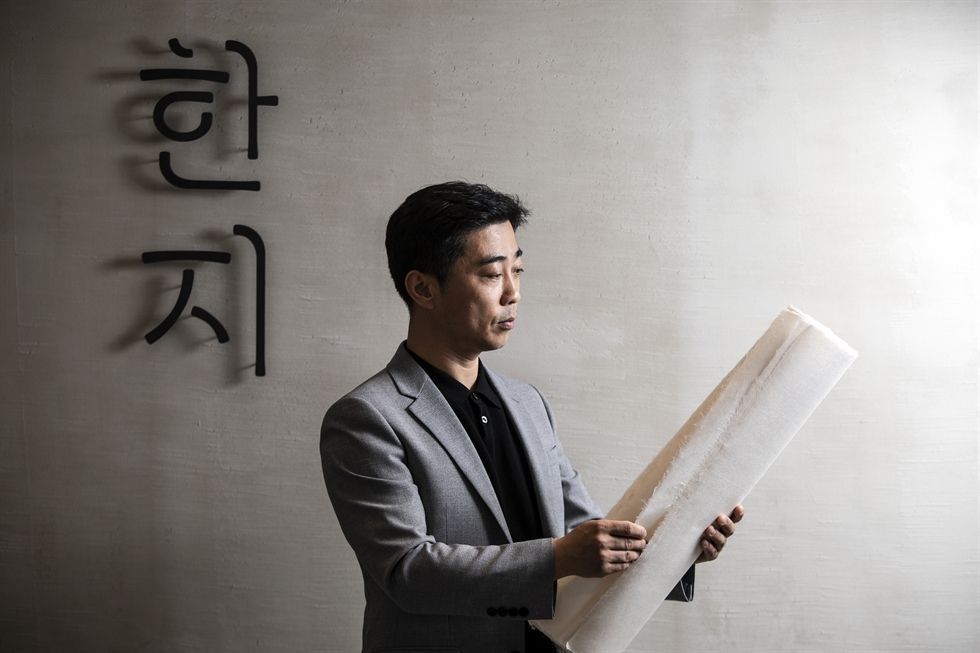
How Hanji Is Made
The traditional hanji-making process is often called baekji, a reference to the roughly one hundred steps required to complete a single sheet. Masters harvest paper mulberry branches between November and February, then steam them for around eight hours so the outer bark can be peeled away. The inner bark is boiled in lye made from plant ash, washed in clean running water, and pounded by hand or with wooden mallets until the fibers separate into a soft pulp. The pulp is mixed with water and hibiscus mucilage, scooped onto a bamboo screen using the distinctive crossed motion, and then drained, pressed, and dried sheet by sheet on heated wooden boards. The entire process can take weeks and depends as much on the season, water, and weather as it does on the maker's skill.
Regional Hanji Centers: Jeonju, Andong, and Wonju
Three cities are widely recognized as the heart of Korean hanji. Jeonju has been a major producer of high-quality hanji for more than a thousand years and is home to the Jeonju Traditional Hanji Center and the Jeonju Hanji Museum, where visitors can see calligraphy paper, ochre and charcoal hanji, and ancient manuscripts. Andong, in North Gyeongsang Province, produces around 60 different kinds of hanji using mulberry from nearby mountains and clean local water, and the Andong Hanji workshop near Hahoe Folk Village welcomes visitors for factory tours and paper-making experiences. Wonju in Gangwon Province leads the modern hanji revival through the Wonju Hanji Theme Park and the annual Wonju Hanji Festival, founded in 1999 to promote hanji to global audiences.

Traditional Uses: From Doors to Dolls
For centuries hanji was woven into nearly every part of Korean daily life. Layered over wooden lattice frames, it became changhoji, the soft translucent paper covering the doors and windows of hanok houses that lets light filter through while insulating against cold winters. Thicker jangpanji served as a durable, oil-treated floor covering on heated ondol floors. Calligraphers and ink-wash painters relied on hanji for its absorbency and longevity, while artisans crafted hanji fans, lanterns, boxes, jewelry chests, and the famous hanji dolls dressed in tiny hanbok. The same paper could even be twisted into cords and woven into baskets, mats, and clothing, an entire material culture built around a single sheet.
Hanji in Modern Korea
Hanji is no longer just a heritage craft. Contemporary designers and artists are reintroducing it as a modern material for fashion, interiors, lighting, and sculpture. Hanji artist Kim Hyun Joo, who has exhibited at Maison and Objet in Paris and major fairs in Frankfurt, London, and New York, builds three-dimensional fans, reliefs, and installations using only dak fibers. Studios in Seoul have used hanji to line the walls of the Lemaire flagship store, while other brands incorporate it into calendars, posters, and packaging. Internationally, the Louvre Museum in Paris and the Library of Congress in Washington have used hanji to restore precious historical documents, signaling its place in the world's most demanding conservation labs.

UNESCO Heritage and the Future of Hanji
Hanji-making is already designated as a National Intangible Cultural Heritage in Korea, and masters who have devoted their lives to the craft are recognized with the honorary title of hanjijang. Korea has submitted hanji for inscription on UNESCO's Representative List of the Intangible Cultural Heritage of Humanity, joining Japanese washi and Chinese xuan paper, both of which have already been recognized. The stakes are high, as the number of traditional hanji workshops has dropped from more than one hundred to around twenty over the last quarter century, and many masters worry about how few young apprentices remain. UNESCO recognition is seen as a way to renew global interest, attract funding, and inspire a new generation of papermakers.
Where to Experience Hanji-Making in Korea
Travelers can step inside hanji culture at several hands-on venues. The Jeonju Traditional Hanji Center offers classes where visitors form their own sheets and imprint traditional patterns, while the nearby Jeonju Hanji Museum tells the story of paper through artifacts, tools, and ancient books. Andong Hanji, at the entrance of Hahoe Folk Village, runs short factory tours and craft programs for hanji lamps and handmirrors. The Wonju Hanji Theme Park gathers history rooms, exhibition halls, and outdoor light installations such as Hanji Fantasia in a single complex, and the Hanji Culture and Industry Center in Seoul's Bukchon neighborhood displays hundreds of samples and contemporary applications collected from workshops nationwide.
Explore More of Korea with Daebak
Want to bring a little piece of Korea into your life? The Daebak Box is packed with the best Korean snacks, ramen, and cultural goodies delivered monthly to your door.


