


Table of Contents
A Korean funeral, called jangrye (장례), is a quiet, structured occasion built around the comfort of the bereaved family. Most modern Korean funerals last three days, take place at a hospital funeral hall rather than a private home, and weave together Confucian roots, Buddhist or Christian elements, and present-day social customs. This guide walks international readers through what to expect, how to behave as a guest, and how the practice is changing as Korea ages.
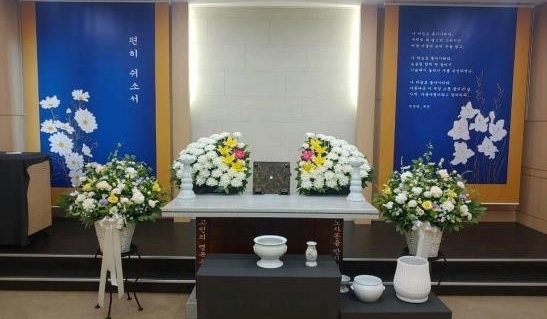
Samiljang: The Three-Day Funeral
The standard Korean funeral is known as samiljang (삼일장), meaning a three-day funeral. Day one is typically devoted to ipgwan (입관), the careful preparation and encoffining of the body, along with notifying relatives and setting up the altar. Day two is the main day of mourning, when most visitors arrive to pay respects, leave condolence money, and share a meal with the family. Day three is balin (발인), when the body is taken from the funeral hall to the crematorium or burial site for the final rites. Many families find that the three-day window also becomes a rare reunion, a time to mourn together and reconnect.
Hospital Funeral Halls (Jangryesikjang)
The overwhelming majority of Korean funerals today are held at a jangryesikjang (장례식장), a dedicated funeral hall usually attached to a hospital. Each hall consists of an altar room with the portrait of the deceased and a much larger adjoining reception area where guests are served food around the clock until the funeral concludes. The shift from private home to institutional setting happened after liberation in the mid 20th century, as urbanization and apartment living made home-based wakes impractical. Funeral halls now offer almost every service in one place, from shroud rental and altar flowers to coordinator support for grieving families.
Mourning Attire: Sangbok and Modern Black
Traditional Korean mourning dress is sangbok (상복), with strict Confucian rules that varied by the mourner's relationship to the deceased. White, considered an unadorned base color symbolizing grief and purity, was the historic standard, and a son might wear an undyed hemp robe for an extended mourning period. In modern Korea, immediate family at the funeral hall still wear a hemp armband and a simple black hanbok or suit version of sangbok, while ordinary guests dress in a plain dark suit, white or neutral shirt, and dark socks. Many funeral halls require guests to remove their shoes, so socks or stockings are essential, and exposed skin or bright colors are considered inappropriate even in summer.
The Sangju: The Chief Mourner
The sangju (상주), or chief mourner, leads the funeral and receives every visitor at the altar. Traditionally this role fell to the eldest son or grandson of the deceased, with daughters and daughters-in-law taking on the food preparation and guest service behind the scenes. Modern Korean families have softened these gendered expectations. It is now common for daughters to share the role of chief mourner, and many families dispense with the strictest Confucian rules in favor of arrangements that reflect their actual relationships. The sangju, identifiable by the hemp armband and black ribbon, returns bows from each guest and accepts condolences on behalf of the family.
Condolence Money: The White Envelope
Guests at a Korean funeral are expected to bring jouigeum (조의금), condolence money, in a plain white envelope. The envelope carries the guest's name and relationship to the family, and is dropped at a designated desk near the entrance rather than handed directly to the bereaved. For acquaintances and ordinary colleagues, 50,000 won is a typical amount, while closer friends and senior colleagues commonly give 100,000 won or more. The custom is called buJo, literally "helping out," and originates in old community traditions of sharing labor and resources at major life events. Salaried Koreans on average spend over a million won a year on weddings and funerals combined.
Bowing at the Altar and Offering Flowers
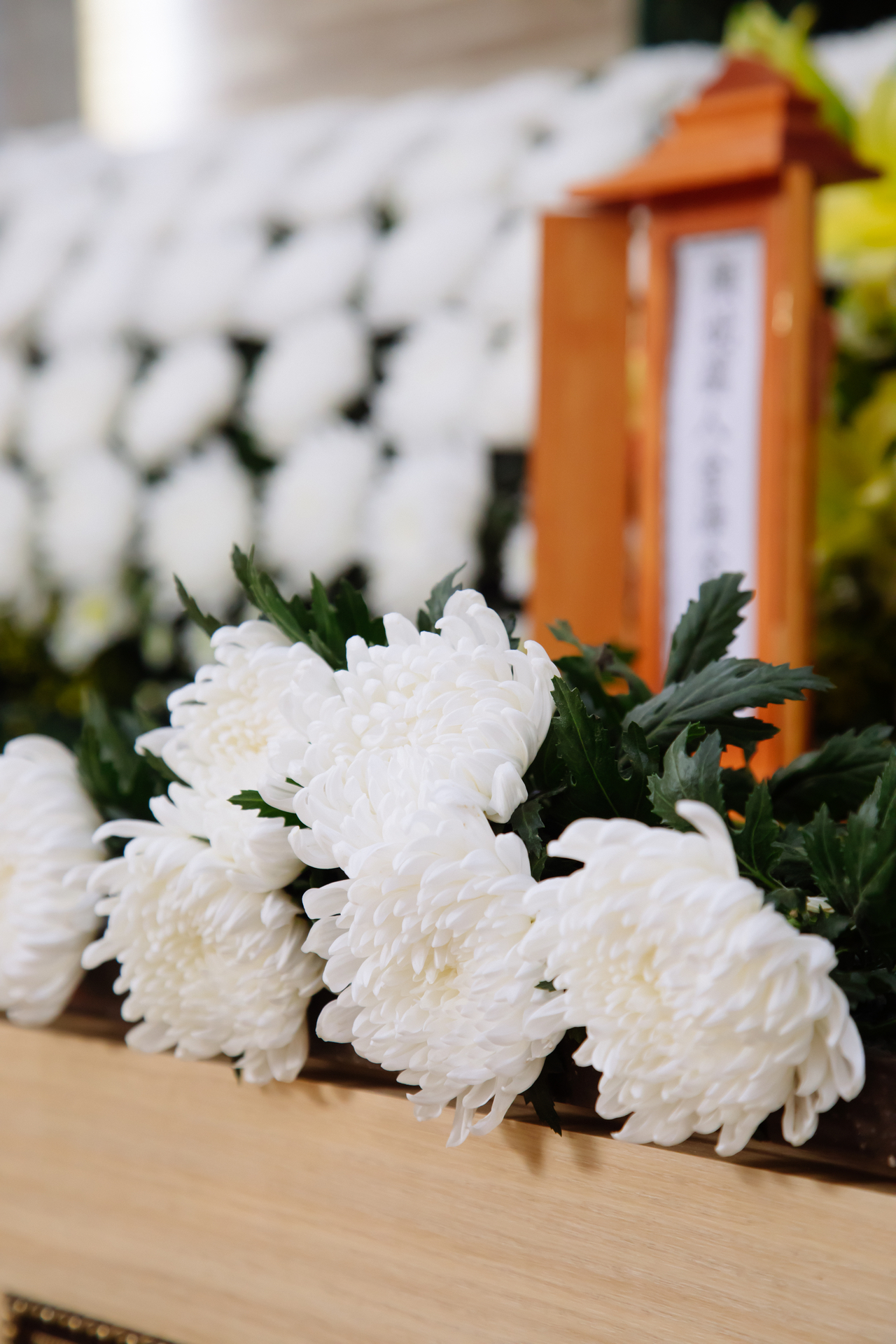
Inside the altar room, the visitor approaches the portrait of the deceased and either lays a single white chrysanthemum on the altar with the blossom facing the portrait, or lights an incense stick at the small table in front. White and yellow chrysanthemums are the standard funeral flowers in Korea, symbolizing purity, grief, and sincerity. After offering the flower or incense, the visitor either kneels and bows twice toward the altar or stands in silent respect. The visitor then turns to the chief mourner, exchanges a single bow, and quietly withdraws. Older mourners may take a few steps back before turning away, a traditional sign of continued respect.

Buddhist, Christian, and Confucian Services
Korean funerals follow the religious tradition of the deceased and the family. Confucian-style services, the historical default, center on the altar, formal bows, and ancestral ritual food. Buddhist funerals add chanting by monks, sutra recitation, and the burning of incense, and are often followed by the 49jae (49재), a memorial held forty-nine days after death because Buddhists believe the spirit lingers for that period before its next rebirth. Christian funerals, whether Protestant or Catholic, replace the altar bows with hymns, prayer, and a sermon, and condolence is offered through a brief greeting rather than a kneeling bow. In every case, the structure of three days at a funeral hall and the offering of condolence money remain consistent.
Cremation, Charnel Houses, and Tree Burials
The most dramatic shift in modern Korean funeral practice is the move from burial to cremation. The national cremation rate, under 20 percent in the mid 1990s, passed 90 percent in the mid 2020s. Most cremated remains are placed in a napgoldang (납골당), or charnel house, a multi-tiered indoor columbarium where urns rest in small lockers that families can visit. Newer options include sumokjang (수목장), tree burials in which ashes are buried at the base of a chosen tree, and natural burial in gardens of shrubbery with only a small name plaque. Surveys now find natural burial preferred by roughly three in ten Koreans, with charnel houses and family burial plots close behind.

Jesa: Annual Ancestral Rites
The relationship with the deceased does not end at the funeral. Korean families traditionally hold jesa (제사), an ancestral memorial rite, on the anniversary of the death and on major holidays such as Seollal and Chuseok. A jesa table, the jesasang, follows Confucian arrangements with rice, soup, wine, fruits, namul vegetables, and dried fish placed in set positions. The descendants bow, pour wine, and offer food as if the ancestor were present. Modern Korean households increasingly simplify the rite, with the influential Sungkyunkwan academy publicly suggesting that nine dishes are enough and that labor-intensive jeon pancakes are not strictly required. A 2025 Gallup survey found just four in ten Koreans still plan to perform a memorial rite, down sharply from 80 percent two decades earlier.
Funeral Hall Meals: Yukgaejang, Jeon, and Soju
Visitors at a Korean funeral hall are almost always served a modest meal. The classic dish is yukgaejang, a spicy beef and scallion soup traditionally believed to ward off bad spirits with its red color and warming heat. The set meal also includes white rice, several types of jeon (savory pancakes), kimchi, and other simple banchan. Modest soju drinking is customary, though never required, and conversation stays low and respectful. The meal is one of the most important social functions of the funeral, a way for the bereaved to thank visitors and for guests to spend time supporting the family beyond the brief bow at the altar.
The Rise of Family-Only and No-Viewing Funerals
As Korean households shrink and social networks become more individualized, family-only funerals (gajokjang, 가족장) and so-called no-viewing funerals are growing rapidly. A standard three-day funeral with 150 guests can cost up to 20 million won, while a quiet no-viewing version typically costs 2 to 3 million. Industry providers report that the number of no-viewing funerals they handle has doubled year over year. Sociologists describe the shift as a move away from funerals that performed the family's social standing toward ones that allow real grief in a smaller circle. The traditional structure is not disappearing, but it is making room for quieter alternatives.
How to Behave as a Foreign Guest
If a Korean friend or colleague invites you to a funeral, attending is a meaningful gesture, and the etiquette is forgiving for foreigners. Dress in plain dark clothing, bring a white envelope with 50,000 to 100,000 won inside, write your name on the front, and drop it at the reception desk. At the altar, follow the lead of the person in front of you: take a chrysanthemum or light incense, stand in silent respect or bow your head, then turn to the chief mourner and offer a brief bow with both hands at your sides. A short phrase such as samga gomyeong bilmnida (a customary expression of condolence) is welcome, but a sincere silent bow is enough. Stay for a small meal if invited, eat quietly, and leave when you feel the family is ready.
A Tradition Quietly Evolving
Korean funeral culture today is a careful balance of inherited form and present-day life. The three-day samiljang, the white envelope, the chrysanthemum on the altar, and the bowl of yukgaejang have all survived urbanization, religious change, and the move from home to hospital. At the same time, cremation has replaced burial, tree burials and charnel houses are reshaping how Koreans remember the dead, and family-only and no-viewing funerals are normalizing quieter ways to grieve. Understanding these customs is one of the most respectful ways an international guest can support a Korean friend during one of life's most important moments.
Explore More of Korea with Daebak
Want to bring a little piece of Korea into your life? The Daebak Box is packed with the best Korean snacks, ramen, and cultural goodies delivered monthly to your door.


