


Table of Contents
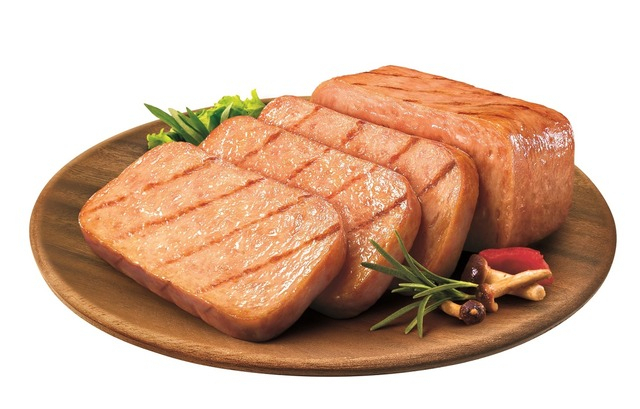
In most of the world, Spam is the punchline of a wartime ration joke. In South Korea, it is wrapped in glossy black gift boxes, stacked into towers at Lotte Mart, and handed over with both hands during Chuseok. Korea is the second largest Spam consumer on earth after the United States, and the canned pink loaf is treated as a genuine premium gift, a pantry hero, and a comfort food worth crying over in a K-drama flashback.
How Spam landed in Korea
Spam was invented by Hormel Foods in Minnesota in 1937 and shipped overseas as a US military ration during World War II. It reached the Korean peninsula in the 1950s with American troops during the Korean War, a time when civilian food supplies were almost nonexistent. Cans that leaked out of US bases, sometimes via the black market near Uijeongbu, became one of the only sources of meat protein many Korean families could find. That scarcity wrote the first chapter of the story: Spam was not cheap junk meat in Korea, it was rare American beef in a tin.
CJ CheilJedang and the rise of Korean Spam
The product went mainstream when CheilJedang, now CJ CheilJedang, signed a technical partnership and production licensing deal with Hormel Foods in 1986 and began producing Spam domestically the following year. CJ did three things that changed Korean food history. It ground the pork finer (3mm instead of Hormel's 4mm) for a smoother texture, removed the starch to dispel any cheap-ham associations, and added a one-day low temperature aging step at its Jincheon factory in Chungbuk. The result is a slightly less salty, denser, more savory loaf that Korean palates prefer to the American original.
Why Spam became a Chuseok and Seollal gift
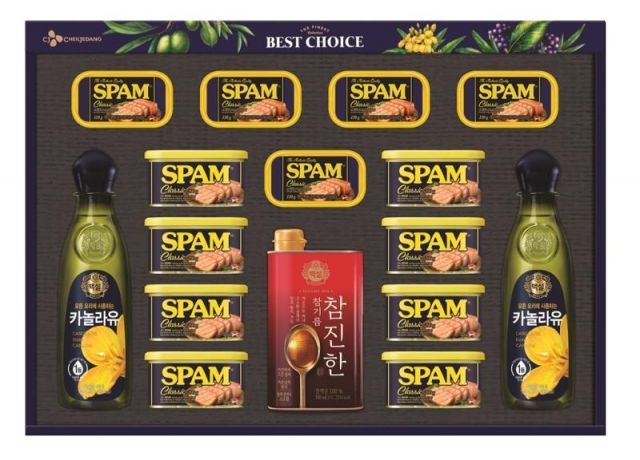
Spam emerged as a popular holiday gift during the Asian financial crisis of the late 1990s, when families needed an affordable but still impressive alternative to hanwoo beef sets and fruit baskets. The image stuck. Today, gift sets account for roughly 60 percent of CJ CheilJedang's annual Spam sales, with the harvest festival Chuseok and the lunar new year Seollal driving the bulk of demand. Spam annual sales reached 490 billion won (about US$370 million) by 2021, and cumulative units sold passed 1.9 billion cans by 2023, the equivalent of around 40 cans for every person in Korea.
A typical gift box on Gmarket runs from under 20,000 won to over 120,000 won. The most popular version is a nine-tin set at about 30,000 won, while an upmarket black label pack with six cans of Spam and two bottles of Andalusian olive oil sells for over 90,000 won (around US$80). Limited editions like the gold-bar Spam and the Supermoon collaboration push the luxury framing even further.

Budae jjigae: the most famous Korean Spam dish
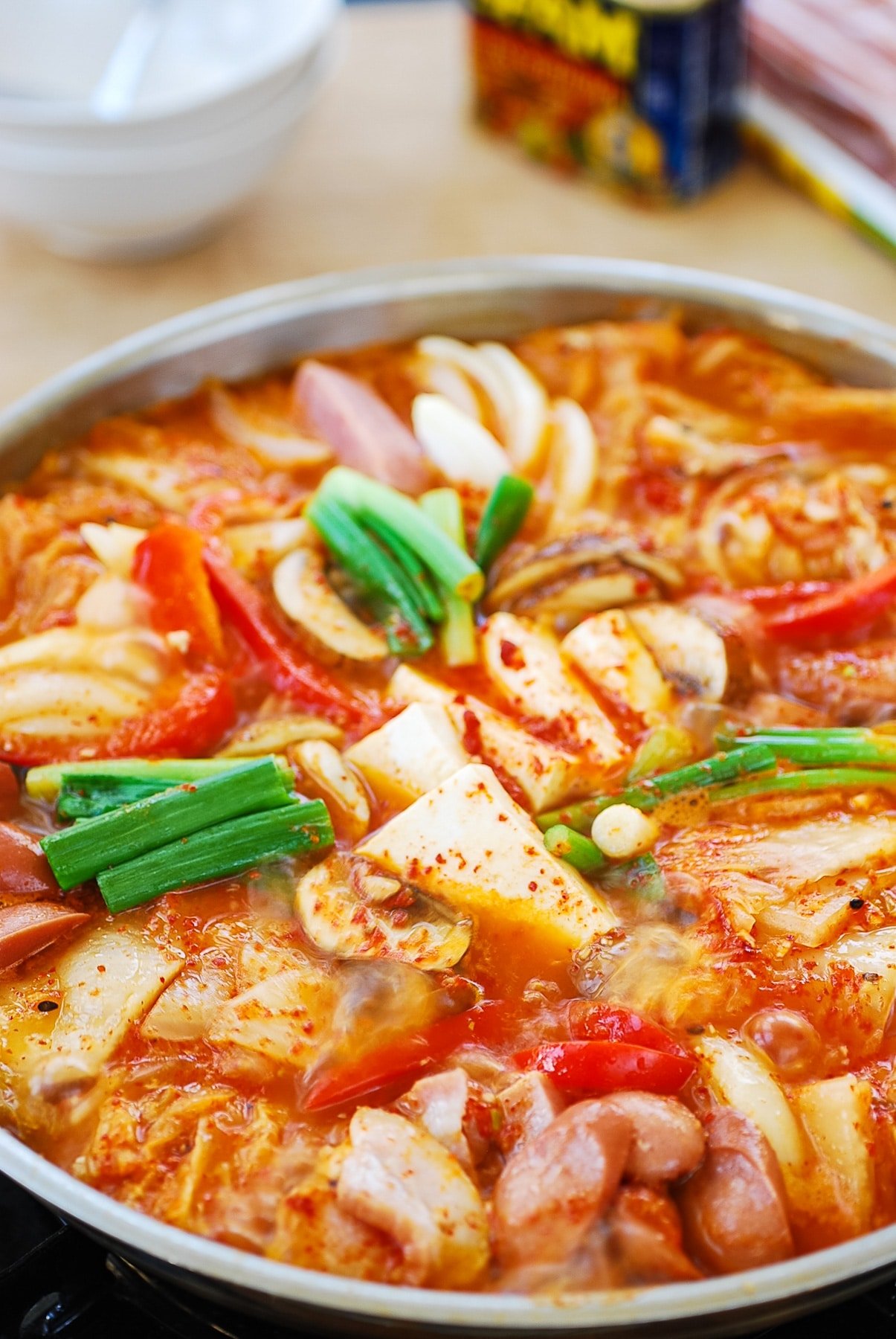
Budae jjigae, or army base stew, is the dish that most directly traces back to Spam's wartime arrival. In the 1950s, a fishcake stand owner in Uijeongbu (just outside Seoul, where US bases were stationed) named Heo Gi-suk reportedly started stir frying and then stewing Spam, hot dogs, bacon, and ham smuggled from the bases together with kimchi, gochugaru, and lard. From that improvised survival meal grew one of Korea's most loved comfort stews, now eaten with American cheese slices, instant ramyeon noodles, baked beans, and tteok in a bubbling shared pot.
Spam in everyday Korean cooking
Beyond budae jjigae, Spam is everywhere in Korean home cooking. Spam kimchi fried rice (Spam kimchi bokkeumbap) pairs the fatty salt of pan crisped Spam with the funk of aged kimchi and a runny fried egg. Spam mari kimbap and Spam musubi style rolls wrap pan fried Spam strips in seasoned rice and gim seaweed for dosirak lunch boxes. A single slab of Spam fried until the edges caramelize, laid over hot white rice with a sunny side up egg, is one of the most beloved everyday meals in the country, sometimes called Spam deopbap. Spam also shows up as a topping in bibimbap variations and as a side of grilled slices alongside banchan.

Spam on K-dramas and in pop culture
The cultural status of Spam was sealed by Reply 1988 (Eungdaphara 1988), the hit tvN drama that turned 1980s Ssangmun-dong nostalgia into a national obsession. In episode 10, Jung-bong returns from ten days at a vegetarian temple retreat, sneaks into his room, and starts scooping Spam directly out of the can with a spoon while his mother screams about her expensive American ham going missing. The scene is funny because every Korean viewer recognized the truth in it: Spam was the can you saved for guests, for holidays, for special rice bowls, not for a hungry son to eat solo. Mukbang creators on YouTube now build entire videos around grilled Spam and white rice, and Spam-themed merchandise from CJ regularly trends on Korean social media.
Spam gift etiquette in Korea
Giving Spam in Korea is a low risk, high signal move. Sets in the 30,000 to 50,000 won range are appropriate for coworkers, neighbors, and in-laws. Premium 80,000 to 120,000 won sets with multiple oils, gim, or tuna cans are saved for bosses, parents, and important business partners. Hand the box over with both hands, ideally in its original shopping bag, and never re-gift a set that has obviously been opened. Korean second hand apps like Joonggonara and Karrot Market are full of unopened Spam sets being resold for cash, which is socially accepted as a savvy holiday move rather than a snub to the original giver.
Where to buy Korean Spam outside Korea
If you want to taste the CJ CheilJedang version rather than American Hormel Spam, look in the Korean grocery aisle. In the US, H Mart, Hannam Chain, Zion Market, and Galleria Market regularly stock CJ Spam Classic and Spam Lite, plus the long Spam Gimbap Ham bar. Amazon sells multi packs that ship from Korea, and UK and EU buyers can find it at Oseyo, Korea Foods, and online Korean grocers. Pick up a can, a brick of fresh kimchi, a bowl of short grain rice, and a single egg, and you have the entire Korean Spam story in one meal.
Explore Korean Snacks with Daebak
Love Korean food? Get authentic Korean snacks and ramen delivered straight to your door with the SnackFever Box by Daebak.


