


Table of Contents
May 4, 2019. The Rose Bowl in Pasadena. BTS pulls up to 60,000 seats and a stage rig that looked closer to a Coldplay tour than a K-pop arena production. That night Big Hit (not yet HYBE) effectively stopped pretending its biggest act was still in the arena-tour bracket. The Love Yourself: Speak Yourself World Tour was the bet that Korean pop could fill stadiums. Eight cities later, 976,283 tickets sold and $116.6 million in gross receipts, BTS came home to Jamsil Olympic Stadium in Seoul on October 26 to 29 for the three-night finale. If you were watching the Korean music industry that summer from the inside, you knew the ceiling had just moved.
Why Stadiums, Why Now: The Logic Behind the Upgrade
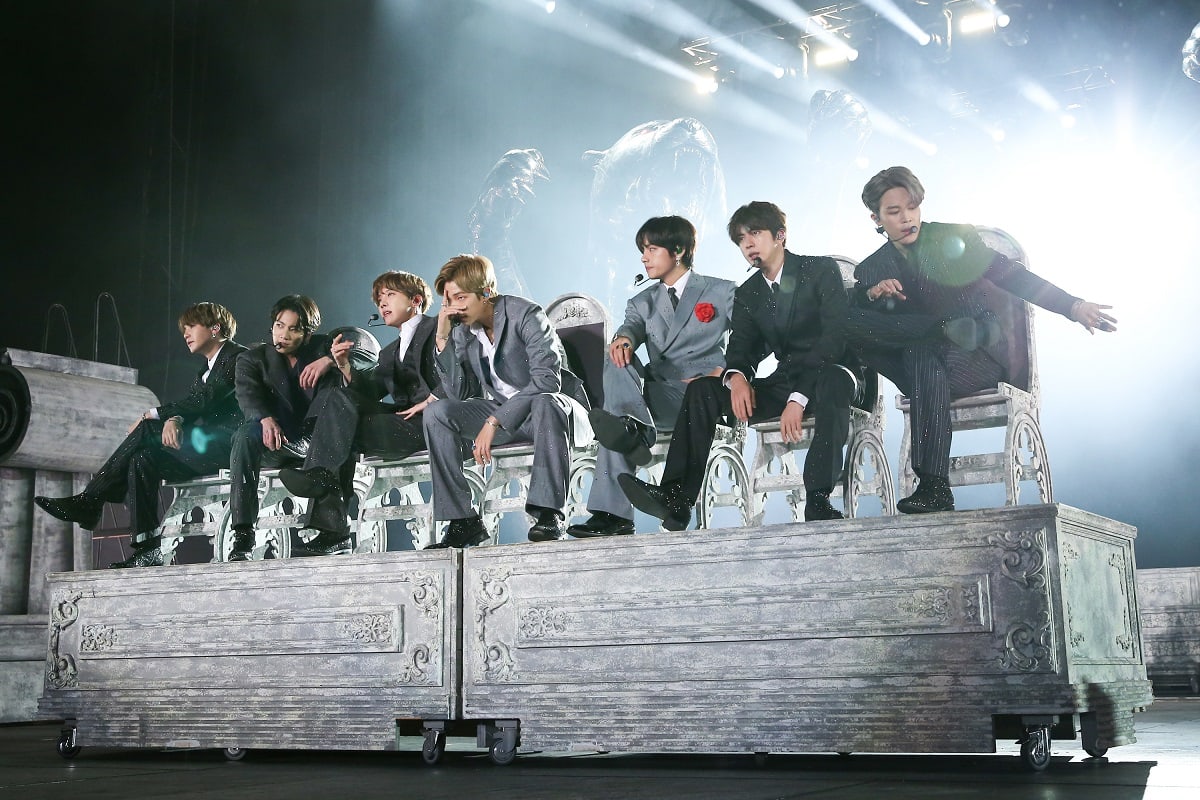
Speak Yourself was technically the 스타디움 stadium-class extension of the Love Yourself World Tour, the arena run that had wrapped earlier in 2019. From inside Korean entertainment, the decision to graft a stadium leg onto a still-active arena cycle was not normal practice. Most Korean labels (SM, JYP, YG) treat stadiums as a one-off victory lap, not a tour configuration. Big Hit pushed it the other way. They had pre-order data, ARMY's per-fan spend on Weverse merch, and three Love Yourself albums (Her, Tear, Answer) that had sequentially graduated each ceiling. The arena tour was selling out in minutes. Upgrading to stadiums was the only sane response, even though it meant burning roughly $3 to $5 million per show in production cost.
What makes that math interesting: every other major K-pop label was still optimizing for arena profitability. Stadium-class staging, including the LED video walls, the satellite stages, the pyrotechnics rigs, and the cross-stadium drone shows, is a margin killer at scale because the venue rental alone runs $1 million on the high end. Big Hit's calculus was different. They were not chasing margin on this tour. They were buying credibility. Once BTS were stadium-class proven, every promoter quote for the 2020 Map of the Soul tour came in at a different multiplier. That tour would have grossed close to half a billion if COVID had not killed it. Speak Yourself was the down payment.
Wembley: The Flex That Reframed K-Pop's Western Ceiling

June 1 and 2, 2019. Two nights at Wembley Stadium. About 114,000 fans across both shows. Tickets cleared in 90 minutes. BTS became the first Asian act to headline Wembley, and 12th act in the venue's history to sell out the stadium. If you want one moment that reframed what Korean pop's max-scale ambition looks like to a Western booking agent, this is it. Pick any 글로벌 진출 global-expansion case study from any K-content label and you will end up tracing back to this specific weekend.
The Wembley pick was not just about capacity. Wembley is the venue with the Queen 1985 Live Aid set, the Spice Girls 2008 reunion, the Take That farewells. Booking it is a piece of music-history positioning, not just a logistics call. Big Hit knew that the Western press would frame any Korean act selling out Wembley using the same vocabulary they used for The Rolling Stones or Adele. You do not get that headline by playing the O2. The choice was 콘서트 연출 concert curation as media strategy, and it worked. The BBC ran live segments. The Guardian sent reviewers. The Sunday Times treated the show like a culture pivot, not an entertainment booking.
Here is the bit Western press underplayed at the time: Wembley happened only 224 days after the UN General Assembly, where RM delivered the "Love Myself" speech that turned the album trilogy into a global soft-power story. The UN speech was the overture. Wembley was where Big Hit cashed it out commercially. That sequencing was not luck. The campaign manager at Big Hit who lined up UN September 2018 then Wembley June 2019 understood narrative arc the way a film distributor understands a theatrical window.
The Setlist Architecture: Why Korean Tours Rarely Build Like This

Twenty-two songs across two and a half hours, structured as a three-act emotional arc that mirrored the Love Yourself trilogy. Open with Dionysus, slide into the unit and solo songs in the middle (Singularity, Seesaw, Epiphany, Just Dance, Love, Serendipity), close with the IDOL into Mikrokosmos finale plus drone show. The setlist is the album narrative compressed into a live performance, the kind of artistic decision you usually see from a Western legacy act curating a career-retrospective tour, not a K-pop label running a 음반 판매량 album promo cycle.
Most Korean labels still build setlists as a greatest-hits jukebox. The logic is simple: maximize singalong density, minimize energy dips, optimize for fancam virality on each title track. That approach is engineered for short-form export, clips that travel on Twitter and TikTok after the show. Big Hit took the opposite read. They bet ARMY would sit through Trivia 起, Trivia 承, Trivia 轉, three rapper-led album cuts that had never been live performed before, because the Love Yourself story required them. The bet paid off because ARMY had already done the homework. The fandom mechanic where fans memorize the album conceptual frame before the tour starts is a Korean idol-system inheritance that Western labels still can't replicate cleanly.
One detail K-content insiders catch but Western reviewers usually miss: the live show was Big Hit's first major outing using AR (augmented reality) graphics inside the stadium production. RM's Trivia 承: Love had floating multilingual word art rotating around him on the big screen. That was an investment in concert production tech that would later show up across every HYBE-era group, from TXT to Le Sserafim. The 콘서트 연출 R&D budget ran through this tour first.
Production Economics: What $80 Million Actually Buys You

Twenty-two stadium shows. Conservative industry estimate of $3 to $5 million in production cost per show once you load in staging, lighting rig, video wall, satellite stages, pyro, drone show licensing, and the touring crew of 200-plus. That puts the total production budget for the tour somewhere in the $70 to $90 million range. By Korean industry standards that is unprecedented. The closest comparable was G-Dragon's 2017 Act III: M.O.T.T.E tour, which had a per-show staging budget closer to $1.2 million and ran arenas, not stadiums. Big Hit was not iterating on the Korean playbook. They were importing the Western legacy-act playbook (Coldplay, U2, Beyoncé) and translating it into Korean idol grammar.
The reason this is interesting from inside the industry: a $80M production budget is only servicable if you can clear $5M-plus per show in gross gate, and even then your margin is thin because per-show profitability gets eaten by venue, security, freight, and visa logistics. The math only works at this scale if your merch take is exceptional. ARMY's per-fan spend at Speak Yourself shows, between official tour merch plus the unofficial fan-merch ecosystem in the event zones plus Weverse Shop pickup, reportedly tracked at four to five times the industry average for a stadium tour. That's the asset Big Hit was monetizing. The ticket revenue was the headline. The merch and platform revenue was the actual business model.
The Event Zone Concept: How BTS Built the Concert-as-Festival Template

At the Seoul finale, the Jamsil Olympic Stadium grounds were not just a venue. They were a converted festival site: ID verification tents, an Official Merchandise Zone with a pre-distributed merch catalog (so the line moved fast), a Love Myself x UNICEF tent, a VT Cosmetics activation, a Lotte Duty-Free pop-up, a photo wall, a BTS VR photo studio, Bodyfriend massage chairs, an ARMY Bomb pairing station, food trucks running pizzas, churros, and grapefruit ade. Wait times were posted to the Weverse app in real time. This is the template every HYBE tour now runs, and arguably every major K-pop label has since copied at varying degrees of competence.
What makes the event zone matter as an industry move: it converted the show from a two-and-a-half-hour ticketed event into a six-to-eight-hour brand experience. That extends merch attach rate, sponsor activation value, fan content generation (every booth produces shareable photos), and Weverse engagement. ARMY would arrive at 11 AM for an 8 PM show, then loop the event zone three or four times before the doors opened. From an entertainment-marketing perspective, that is a massively more valuable customer than someone who shows up at 7:30 PM, walks in, and leaves at 11. Big Hit understood this two years before most K-pop labels caught on.
The Seoul Finale and What It Bought BTS Next
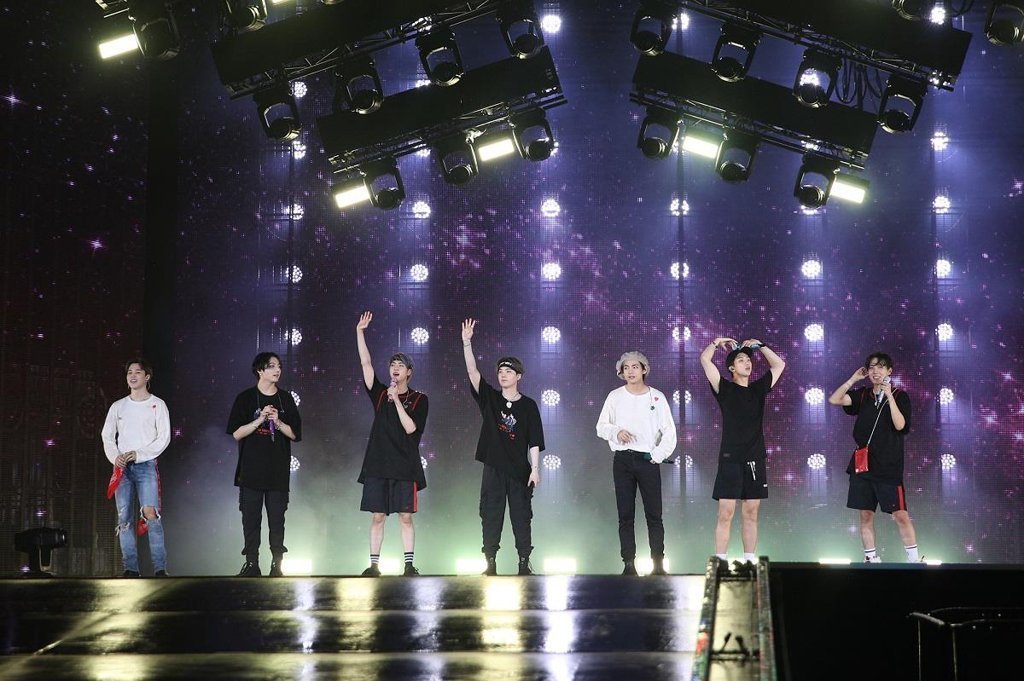
The Jamsil Olympic Stadium finale on October 26 to 29, 2019 closed the Love Yourself era. Three nights, around 130,000 fans, and a drone show recreating the BTS symbol over 300 drones above the stadium. The numbers when the tour wrapped: $116.6 million gross, 976,283 tickets, average $5.8 million and 48,814 tickets per show. Billboard ranked it the third-biggest tour of 2019 globally. For a Korean act, those numbers had no historical comparison. For most Western acts, those numbers placed them in the top tier of the year's touring economy.
The downstream consequence inside Big Hit was concrete and immediate. The label could now negotiate the 2020 Map of the Soul Tour as stadium-only from the start, with promoter advances at multiples of what the 2019 tour had cleared. The Map of the Soul Tour was projected to gross past half a billion before COVID-19 forced cancellation. The Permission to Dance Las Vegas residency in 2022, the Yet to Come in Busan special, the entire post-pandemic touring template for BTS, was built on the credibility BTS earned in 2019. That is what Speak Yourself actually bought. Not just $117 million in 2019 revenue, but the industry standing to play at this scale for the rest of their career.
What makes Speak Yourself the watershed moment, and not just one more BTS milestone: it forced the entire Korean music industry to upgrade its ambition. Within 18 months of the tour wrap, every major K-pop label was building stadium-class production capability internally. The next generation of acts (SEVENTEEN, NCT, ATEEZ, Stray Kids) inherited a touring grammar that did not exist in 2018. Speak Yourself rewrote what "K-pop on tour" meant, and the labels that paid attention got to ride the upgrade.
Want more deep-dive K-pop coverage and exclusive merch from your favorite groups delivered straight from Korea? The Daebak Box is our monthly K-pop and Korean culture subscription, packed with idol-themed snacks, limited goods, and items you will not find anywhere outside Seoul. Sign up and let Korea come to your doorstep, comeback season after comeback season.


