


Table of Contents
On a sweltering Korean summer day, few things are as deeply satisfying as a bowl of naengmyeon. Served ice cold, with noodles so long they have to be cut at the table, this dish is simultaneously refreshing, filling, and complex in flavor. Whether you prefer the clean, delicate broth of mul naengmyeon or the bold, fiery sauce of bibim naengmyeon, this is one of the most distinctive and beloved noodle dishes in all of Korean cuisine.
What Is Naengmyeon?
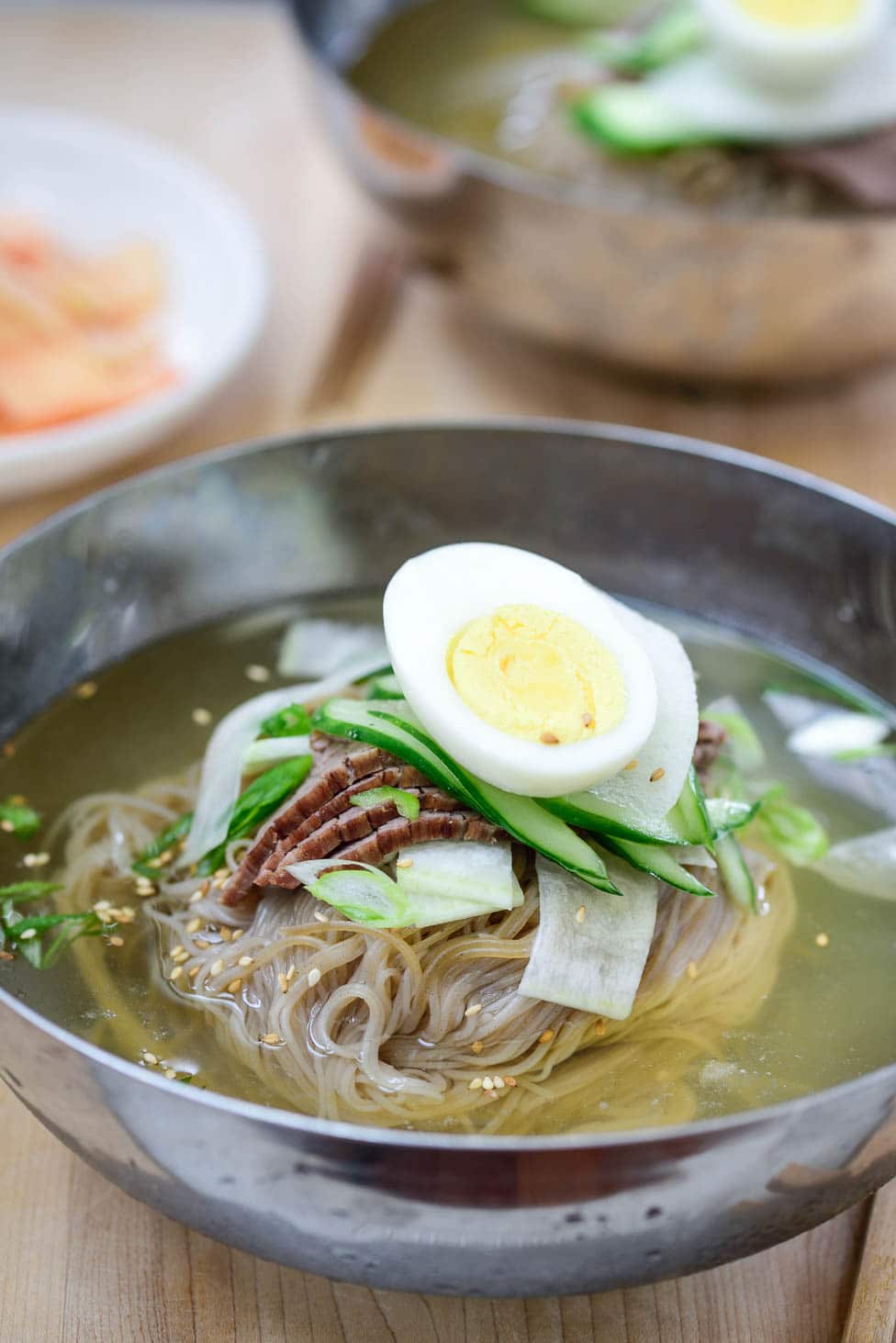
Naengmyeon (냉면) literally means cold noodles in Korean. It refers to a family of chilled noodle dishes made with thin, slightly chewy noodles, most traditionally made from buckwheat flour (memil) or a combination of buckwheat and sweet potato or arrowroot starch. The noodles have a distinctive dark color and a springy, elastic texture that holds up well in cold temperatures. Naengmyeon is served in one of two main styles: mul naengmyeon (물냉면), in which the noodles are placed in a bowl of icy, clear beef or dongchimi (radish water kimchi) broth; or bibim naengmyeon (비빔냉면), in which the noodles are drained and tossed with a sweet and spicy gochujang-based sauce. Both are typically topped with thinly sliced cucumber, julienned Korean pear, a halved hard-boiled egg, and a few slices of tender boiled beef.
A Winter Dish That Became Korea's Summer Obsession
Naengmyeon has a surprisingly long history. Historical records from the Joseon period mention cold noodle dishes as early as the 18th century, and the dish was originally considered a winter food. In the cold northern provinces, buckwheat was a hardy crop that could be harvested in autumn, and chilled noodles were enjoyed as a refreshing contrast to the hearty warming foods that dominated the cold months. After the Korean War, refugees from the northern regions, particularly Pyongyang and Hamhung, brought their naengmyeon traditions south. The dish was gradually adopted across the country and, over time, became strongly associated with summer, when its cooling properties made it especially appealing.
Mul Naengmyeon: The Pyongyang Classic
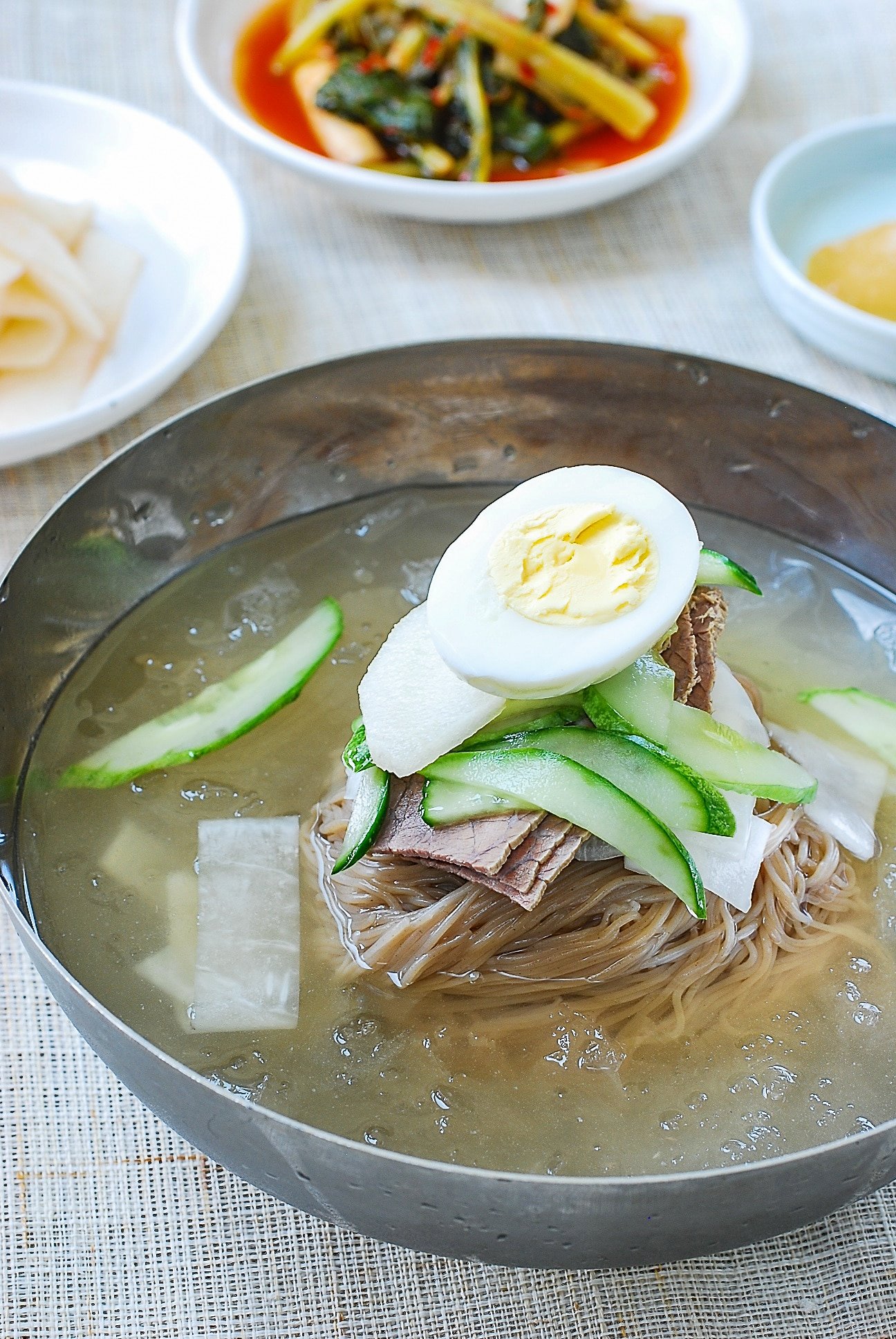
Mul naengmyeon, the broth-based version, originates from Pyongyang (now the capital of North Korea) and is the gentler of the two main styles. The broth is made from beef, and sometimes blended with dongchimi brine (the liquid from radish water kimchi), giving it a clean, slightly tangy, subtly sweet flavor. The broth is chilled until almost slushy before serving, and in some restaurants, a few chips of ice are added to keep it frigid. The noodles are buckwheat-forward, with a notably earthy flavor and firm bite. Because the broth is so delicate, the toppings serve as important flavor accents: the cucumber adds freshness, the pear brings sweetness and crunch, the egg adds richness, and thin-sliced beef provides savory depth.
Bibim Naengmyeon: The Hamhung Fire Version
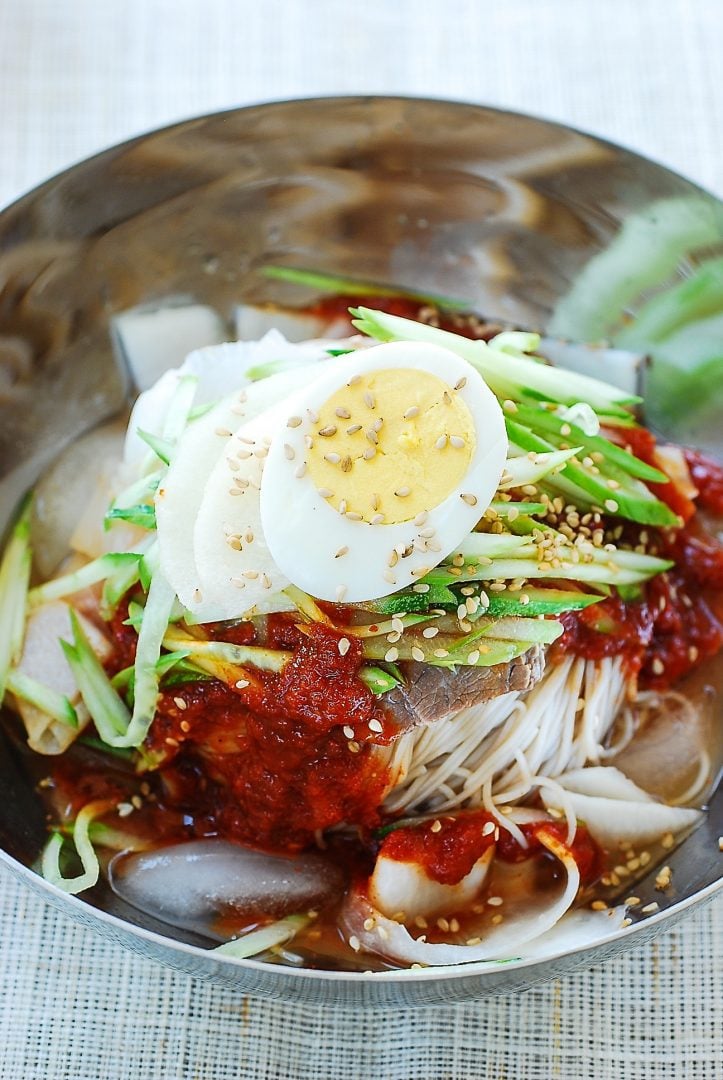
Bibim naengmyeon originates from Hamhung, a coastal city in what is now North Korea, and it offers a dramatically different eating experience. Here the noodles, made with a higher proportion of starch and therefore chewier and more elastic, are served cold but dry, coated in a sauce made from gochujang, gochugaru (red pepper flakes), sugar, rice vinegar, garlic, and sesame oil. The sauce is intensely red, sweet, spicy, and tangy all at once. Toppings are similar but the whole dish feels bolder and more assertive. Bibim naengmyeon is a popular companion to Korean barbecue, since its spicy, cool quality cuts through the richness of grilled meat beautifully.
How to Eat Naengmyeon
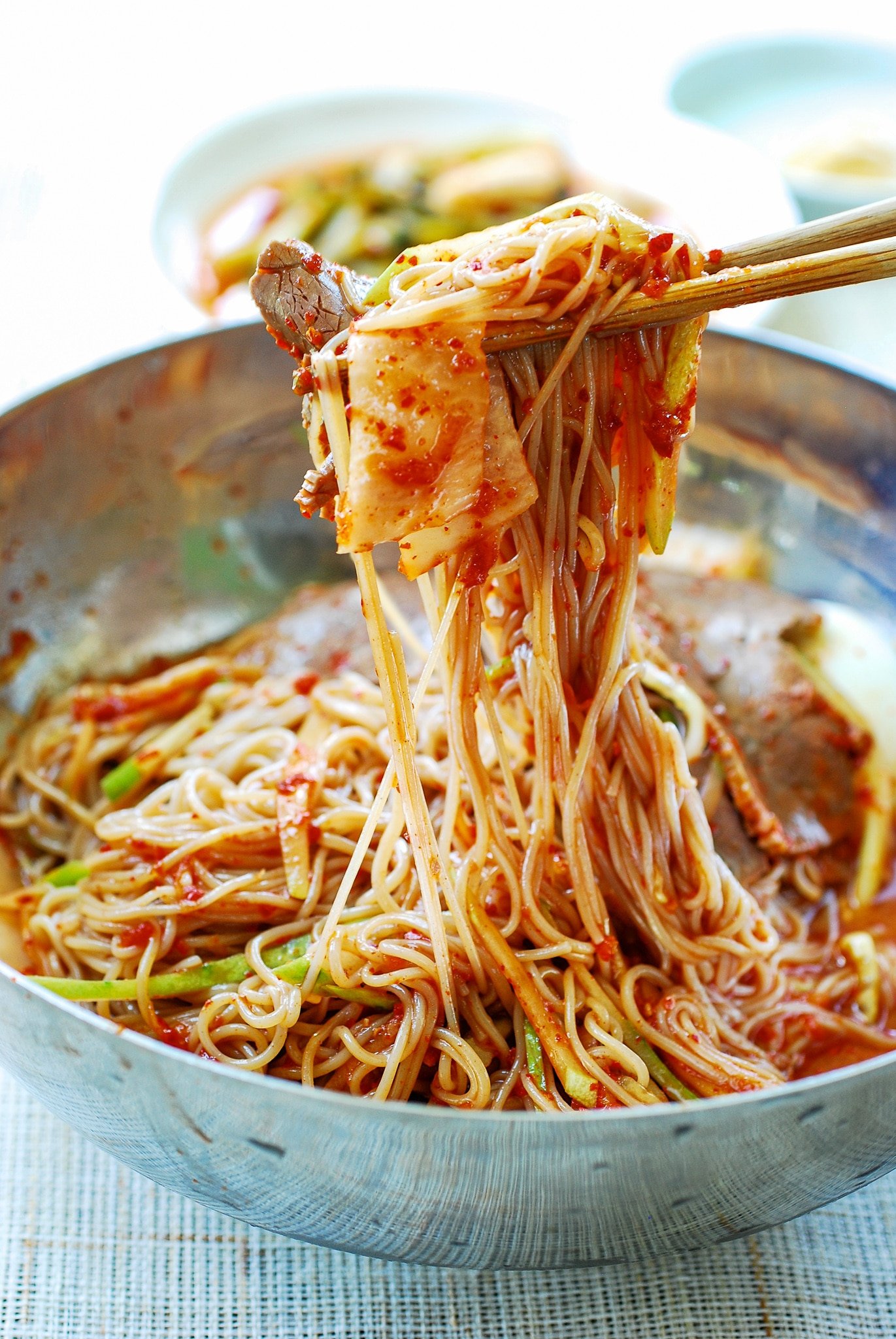
When a bowl of naengmyeon arrives, the noodles are often coiled tightly in the center and very long. Many restaurants provide scissors at the table specifically to cut the noodles before eating, since their length can make them difficult to manage with chopsticks. The condiments on the table are also part of the experience: a splash of rice vinegar brightens the broth of mul naengmyeon, while a small amount of mustard adds a sinus-clearing heat. For bibim naengmyeon, most diners mix the sauce thoroughly from the bottom of the bowl before eating to coat every strand of noodle evenly. Naengmyeon is available at specialty naengmyeon restaurants, Korean barbecue restaurants, and increasingly in supermarkets as instant versions with pre-made broth sachets.
Explore Korean Snacks with Daebak
Love Korean food? Get authentic Korean snacks and ramen delivered straight to your door with the SnackFever Box by Daebak.


