


Table of Contents
Step into any Korean market, pojangmacha tent, or night market and you will find a world of flavor that stops you in your tracks. The sizzle of fish cakes in golden broth, the sticky pull of sweet rice cake in bright red sauce, the warm caramel scent of sugar-filled pancakes fresh off the griddle. Korean street food is not just a meal. It is an experience woven into daily life across the peninsula.
Whether you are planning a trip to Seoul, exploring a Koreatown near you, or simply want to understand what makes Korean food culture so vibrant, this guide covers the most iconic street foods you need to know.
A Culture Built Around Street Food
Street food in Korea traces its roots to the Joseon Dynasty (1392-1897), when vendors called "bangmul jang-su" roamed city streets selling snacks to working people. The tradition flourished around markets, train stations, and public gathering places. After the Korean War in the 1950s, pojangmacha (covered food carts) became a symbol of resilience, offering affordable, warming food to people rebuilding their lives.
Today, pojangmacha culture is enshrined in Korean identity. The government has even moved to protect and formalize these street stalls as cultural heritage. From the legendary Gwangjang Market in Jongno to the neon-lit Myeongdong shopping district, Seoul's streets are a paradise for hungry explorers. And the same spirit extends to Busan's Jagalchi fish market, Daegu's Seomun Market, and countless other cities and towns across Korea.
Tteokbokki: The King of Korean Street Food
No discussion of Korean street food begins anywhere but tteokbokki. Chewy cylindrical rice cakes simmered in a fiery gochujang-based sauce, tteokbokki is the dish that defines the genre. Vendors pile the sauce thick with fish cake slices (eomuk), boiled eggs, and sometimes ramen noodles or melted mozzarella cheese.
The modern sweet-spicy version dates to the 1950s, popularized in Seoul's Sindang-dong neighborhood, which still hosts a famous "tteokbokki town." The dish has evolved into dozens of regional and creative variations: rose tteokbokki (creamy with heavy cream), gukmul tteokbokki (broth-style), and even black squid ink versions at trendy spots.
For mild heat lovers, "gungjung tteokbokki" skips the gochujang entirely, using soy sauce and sesame for a nutty, savory take on the classic. However you like it, tteokbokki is unmissable.
Odeng and Eomuk: The Soul of the Winter Street
If tteokbokki rules the eyes, odeng (also called eomuk) warms the soul. Fish cakes made from ground white fish mixed with vegetables and starch are threaded onto wooden skewers and simmered in a light kelp-based broth. Vendors serve the broth in paper cups for free alongside each skewer, making odeng one of the most generous and communal street snacks imaginable.
The custom is to stand at the cart, sip your warm broth, watch the city go by, and eat skewer after skewer until you are warm from the inside out. In winter especially, the sight of rising broth steam around an odeng cart is one of the most comforting in all of Korean urban life. Odeng is found at almost every pojangmacha and market stall, typically priced at just a few hundred won per skewer.
Hotteok: Korea's Sweet Street Pancake
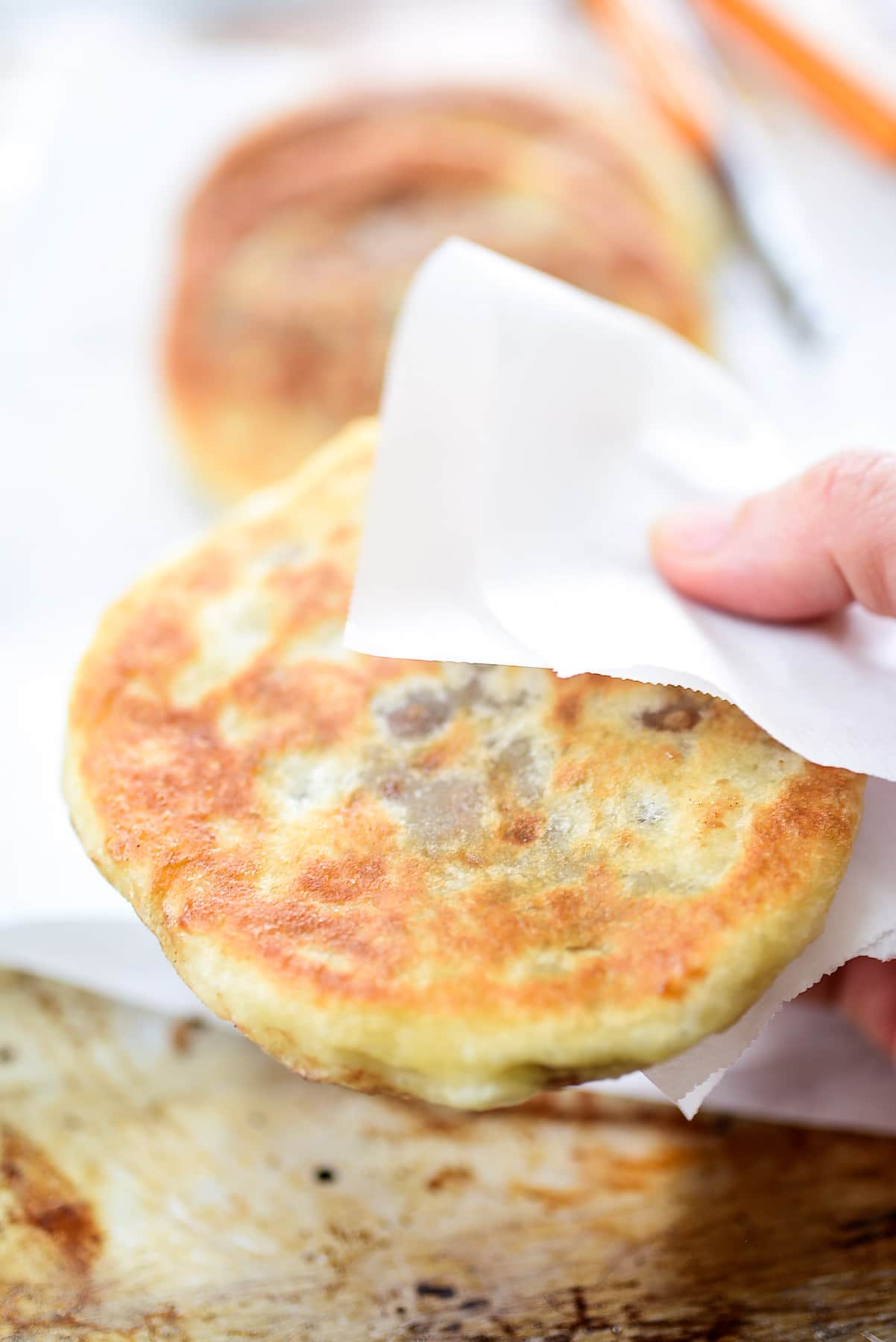
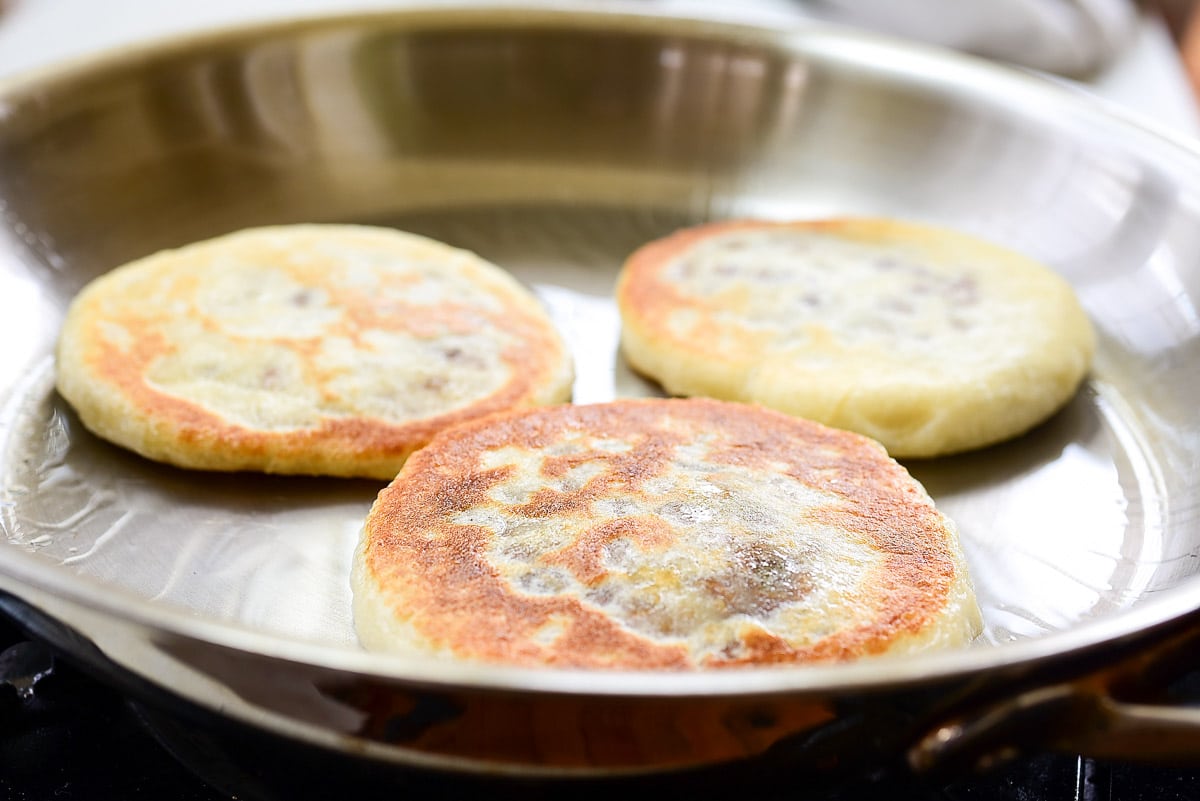
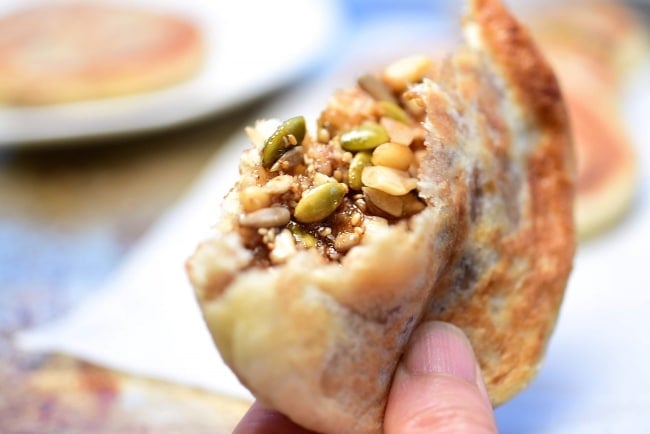
When the air turns cool, vendors fire up their griddles and the sweet scent of hotteok fills the street. These thick, doughy pancakes are stuffed with a filling of brown sugar, cinnamon, and crushed peanuts, then pressed flat on the griddle until golden and caramelized. As you bite in, the sugar melts into a warm, sticky syrup that drips down your fingers in the best possible way.
Modern versions have expanded the filling options: sweet potato, chocolate, pumpkin, green onion and cheese (savory hotteok), and even seeds and nuts for a healthier crunch. The classic brown sugar version remains the most beloved and is the one you will find at nearly every winter street market throughout Korea.
Korean Corn Dogs: Street Food Goes Viral
Korean corn dogs have taken over social media worldwide, and the hype is entirely deserved. Unlike their American counterparts, Korean corn dogs (gamja hotdog) feature a thick, slightly sweet batter that can be coated in breadcrumbs, crushed ramen noodles, rice puffs, or diced potato cubes before frying. Inside, you can find a classic sausage, a combination of sausage and stretchy mozzarella, or even a pure mozzarella filling that pulls into impossibly long cheese strings.
After frying, vendors roll the corn dog in sugar and squeeze on lines of ketchup and mustard. The combination of sweet, savory, crunchy, and gooey is addictive. Chains like Myungrang Hotdog have turned the format into a phenomenon, with locations now spreading internationally.
Bungeoppang and Gyeranppang: Baked Street Snacks
Two baked street snacks define Korean winter: bungeoppang and gyeranppang. Bungeoppang is a fish-shaped waffle cake filled with sweet red bean paste, pressed in cast-iron fish molds over hot coals. The crispy shell gives way to sweet, earthy anko inside, and each bite is a small nostalgia trip for Koreans of every generation. Modern fillings include custard cream, chocolate, and ice cream.
Gyeranppang (literally "egg bread") is a rectangular sponge cake baked with a whole egg on top, savory and slightly sweet at once. Vendors dust it with sesame seeds or melted cheese, and it makes a quick and satisfying breakfast on the go. Both snacks are found at winter markets and near subway stations throughout Korea from October through March.
Sundae: Korea's Traditional Stuffed Sausage
Korea's sundae has nothing to do with ice cream. It is a traditional sausage made by stuffing pig intestine with glass noodles (dangmyeon), barley, vegetables, and coagulated blood, then steaming until firm. Sliced into rounds and served with a sprinkle of salt and perilla leaf, or dipped into a spicy fermented paste, sundae has been a staple of Korean markets for centuries.
The texture is soft and chewy, the flavor deeply savory. At markets, sundae is often served alongside tteokbokki or steamed with offal in a dish called "sundae bokkeum." It is adventurous eating that rewards the curious, and an essential part of the full pojangmacha experience.
Twigim: Korea's Deep-Fried Street Food
Twigim is Korean-style deep-fried street food, and the variety is staggering. Vendors fry everything in a light, crispy batter: sweet potato slices, whole green peppers stuffed with glass noodles, squid rings, shrimp, vegetable patties, and small dumplings. Served alongside tteokbokki in a shared pojangmacha bowl, twigim soaks up the spicy sauce beautifully.
Gwangjang Market in Seoul is one of the best places in the world to experience twigim alongside bindaetteok (mung bean pancakes), which are fried fresh to order on massive cast-iron griddles. The market has been operating since 1905, making it one of Korea's oldest continuously operating traditional markets.
Best Street Food Markets in Korea
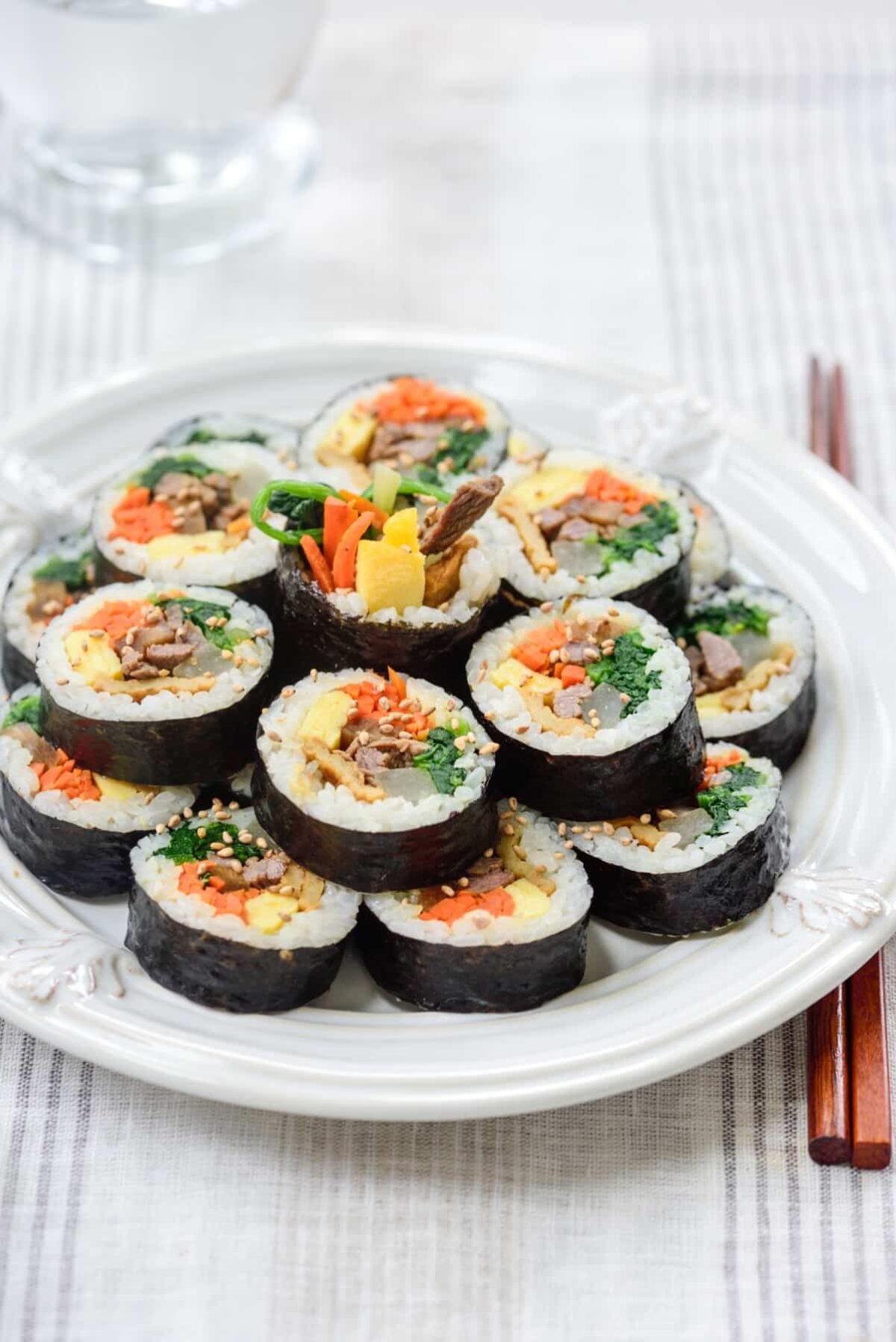
If you are visiting Korea, these are the markets you should not miss. Gwangjang Market in Seoul (Jongno-gu) is one of the oldest and most authentic, with an entire food hall dedicated to bindaetteok, kimbap, and raw fish. Myeongdong Market operates every evening in the famous shopping district and is perfect for first-time visitors wanting variety. Tongin Market in Jongno features a coin-operated system where you buy traditional coins to exchange for dishes from different vendors, allowing you to try a little of everything.
Outside Seoul, Jagalchi Market in Busan is the best place in Korea for fresh seafood street food. Seomun Market in Daegu is legendary for its flat dumplings and smoked chicken. And in Jeonju, the birthplace of bibimbap, you will find endless creative variations on Korean classics at the traditional market near Hanok Village.
Bring the Street Food Spirit Home
You do not have to be in Korea to enjoy the spirit of Korean street food. Many of the flavors that make tteokbokki, hotteok, and all those other incredible snacks so irresistible are captured in the packaged snacks and pantry staples that Korean brands export worldwide.
From spicy rice cake snacks to fish cake chips, sweet hotteok pancake mix kits, and the sauces that tie it all together, you can recreate the market experience at home. The SnackFever Box is one of the best ways to explore a curated collection of authentic Korean snacks shipped directly to your door every month.
Final Thoughts
Korean street food is one of the most democratic and joyful food cultures in the world. It is food for everyone: workers grabbing lunch, students sharing tteokbokki after school, couples warming up with odeng in winter, tourists wide-eyed at the abundance of flavor on every corner. The beauty of it is that nothing costs much, everything tastes deeply satisfying, and the act of eating it connects you to something genuinely Korean.
Whether you experience it in person on the streets of Seoul or through carefully chosen snacks at home, Korean street food is a journey worth taking.


