


Table of Contents
Have you ever wondered how your favorite idols spend New Year's morning in Korea? The answer, across HYBE, SM, JYP, and every trainee dorm from Cheongdam to Yeouido, is remarkably uniform. Everyone eats 떡국 (tteokguk). This is the rice cake soup that carries a very specific piece of Korean identity: the tradition that eating one bowl on 설날 (Seollal, Lunar New Year) makes you one year older. After a decade watching Korean food culture translate to global audiences, I can tell you the appeal of tteokguk is not the recipe. It is the ritual. A bowl of thinly sliced 가래떡 (garaetteok) in clear broth, and suddenly the entire nation has aged in unison. Here is the industry-side read on why this bowl still matters, how the 사골 (beef bone) versus 멸치 (anchovy) broth debate splits Korean households, and what the 2023 age law reform did and did not change about the joke.
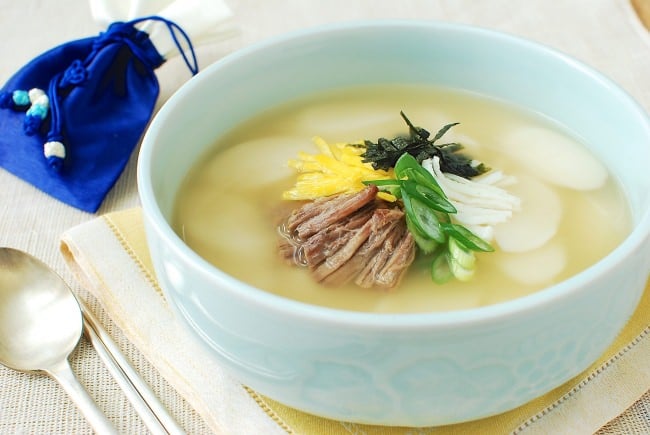
Joseon-Era Ancestral Rites: Why the Rice Cake Is Sliced Into Coins
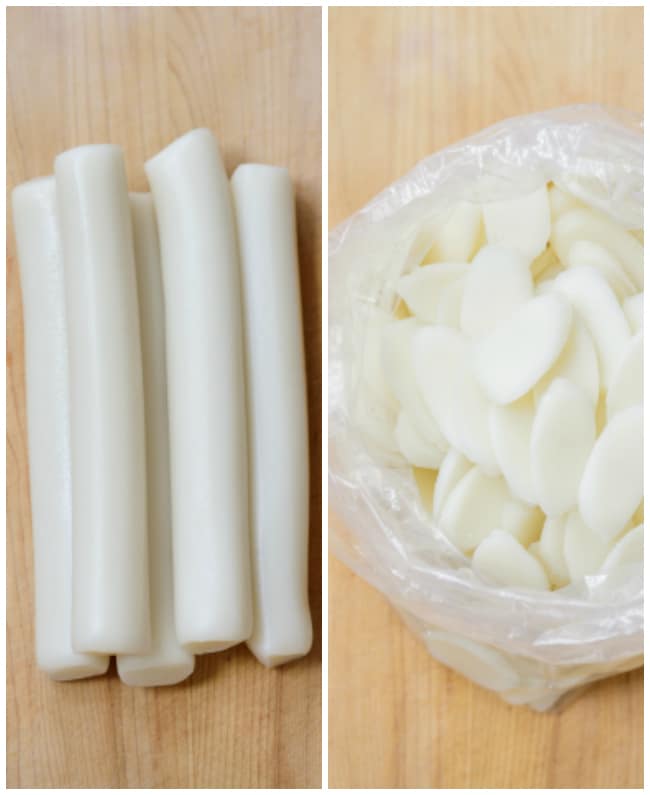
Tteokguk shows up in the 열양세시기 (Yeolyang Sesigi), an 1819 Joseon-dynasty record of Seoul customs by Kim Mae-sun, listed as the essential Seollal 차례 (charye, ancestral rites) dish. The symbolism is not accidental. Garaetteok is made from unsweetened rice flour, steamed and pounded into long white cylinders that can stretch a meter. White signals purity and a clean start. Length signals longevity. And the diagonal slice, cut into thin oval discs, was deliberately chosen because it echoed the shape of 엽전 (yeopjeon), the copper cash coins that circulated through the late Joseon. Eat coins on the first day of the year, invite prosperity for the next twelve months. That is the logic Korean grandmothers still explain to grandkids every January while stirring the pot. What outsiders often miss is that this dish is not "traditional food that people eat because it is traditional." It is functional symbolism. Each element on the spoon is doing a job.
사골 vs 멸치: The Broth War That Splits Korean Households
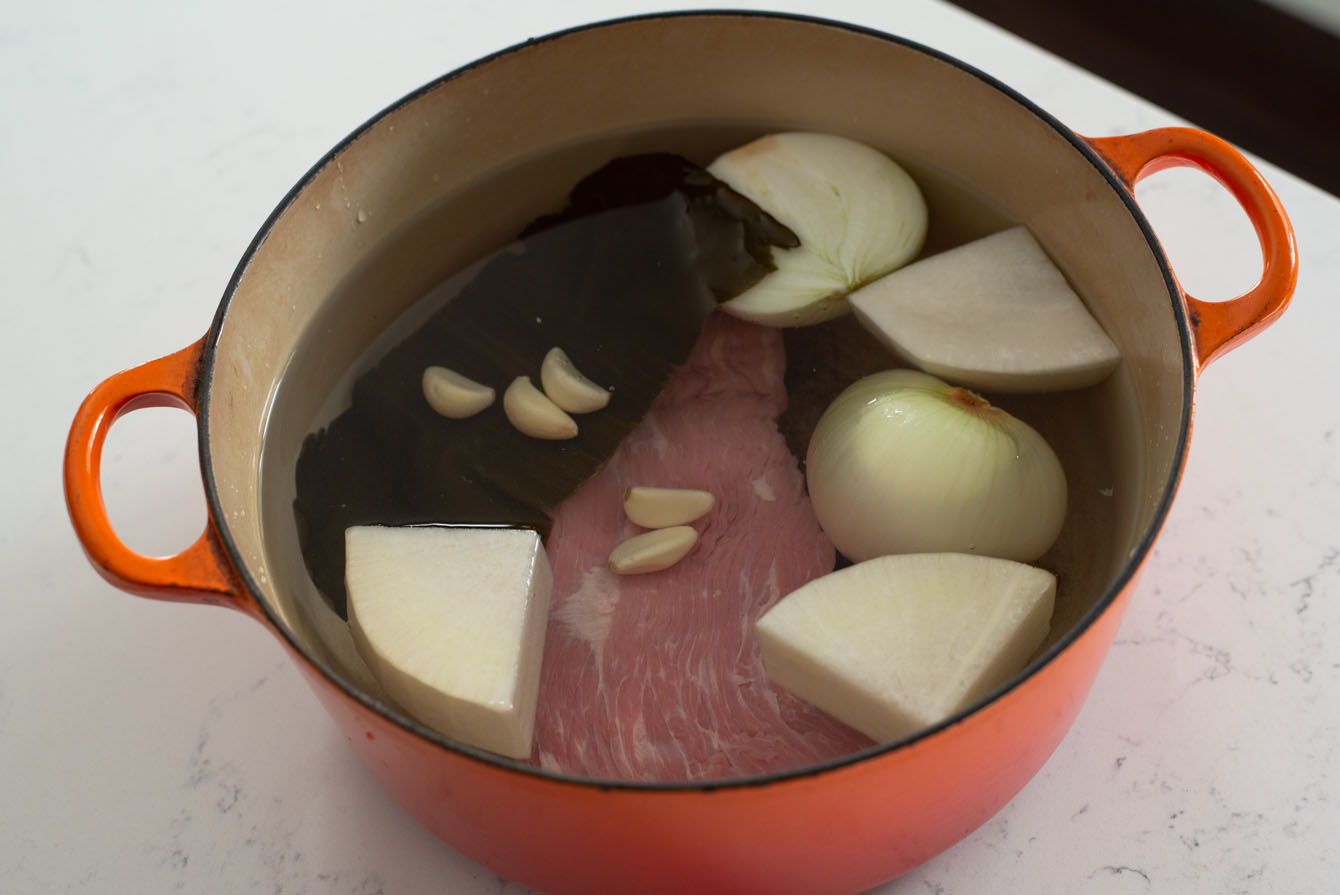
Every Korean family has a strong opinion on the broth base, and the split is regional in ways most K-food coverage flattens. Seoul and Gyeonggi households traditionally go 사골, boiling beef leg bones for six to twelve hours until the stock turns milky white and glossy. This is the version 백종원 (Baek Jong-won, the celebrity chef running the Yookdaejang empire) demos on YouTube every Seollal, and it is the version that lands on TV cooking segments because it photographs richer. Southern coastal regions, especially Busan and Tongyeong, tend toward 멸치 육수, the anchovy-and-kelp stock that runs clear and clean. Then there are the Gyeongsang inland households that split the difference with 소고기 양지 (beef brisket) simmered in aromatics for an hour, the mid-weight compromise that Korean Bapsang, My Korean Kitchen, and Beyond Kimchee all default to for global readers because it delivers the flavor profile without the twelve-hour bone commitment. Above the DMZ, North Korean households add 만두 (mandu) dumplings, creating 떡만둣국, a hybrid that many South Korean families with Hwanghae or Pyeongan roots still preserve. The broth argument at any Korean holiday table is essentially a map of where your family came from.
떡국 한 그릇 = 나이 한 살: The Age Joke That Runs Every Korean Family Group Chat
The phrase every Korean kid grows up hearing on Seollal morning is 떡국 한 그릇 먹었으니 나이 한 살 더 먹었네, "you ate a bowl of tteokguk, so you gained a year." This is not decorative folklore. Under the traditional Korean age system, everyone aged up on New Year's Day together, and finishing your bowl was the ritual seal on the year change. I have seen every Korean kid pull the same move: eat half a bowl and try to argue you should only age half a year, or refuse the soup entirely because you did not want to turn seven. Grandparents love the joke, and there is a specific comedic beat where an older aunt teases a cousin in her thirties by asking 몇 그릇 먹었어? (how many bowls did you eat?), implying she has been aging faster than she should. The appeal for global fans discovering Korean culture through K-dramas is exactly this warmth. It is not a lecture about heritage. It is a family group-chat joke that happens to be four hundred years old.

June 28, 2023: What the Korean Age Reform Actually Did to the Tteokguk Joke
Here is the industry-side detail most global K-culture coverage missed. On June 28, 2023, the Yoon Suk Yeol administration's age reform law took effect, and South Korea officially dropped the Korean age system in favor of the international age system. Overnight, every Korean citizen got one or two years younger on their driver's licenses and hospital forms. The Korea Herald covered the transition as a psychological reset. A 50-year-old office worker quoted in the paper said the shift back to her 40s felt like she had "bought lost time." But the tteokguk age joke did not die with the law. If anything, it flourished on Korean Instagram and TikTok because the joke was never really about legal age. It was about the collective ritual of aging in unison, and a legal change to how age is calculated on paperwork does not erase four centuries of grandma banter. Watch any Korean YouTube channel around Lunar New Year and the punchline is still there, just retooled: 이제 만 나이라 안 늙는대 (they say we do not age anymore since we switched to international age), followed by grandma pouring another bowl anyway.
Post-Parasite: Why Tteokguk Searches Spike on Naver and YouTube Every Seollal
The K-content industry data on tteokguk is genuinely striking. Google Trends for "tteokguk" and "Korean rice cake soup" show a consistent January-February spike every year since 2020, the year Parasite won Best Picture and the entire K-food category started tracking upward on Western search platforms. Maangchi's tteokguk recipe video, uploaded in 2013, sits at just under 900,000 YouTube views with over half of that traffic concentrated in January. My Korean Kitchen, Korean Bapsang, and Beyond Kimchee all report the same seasonal pattern in their Pinterest analytics. What is happening is that Western K-drama fans who binged Crash Landing on You or Reply 1988 saw a family gather over tteokguk in a Seollal scene, googled it, and landed on one of the four or five Korean-diaspora food bloggers who have been quietly building this content for a decade. This is not accidental. Korean cultural exports move in a specific pattern: a K-drama scene surfaces a food, English-language search volume spikes, and the diaspora recipe blogs cash the check. Tteokguk is one of the clearest examples of that pipeline because the Seollal spike is so predictable that food bloggers plan their content calendars around it.
The Point Global Fans Actually Get About Tteokguk
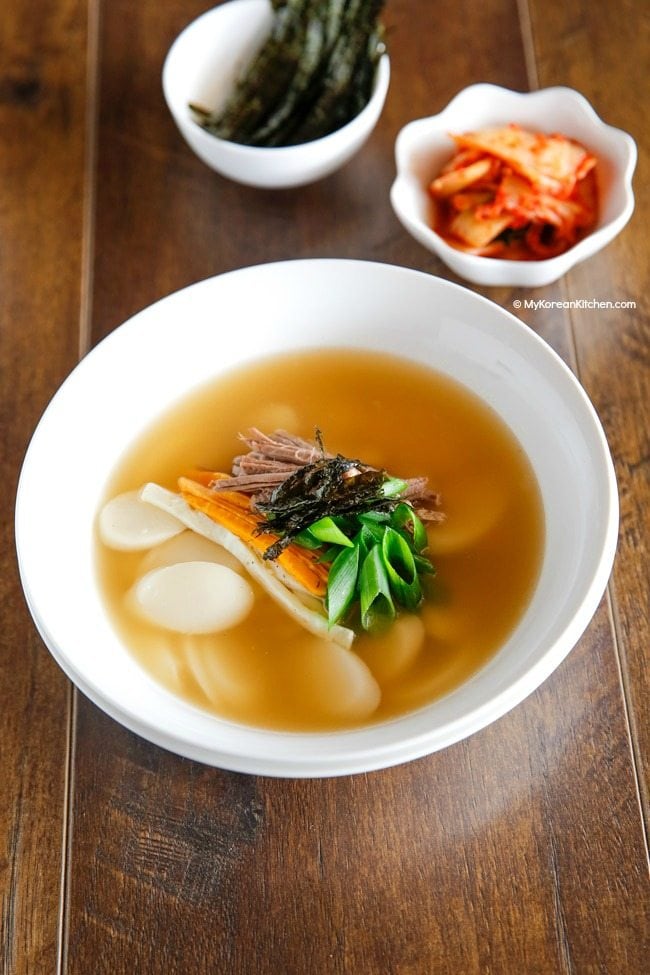
What makes tteokguk different from every other viral Korean food that has crossed over (Buldak ramen, dalgona coffee, K-corn dogs) is that the appeal is not the flavor profile. It is the ritual context. You can make an anchovy-broth version in twenty minutes on a Tuesday and it is fine. But eat it with your family on Seollal morning after everyone has done 세배 (sebae, the New Year deep bow to elders) and received 세뱃돈 (sebaetdon, New Year lucky money), and the same soup carries a different weight. The K-drama scenes that pull Western viewers into this dish know exactly what they are staging. The chewy 쫄깃 bite of garaetteok against a clean savory broth is delicious, but the reason the shot lingers is the ritual around the bowl. If you are curious enough about Korean culture to have read this far, my honest recommendation is not to Google a recipe. Find a Korean grandmother, ask if you can join a Seollal breakfast, and eat the bowl with the family group chat lighting up around you. Every Korean-American diaspora family I know says yes to that ask.
Explore Korean Snacks with Daebak
Love Korean food? Get authentic Korean snacks and ramen delivered straight to your door with the SnackFever Box by Daebak.


