


Table of Contents
Little Forest (리틀 포레스트, 2018) is the film I bring up whenever a foreign reader asks me what 힐링 시네마 (healing cinema) actually means in Korea. It is a 103-minute rural cooking movie, adapted from Daisuke Igarashi's Japanese manga and reimagined by Yim Soon-rye with Kim Tae-ri (김태리) fresh off The Handmaiden, and it does something almost nothing else in the Korean box office does: it sits still. No chaebol villain, no idol cameo, no Seoul rooftop chase. Just a young woman named Hye-won, a farmhouse in North Gyeongsang-do, and roughly sixteen dishes cooked across four full seasons. I have been working in and around K-content for over a decade, and Little Forest is the movie I keep sending to overseas partners when they want to understand why the "slow" register of Korean cinema, the register Parasite is not, still matters as an export category on its own terms.
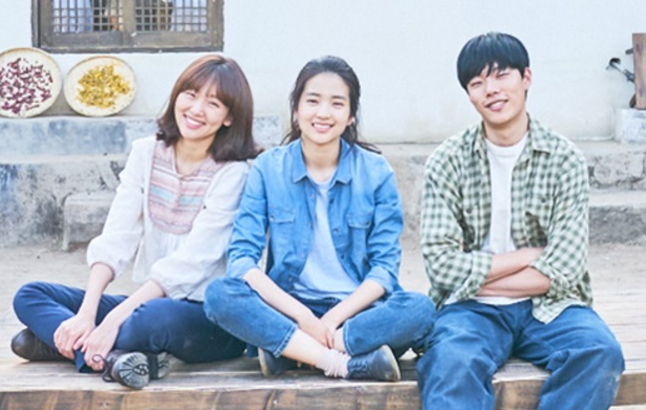
Why Little Forest Hits Different in the Slow-Cinema Wave
The industry framing you rarely see written down: Little Forest opened February 28, 2018, moved past 1 million cumulative admissions within its first month, and did it against a schedule stacked with 1987: When the Day Comes and Along With the Gods: The Two Worlds. That is not a runaway commercial hit by Korean standards, but the margin logic is what matters. Yim Soon-rye and distributor Megabox Plus M shot the film over a full year on location so the seasons landed authentically, then locked the budget tight and skipped the K-drama-scale marketing spend most Korean features chase. The result: Little Forest became one of the higher-margin Korean films of its year and, more importantly, proved to Korean investors that "quiet" content had a viable domestic ceiling. What foreign viewers respond to is the pace itself, and that is where the appeal lives. Korean commercial cinema is loud, and when a film like Little Forest refuses to be loud, it reads to Western audiences as almost avant-garde, even though at home it played as squarely mainstream drama.

The Sixteen Dishes and the Real Reason They Are (Mostly) Meatless
Yim Soon-rye is on the record that she deliberately structured Little Forest around roughly sixteen dishes, three or four per season. Fried acacia flower fritters when spring hits. Kongguksu (콩국수, chilled soy milk noodle soup) at the height of summer. Sujaebi (수제비, hand-torn dough soup) when the first cold rain comes. Sirutteok (시루떡, layered rice cake) at the winter turn. That is the seasonal calendar every rural Korean halmeoni would nod along to, and it is exactly the calendar convenience food in Seoul does not respect. Here is the detail most food writers skip: the dishes are almost entirely meat-free, which is not an aesthetic choice, it is Yim's politics. She identifies as an animal-rights advocate and describes herself as a fish-vegetarian, and she quietly encoded that into the entire menu. For international viewers who want to explore Korean cuisine without navigating the pork-and-beef default of Korean restaurants abroad, Little Forest works as a curated meat-free entry point. That is a real product-market fit no one at the time realized they had built.
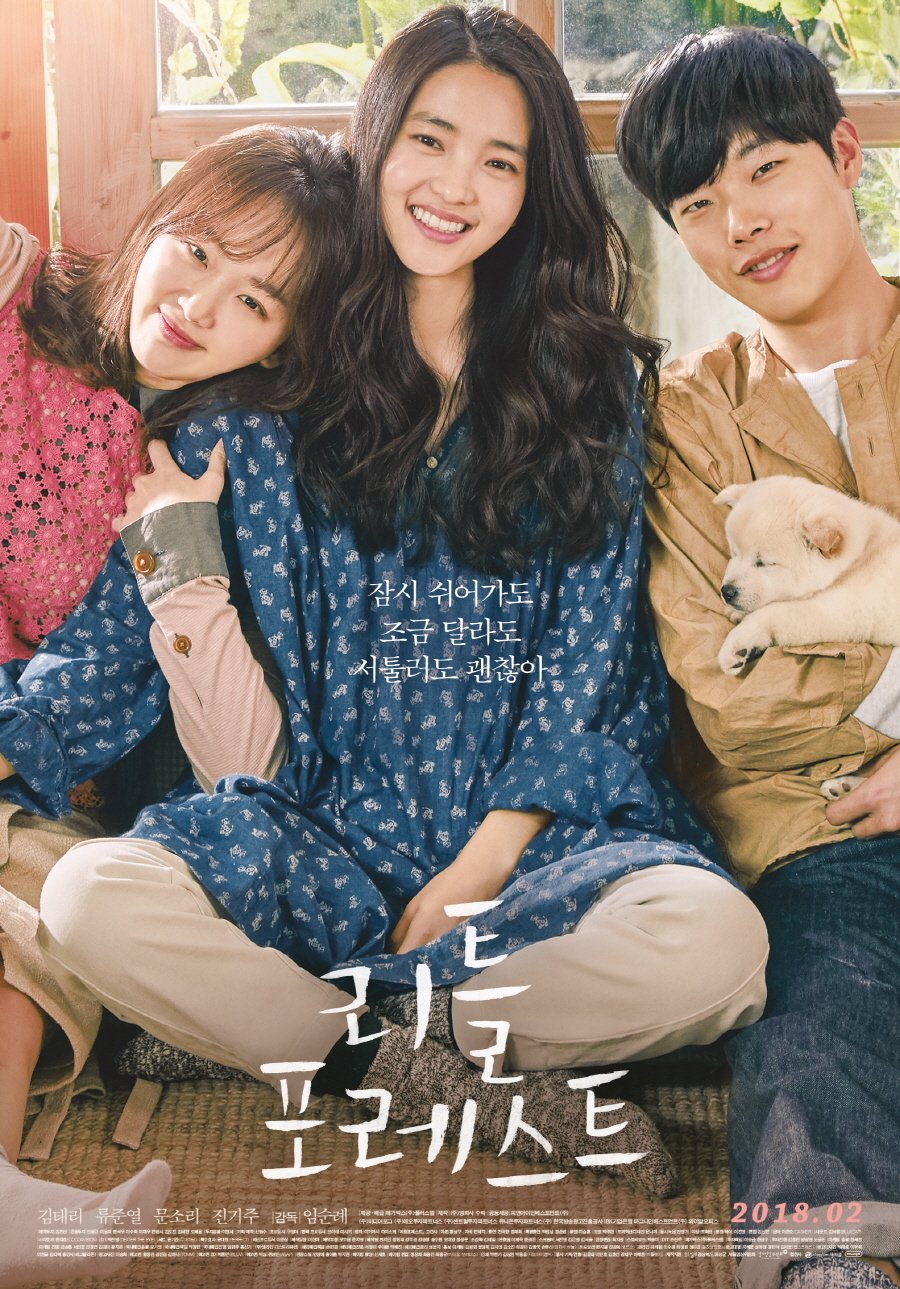
Kim Tae-ri's Career Pivot: Handmaiden to Hye-won
Little Forest was Kim Tae-ri's first lead choice after Park Chan-wook's The Handmaiden (2016), the film she was cast into from among 1,500 candidates and which won her Best New Actress at the Blue Dragon Film Awards. That context is essential to reading her performance here. The Handmaiden is a maximalist, Japanese-occupation-era psychological thriller with famously long, choreographed sex scenes. It made Kim Tae-ri instantly bankable, and every casting director in Seoul in 2017 was pitching her the next chaebol-daughter role. She turned all of them down for Hye-won, a character who spends most of the runtime alone in a farmhouse kneading dough. That is a career decision with real downside risk, and it is the reason Korean critics still cite Little Forest as her artistic pivot. The follow-through proved her right: Mr. Sunshine (2018) on tvN cemented her as a prestige-drama lead, Twenty-Five Twenty-One (2022) turned her into the coming-of-age face of a generation, and Revenant (2023) let her carry possession horror on a global streaming stage. None of that trajectory reads the same without Little Forest as the quiet mid-point that showed she could hold a film with almost no dialogue.

Yim Soon-rye's Female Filmmaker Legacy and Slow-Cooking Authenticity
You cannot talk about Little Forest without talking about the director. Yim Soon-rye had not directed a feature since Whistle Blower (2014), and Little Forest was her return after a four-year gap, which is unusually long by Korean industry standards. She is one of the small, important handful of women directors who have made careers inside a Korean commercial film system that is still, honestly, brutally male-dominated. Her earlier films (Waikiki Brothers, Forever the Moment) share a signature Korean critics call attention-to-margin: characters who would be background in someone else's film get to be the whole story. Hye-won fits that pattern exactly. In her interview with View of Korean Cinema, Yim explained that she personally learned to make makgeolli during production and failed three times before getting the fermentation timing right. That is the kind of on-camera authenticity you cannot fake, and it shaped the entire tempo of the shoot. That authorial fingerprint, the willingness to slow down and let the process actually breathe, is what makes Little Forest read as a Korean art film to overseas festival audiences even though at home it played wide.

힐링 시네마 as a Post-Parasite Export Category
Here is the industry angle that only makes sense in hindsight. Little Forest opened in early 2018, roughly eighteen months before Parasite swept Cannes and then the Oscars. When Bong Joon-ho's film broke through, global audiences suddenly wanted more Korean cinema, and a lot of them assumed "Korean film" meant "biting class satire, thriller pacing, unforgettable violence." Little Forest was the counter-example everyone quietly reached for. Streaming rollouts of the film to more territories in the years after Parasite, plus the surging Kim Tae-ri profile from Mr. Sunshine and Twenty-Five Twenty-One, gave Little Forest a second life as the international poster child for 힐링 시네마. That is a Korean market category that predates the international name for it, and it now covers everything from Little Forest to When the Weather Is Fine (2020) and Summer Strike (2022). What actually makes these titles specifically Korean, in my working experience, is the tension inside them: they are made in a country running one of the world's most demanding work cultures, and the fantasy of returning to a rural 시골 village to grow your own tomatoes reads as almost countercultural. The appeal is not "look how cute the countryside is." It is "look how much I need this and cannot have it." Every foreign viewer who has ever felt Seoul-tired understands that instantly.
What to Cook After You Watch
Start with sujaebi. It is the easiest of the dishes to make, needs only flour, salt, and stock, and it is the one Hye-won reaches for on the cold, rainy days that hurt the most. Kongguksu is next, honestly transformative on a Seoul summer afternoon. And if you are ambitious, try Hye-won's spring flowered pasta with actual edible acacia petals, the dish Yim Soon-rye specifically said she had made herself before the shoot. Tell us in the comments which season of Little Forest you would want to live in first, and if you have already made any of these dishes at home, drop the story.
Explore Korean Snacks with Daebak
Love Korean food? Get authentic Korean snacks and ramen delivered straight to your door with the SnackFever Box by Daebak.


