

Table of Contents
If you have watched a Korean food scene in the last five years and thought "wait, what actually is Korean cuisine?", you are asking the same question the Korea Tourism Organization spends serious money answering. After more than a decade working around Hallyu content and K-food marketing, I can tell you the honest answer is that Koreans do not think of their food as one flat category. We think of it in four buckets, and once you know the buckets, everything from the Michelin Guide's tteokbokki obsession to the samgyeopsal scene in Reply 1988 suddenly makes sense.
The four categories are 한식 (hansik, traditional Korean), 분식 (bunsik, street snack food), 중식 (junsik, Korean-Chinese), and 양식 (yangsik, Korean-Western fusion). KTO uses this exact split when it markets Korean food tourism abroad, and every Korean over the age of ten can name which bucket a dish belongs to without thinking. Here is what each one really is, why global palates started paying attention after Parasite and Squid Game, and what the industry is actually selling when it says "K-food."
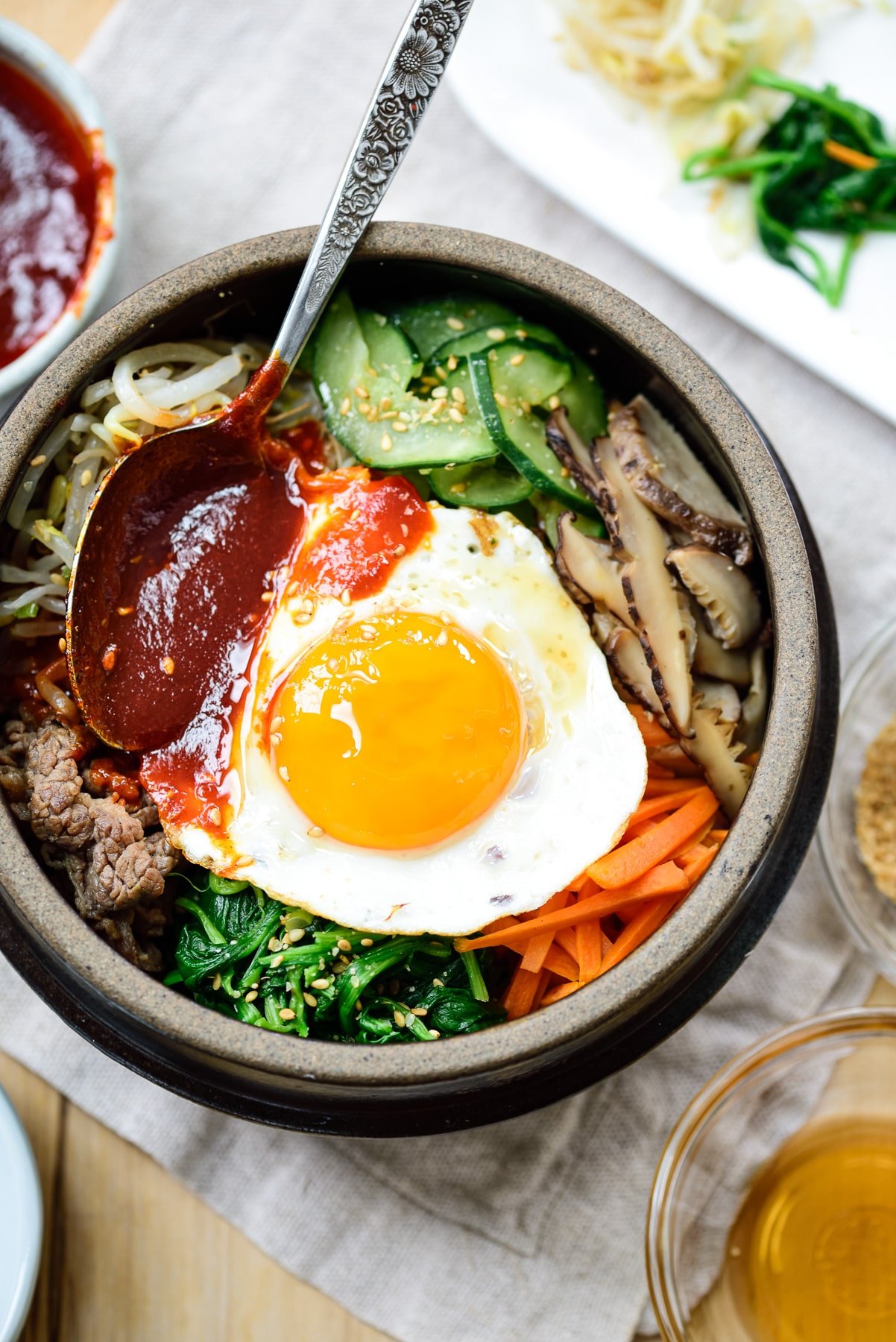
한식 (Hansik): The Traditional Tier That Anchors Korean Food Identity
Hansik is the category anyone abroad thinks of first when you say "Korean food." Bibimbap, bulgogi, samgyetang, doenjang jjigae, the whole banchan (side dish) spread that shows up before you even order. Structurally hansik is defined by three things Koreans take for granted and foreigners take a while to unpack: a rice-plus-stew-plus-banchan meal architecture, aggressive fermentation (gochujang, doenjang, ganjang, kimchi), and the seasonal 제철 (jecheol) logic that dictates what shows up at the table in June versus October.
The reason hansik carries the export weight is that it is the tier the Korean government actively subsidises for cultural diplomacy. The Ministry of Agriculture funds Hansik Promotion Institute campaigns that have pushed bibimbap into the airline meal industry and set up a Korean cuisine chef training pipeline in Seoul specifically to send graduates to New York and London kitchens. When Anthony Bourdain sat down at Jungsik NYC in 2013, that placement was not accidental. Sue at My Korean Kitchen and Hyosun at Korean Bapsang have both spent over a decade translating this same tier for home cooks abroad, and their sustained blog traffic is basically the retail proof that the diplomacy strategy works.
The appeal point that makes hansik different from Chinese or Japanese cuisine is the balance obsession Koreans call 조화 (johwa). A properly plated hansik table hits five colours (red, white, yellow, green, black), five flavours (sweet, sour, salty, bitter, spicy), and five cooking methods on the same table. That is not accidental aesthetics, it is a wellness codex inherited from Joseon-era 궁중요리 (royal court cuisine) and quietly rebranded for the modern healthy-eating market. Watch any bibimbap video and you are watching johwa in real time.
분식 (Bunsik): Street Snack Food, Which Is Where K-Food Actually Went Viral
Bunsik is the tier that broke K-food onto TikTok. Tteokbokki, gimbap, sundae (Korean blood sausage), twigim (fritters), odeng (fish cake skewers), the whole snack-bar-plus-elementary-school-nostalgia stack. If hansik is the diplomatic showcase, bunsik is the cheap, spicy, chewy, extremely photogenic tier that Gen Z fell in love with through Mukbang YouTube and short-form video.
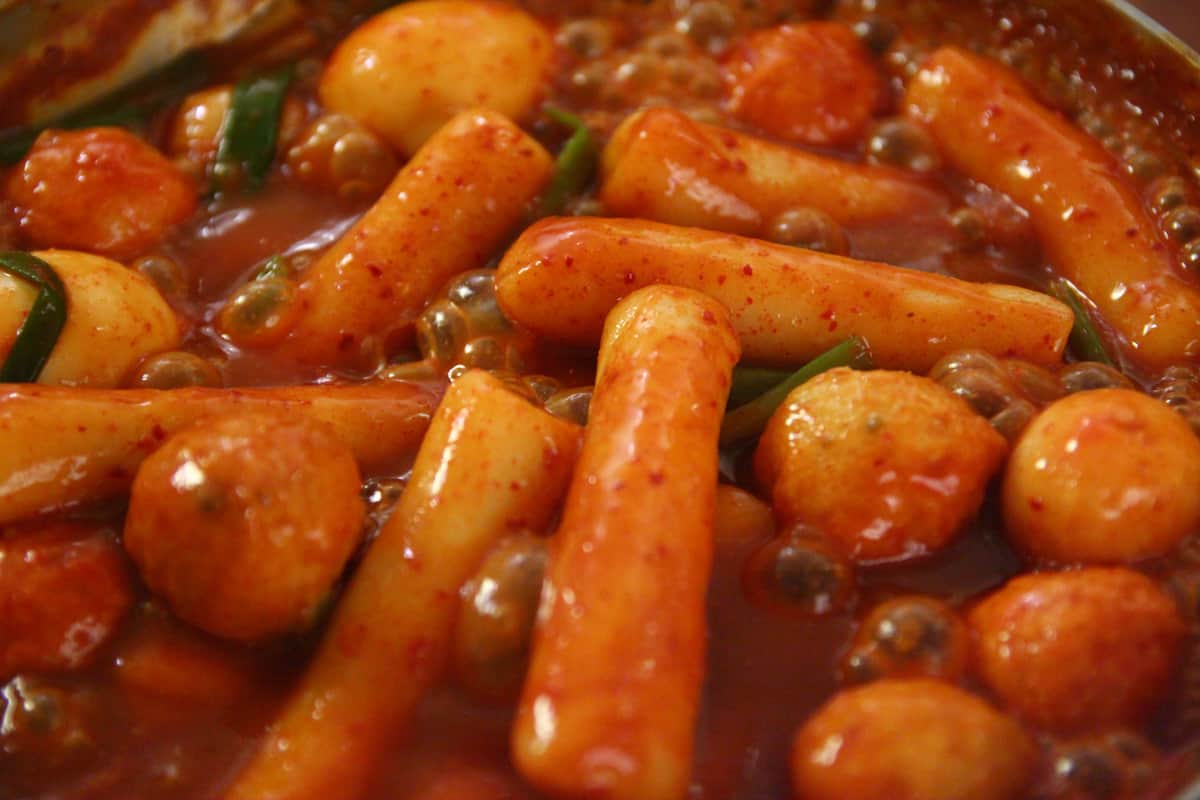
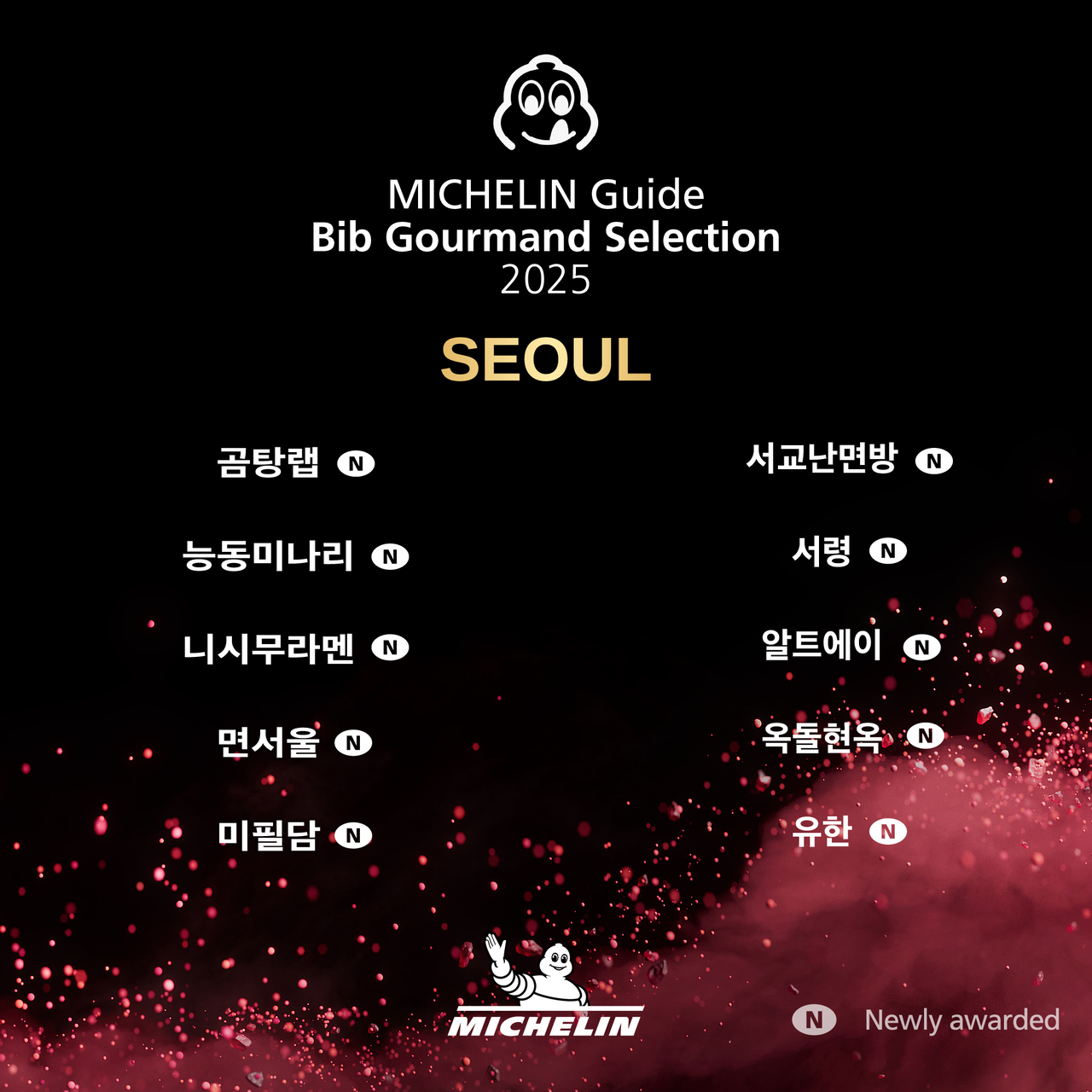
Here is the industry mechanic. Tteokbokki cost under 4,000 won at a Seoul bunsik stall in 2015 and costs about 6,000 won now. That price point is what made it the "affordable heritage" category the Michelin Guide leaned into starting 2020, when the Bib Gourmand awards for Seoul and Busan started acknowledging pojangmacha-style tteokbokki spots that any 20-year-old college student in Korea already knew. The February 2025 Bib Gourmand batch added 14 more Korean restaurants under 45,000 won per person, including bunsik-adjacent noodle spots. Michelin realised something Koreans already understood: the food does not have to be expensive to be technically excellent.
The appeal point is the specific texture profile Koreans call 쫄깃 (jjolgit), that springy chewy resistance you get from rice cake, chewy noodles, or fresh mandu skin. Western snack culture does not have a native word for it, which is why every Buzzfeed food video trying to explain tteokbokki lands on "it is like gnocchi but spicy," a comparison that is technically wrong and misses the whole point. The 쫄깃 mouthfeel plus the sweet-spicy 매콤달콤 gochujang sauce is the actual hook. Add cheese, add ramyeon noodles, add mandu, the base contrast never breaks.
중식 (Junsik): Korean-Chinese, the Category That Confuses Everyone Abroad
Junsik is where foreigners get lost. In Korea, junsik is a completely distinct dining category from actual Chinese food. It is the Korean-Chinese fusion cuisine developed in Incheon's Chinatown starting in 1905 (Gonghwachun, the founding restaurant, still gets treated as heritage) and evolved for over a century into a menu Koreans consider deeply their own. Jjajangmyeon (black bean noodles), jjamppong (spicy seafood noodle soup), tangsuyuk (sweet-sour pork), yangjangpi (chilled seafood platter). None of these exist in China in the same form. They are all Korean industry inventions with Chinese roots, and every Korean has strong opinions on which delivery joint does them right.

The K-drama export mechanic on junsik is genuinely fun to watch. When Crash Landing on You aired in 2019, the scene where Hyun Bin's North Korean officer sits down to jjajangmyeon in Seoul was not filler. That was a deliberate cultural placement, because in the Korean fan lexicon jjajangmyeon is 배달 (baedal, delivery) food, moving day food, school graduation day food, all wrapped up in one bowl. Nobody explains this to foreign viewers, but every Korean viewer registered the emotional weight instantly. Post-CLoY, Korean-Chinese delivery restaurants in the US saw noticeable Google Trends spikes for jjajangmyeon searches. Delivery apps in Los Angeles and New York started adding the dish to their K-food category.
The industry insight on why Koreans keep eating junsik at this volume: it is the cheap-luxury tier of Korean dining. A jjajangmyeon set (jjajangmyeon plus tangsuyuk plus fried dumplings) at a delivery joint runs about 25,000 won for two people. That is your default "we do not want to cook, we want something ritual-comfort" order. For a 20-something Seoul office worker splitting a meal with a friend after work, that is emotional value nothing else in the food ecosystem hits.
양식 (Yangsik): Korean-Western Fusion, the Tier the KTO Almost Forgets
Yangsik is the sleeper category. Literally "Western food," but the Korean version, which means a specific 1970s-1980s post-industrialisation menu that Korea built out of adapted Western fast-casual dishes: 돈까스 (donkkaseu, Japanese-Korean pork cutlet), 함박스테이크 (hambak seuteikeu, Salisbury-style hamburger patty steak served with rice and demi-glace), 오므라이스 (omurice, ketchup fried rice inside an omelet), spaghetti 나폴리탄 style. None of these are American, none are Italian, none are Japanese. They are Korean interpretations that have their own home-plate identity now.
Yangsik matters commercially because it is the tier that dominates Korean casual dining chains (Ashley, VIPS, Outback Steakhouse Korea) and shows up constantly in K-drama family scenes. When Kim Ji-won's character in My Liberation Notes orders donkkaseu at a workday lunch, that is a yangsik moment. Korean office workers eat this tier roughly as often as they eat hansik, and the KTO under-markets it abroad because it does not photograph as exotic. Ironically the demand data says K-food consumers overseas want this tier once they discover it. Korean corn dogs (an early bunsik-yangsik hybrid) blew up on TikTok in 2020 and are still tracking as one of the fastest-growing Korean street food exports.
국물 요리 (Gukmul Yori): The Soup Culture That Cuts Across All Four Tiers
One thing that unifies every tier of Korean cuisine is 국물 요리 (gukmul yori), the culture of soupy dishes. Kimchi jjigae in hansik, ramen and mandu-guk in bunsik, jjamppong in junsik, and even yangsik has its own cream soup tradition. Koreans grow up with the belief that a real meal has broth involved somewhere. This is the reason instant ramyeon exports hit a record 1.2 billion USD in 2024 and why samgyetang, the ginseng chicken soup, gets rebranded as a wellness dish in New York menus.
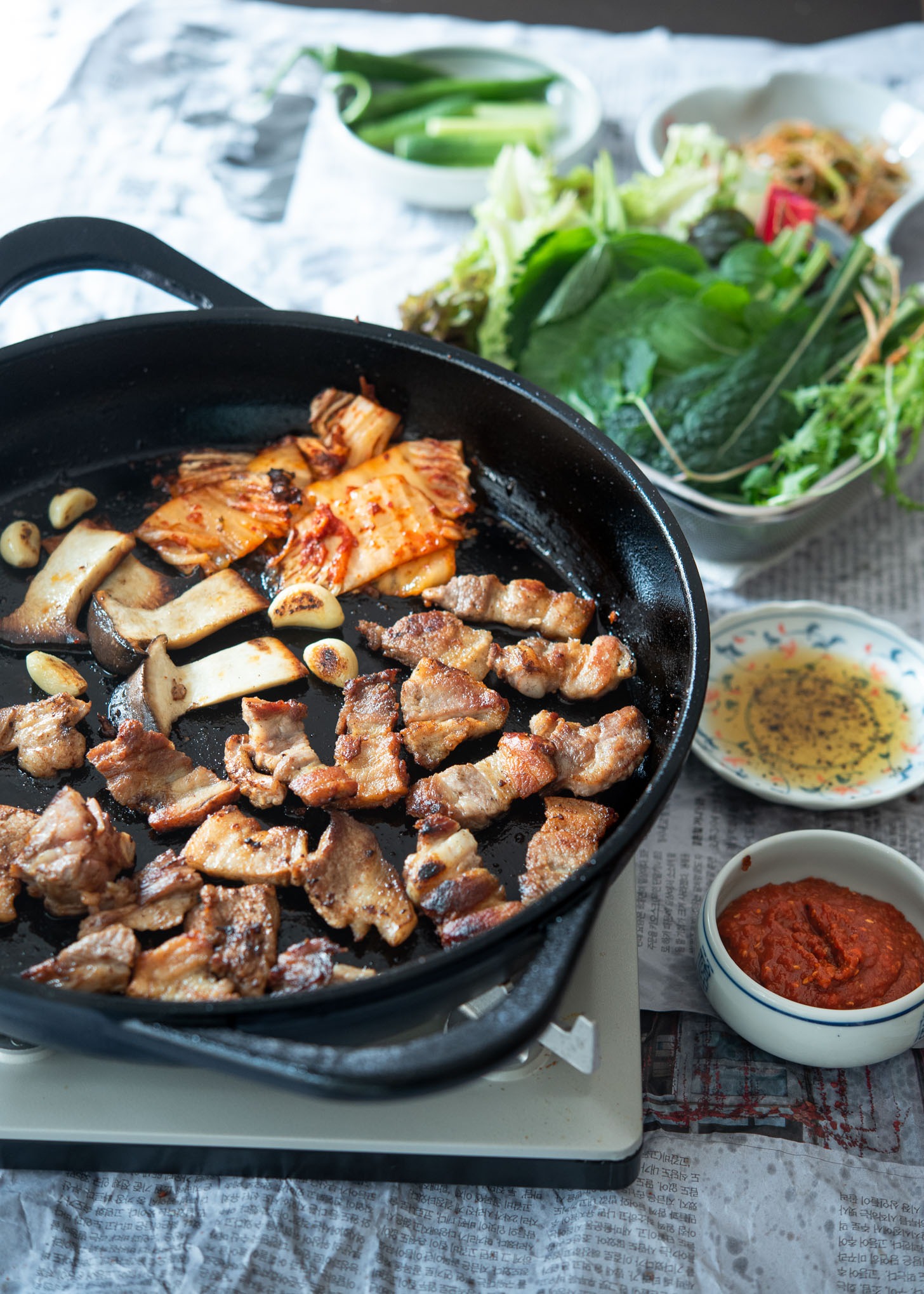
Why Post-Parasite K-Food Really Exploded (Not Just Because of the Movies)
The narrative that K-food surged because of Parasite (2019) and Squid Game (2021) is only half right. Yes, those two moments made non-Korean audiences curious. Ram-don (jjapaguri, a home combination of jjajangmyeon and jjamppong instant noodles that already existed in Korean pantries) hit Google Trends record highs the week after Parasite streamed on Netflix. The dalgona sugar candy from Squid Game moved US retail units nobody at Nongshim had forecasted. But the actual explosion mechanic runs deeper.
Korean Ministry of Agriculture data (February 2026) shows Korean restaurant chains operating overseas grew from 3,722 stores in 2020 to 4,644 in 2025, roughly a 25 percent jump, with the US alone jumping from 528 to 1,106 stores. That is not a movie effect. That is real Korean food companies (Genesis BBQ, Paris Baguette, CJ Bibigo, Sun at Seven, Cote steakhouse) investing serious restaurant capital abroad. The films opened the door, and 10-year Korean food industry strategy walked through it. Michelin's Bib Gourmand embrace of affordable Korean cuisine starting 2020, the KTO's 2018 to 2024 international food tourism campaigns, and the K-drama food-scene product placement pipeline all converged on the same window.
Here is the industry read that matters: Korean food globalisation is not a fluke of Netflix. It is a decade-old Korean government and conglomerate strategy that used the Hallyu wave as delivery vehicle. Every 한식, 분식, 중식, 양식 category is being systematically marketed to a different overseas segment. Hansik gets the Michelin-tier chef training pipeline. Bunsik gets the TikTok viral moment. Junsik piggybacks on K-drama emotional-comfort placements. Yangsik follows Korean casual-dining chain expansion. The four categories, when you frame them right, are actually four different export playbooks running in parallel.
Explore Korean Snacks with Daebak
Love Korean food? Get authentic Korean snacks and ramen delivered straight to your door with the SnackFever Box by Daebak.


