

Table of Contents
Here is the honest news about cooking Korean food at home in 2026. The ingredient wall that used to keep home cooks out has quietly fallen. Gochujang sits on the Kroger shelf next to sriracha. Gochugaru is a two-day Amazon Prime delivery. Chung Jung One and CJ Bibigo pastes are stocked at Target. After a decade watching K-food go from H Mart-only to Trader Joe's endcap, I can tell you the bottleneck is not access anymore, it is recipe accessibility. Maangchi's YouTube channel now sits at 6 million-plus subscribers, and the videos that top-perform are the 15-minute, five-ingredient kind, not the two-day fermentation projects. That is the correct read of what beginner home cooks actually want out of Korean cooking. Not a project. Dinner.
The five dishes below are the ones I hand to anyone who says they want to cook Korean but does not know where to start. They are the dishes Korean parents teach Korean kids by osmosis, which is the most reliable stress test of "beginner-friendly" there is. Nothing here requires a dolsot, a fancy claypot, or a fermenter. Just a nonstick pan, a pot, a rice cooker, and about three Korean pantry items you can buy once and use for two months.
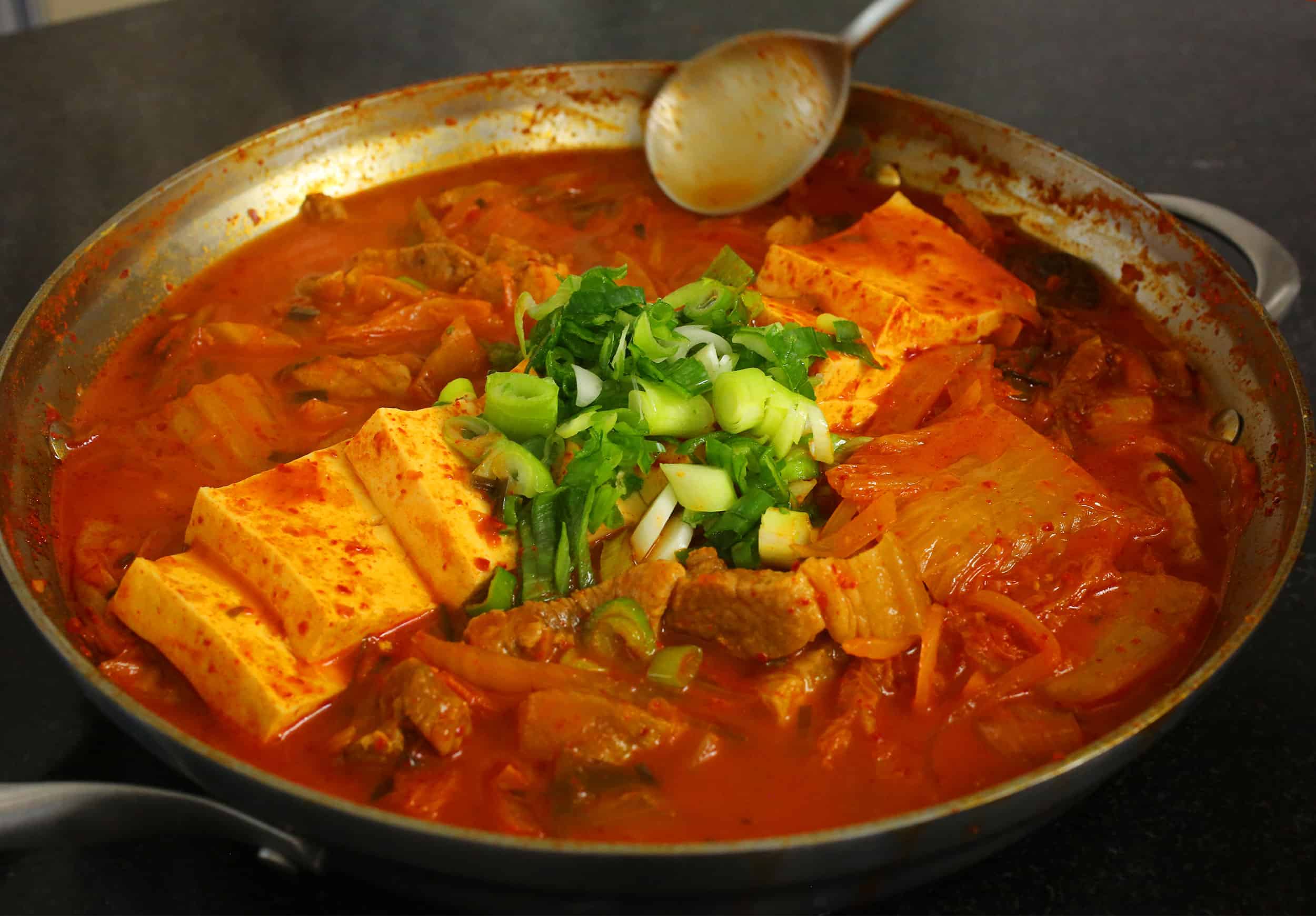
김치찌개 (Kimchi Jjigae): The 15-Minute Stew That Redeems Aging Kimchi
Every Korean fridge produces the same problem eventually. You bought or made kimchi, ate the fresh crunchy stuff for two weeks, and now the jar at the back is soft, sour, and slightly funky. That kimchi is not spoiled. That kimchi is at peak jjigae readiness. This is the one Korean cooking law you can memorize on day one: fresh kimchi is a side dish, sour kimchi is a stew ingredient. The lactic acid fermentation is doing the flavor work that a French cook would spend three hours building with wine reduction and beef stock.
The mechanic that makes 김치찌개 the correct starter dish is that the kimchi carries almost all the seasoning. You add a spoon of gochujang for depth, a spoon of gochugaru for color and clean heat, a splash of the kimchi brine, some pork belly or canned tuna, and water. Fifteen minutes of simmering later, you have a stew that Korean grandmothers have been making since before industrial food coloring existed. Maangchi's version uses anchovy stock for the base, which is the upgrade path once you are three or four attempts in. On night one, water is fine. The kimchi is the star, and the point is to prove to yourself that the pantry gap is smaller than the cooking blogs make it look.
계란말이 (Gyeranmari): The Technique-First Egg Roll That TikTok Turned Global
계란말이 is the dish that broke through on TikTok around 2020 and never left. Search the tag and you will find millions of videos of people rolling wobbly egg logs in nonstick pans, with the Korean bento aesthetic as the anchor visual. What most tutorials miss is that this is a technique-first dish, not an ingredient-first dish. The whole recipe is three eggs, a pinch of salt, chopped scallion, chopped carrot, and a pan. The reason it looks impressive on camera is entirely the rolling motion, and the rolling motion is the entire skill you are buying with an hour of practice.
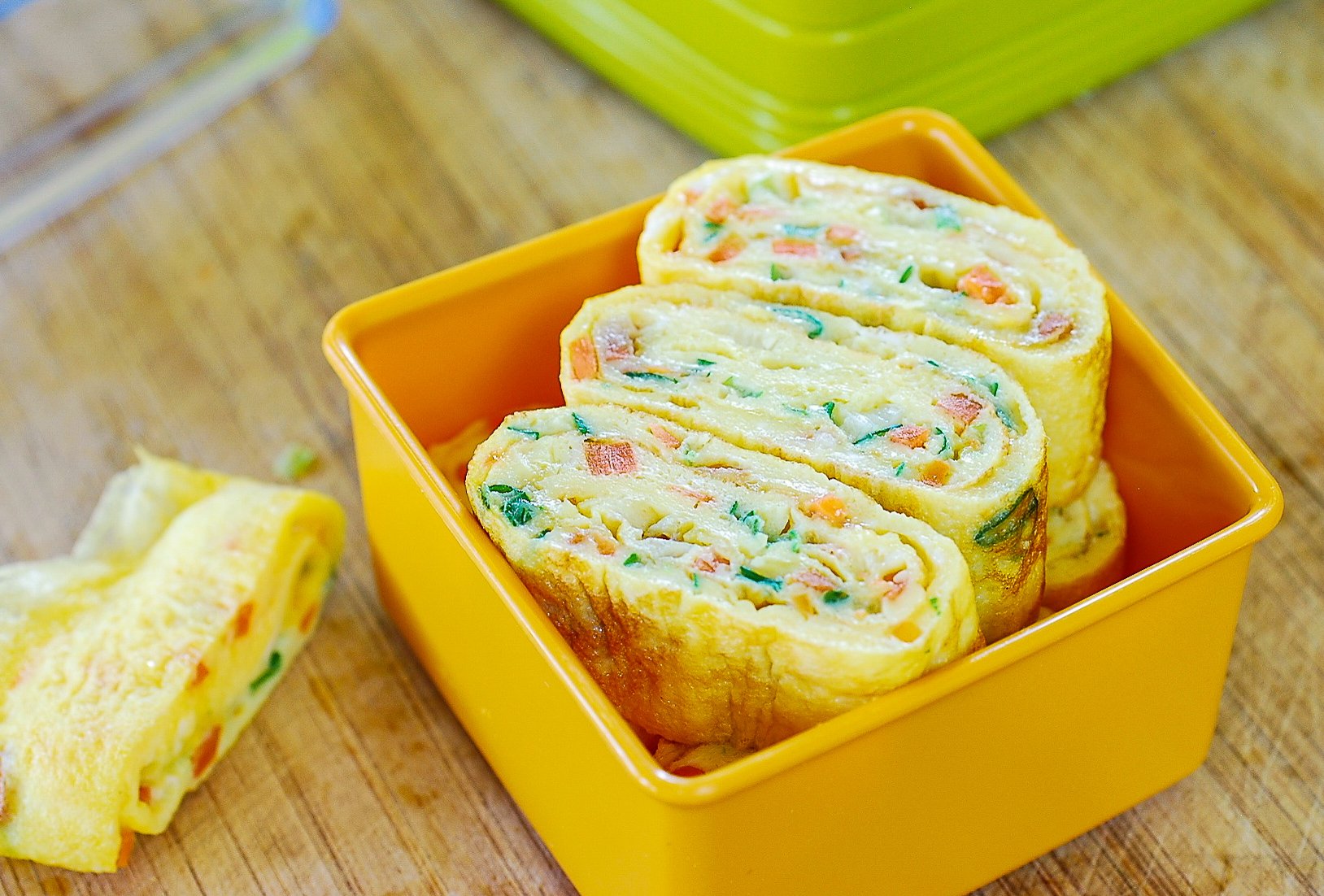
Here is the industry-level insight nobody puts in the recipe card. Korean elementary school 도시락 (dosirak, lunch boxes) rely on 계란말이 because it slices into pretty rounds that look purposeful next to rice and kimchi, and it stays soft at room temperature for four hours. That is why every Korean mom in the 1990s could produce this at 6 a.m. before school. If you are meal-prepping for a week, 계란말이 is the highest visual-to-effort ratio in the entire Korean pantry. Korean Bapsang's version keeps it to three eggs and one small skillet, which is the correct starter scale. Do not try to roll five eggs on your first attempt. The physics work against you, and the ego damage is real.
김밥 (Kimbap): The Bento-Tier Meal Prep That Costs Almost Nothing
김밥 is what happens when Korean home cooking meets the picnic economy. A single roll costs about $1.50 in ingredients and feeds one adult for lunch. Roll five and you have a week of desk lunches for less than what one sad Sweetgreen bowl costs in Manhattan. This is not an exaggeration. My Korean Kitchen's Sue Pressey has been writing about the economics of 김밥 since 2006, and the cost-per-serving math has not moved much even through inflation. The reason is that the expensive part (protein) is optional, and the anchor ingredients (rice, seaweed, egg, carrot, spinach, pickled radish) are all sub-$2 items with a long shelf life.
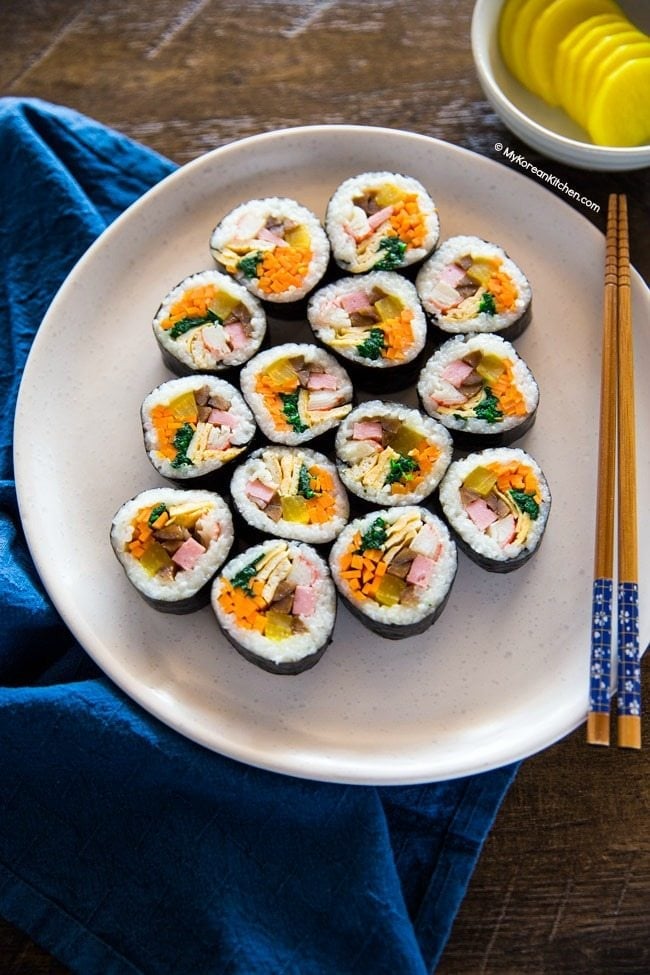
The barrier that stops most beginner home cooks from trying 김밥 is the fear of the rolling itself, which is misplaced. A bamboo mat costs $3, and if you can roll a burrito you can roll a 김밥. What actually separates good 김밥 from mushy 김밥 is the rice temperature (slightly warm, not hot, tossed with sesame oil and salt) and the fill discipline (do not overstuff; two-thirds of the seaweed sheet covered, one strip of each ingredient). This is the sort of practical knowledge you only get from Korean home cooks who have made this thousands of times, which is why the Korean food blogger ecosystem exists in the first place. The rolls in the photo above are 아채김밥 (yachae kimbap, vegetable kimbap), the entry-level version that every Korean kid has packed for a school picnic.
비빔밥 (Bibimbap): The Rice Bowl That Doubles as Fridge Cleanout
비빔밥 has a reputation as a complicated dish because restaurant versions arrive with eight tiny piles of individually seasoned vegetables and a raw egg yolk in the middle. That is the presentation version. The home cooking version, which is what Korean families actually eat, is closer to "warm rice, whatever vegetables you already sautéed this week, one fried egg, spoonful of gochujang sauce." Beyond Kimchee's Holly Ford calls out this exact frame in her recipe intro: 비빔밥 was the weekly leftover cleanup dish in her family growing up, made faster with ground beef bulgogi than the classic sliced-and-marinated version.
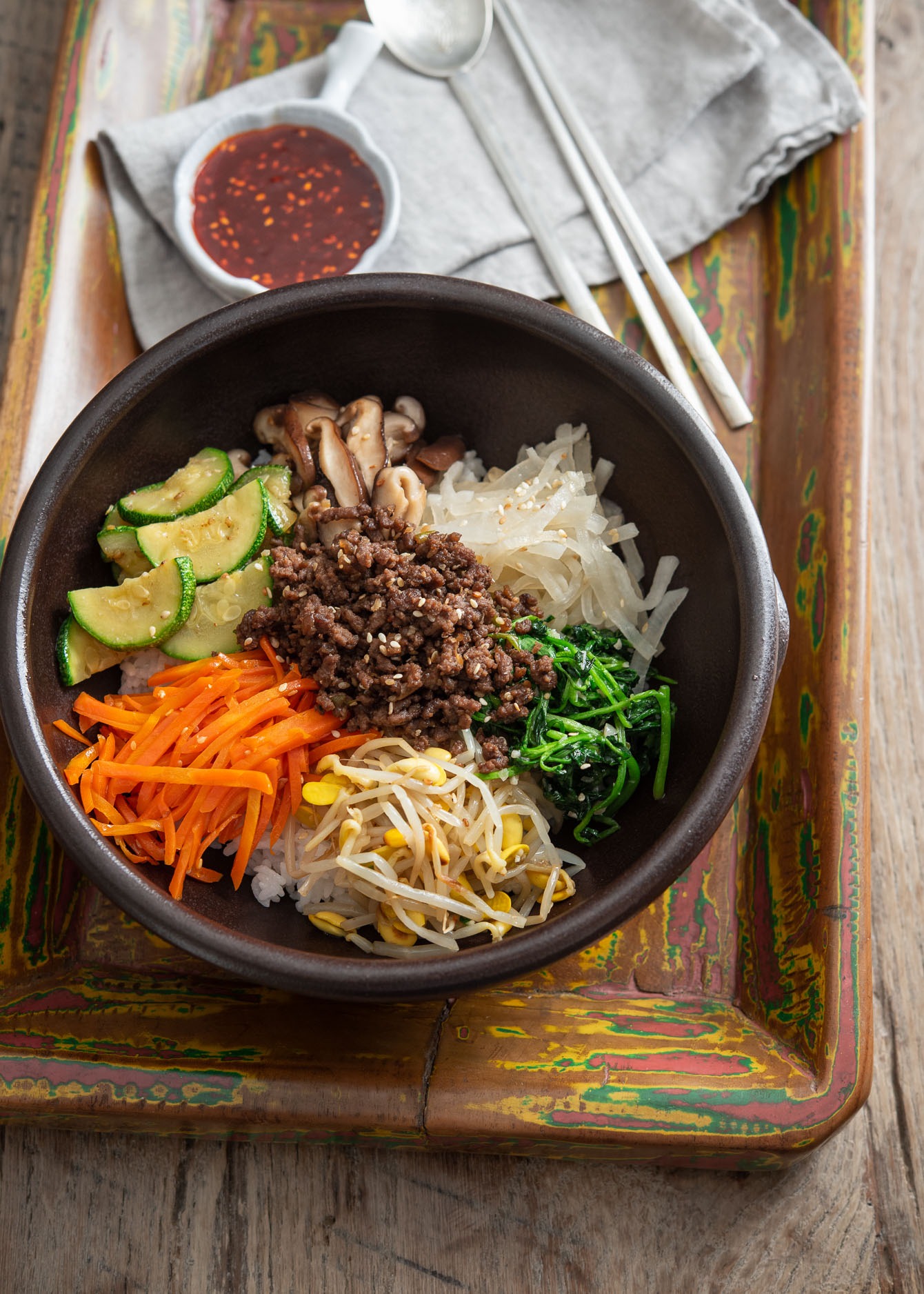
The technique that separates good 비빔밥 from restaurant-blah 비빔밥 is layered seasoning of each vegetable. Do not toss them all together raw. Blanch or sauté each one alone with a pinch of salt, a drop of sesame oil, and either garlic or soy sauce, then arrange them on the rice in colors that do not touch. This is why Korean 반찬 (banchan, side dish) tradition matters even when you are just making a rice bowl. Each vegetable is a mini-recipe that stands on its own, and the bowl becomes a stage. The gochujang sauce (gochujang, sesame oil, sugar, sesame seeds, sometimes 매실청 plum syrup) is what pulls it all together. Mix aggressively at the table with a spoon. Do not be precious about the presentation. Korean families never are.
라면 Upgrade: The Instant Noodle Rebuild Every Korean Household Runs
Korean instant ramen (라면, ramyeon) is not a dish, it is a platform. Every Korean household has a personal rebuild of Shin Ramyun or Neoguri that involves at least three add-ins. This is such an established genre that Korean convenience store chain CU opened a dedicated "Ramyun Library" store in Hongdae in late 2023, with 225 SKUs on the wall and cooking machines on the floor for customers to build their own bowl. When a convenience store chain builds a physical library for a category of instant noodle, that category is officially not just a snack. It is a home cooking discipline.
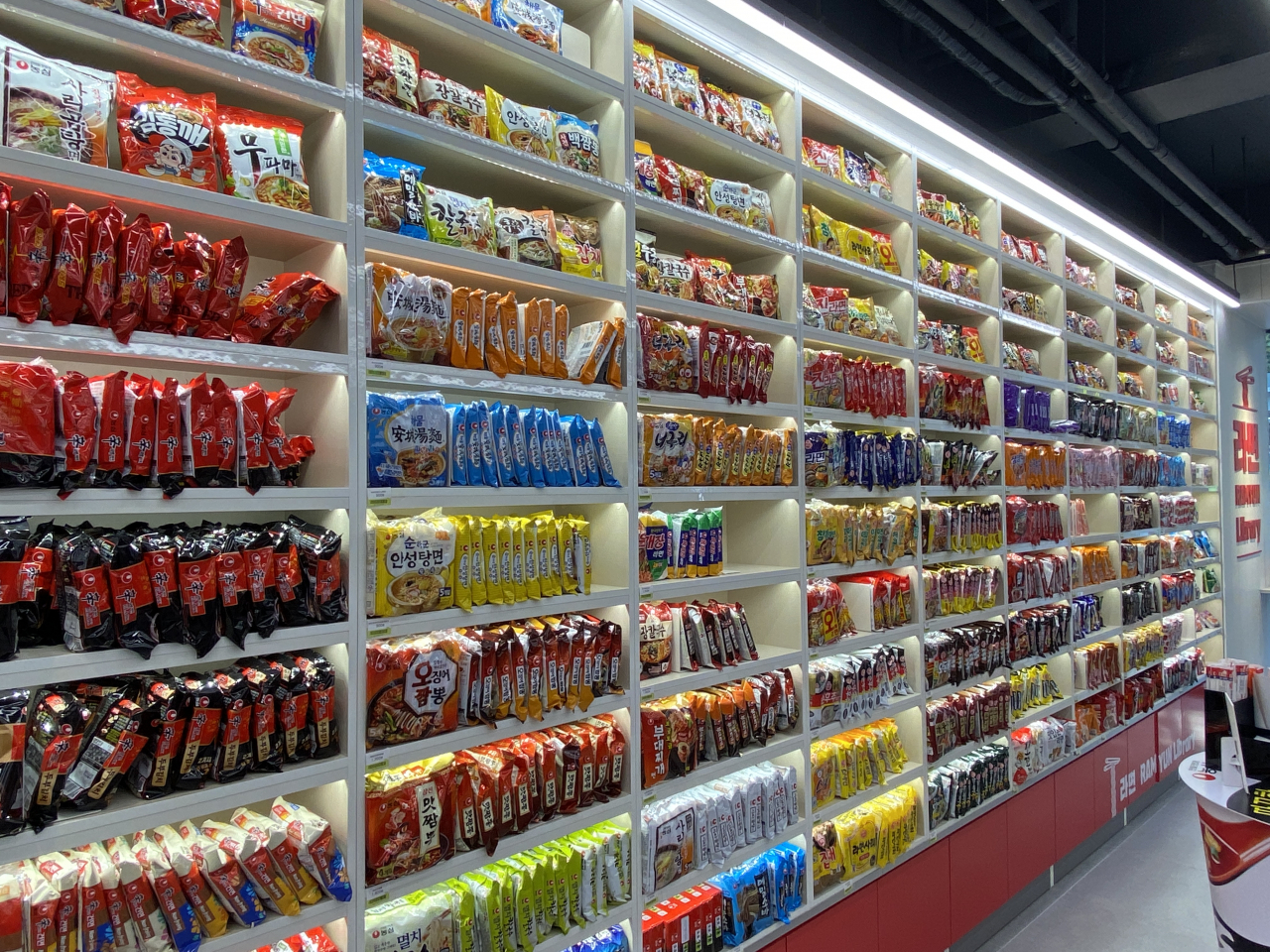
The beginner upgrade formula that every Korean home cook eventually settles into is this: base ramen packet, then add one aromatic (minced garlic, sliced scallion), one protein (raw egg dropped in the last 30 seconds, or a slice of American cheese for creaminess), and one texture (sliced rice cake 떡, dumpling 만두, or leftover sour kimchi). Do not stir the egg in aggressively. Crack it, cover the pot, let it sit for 40 seconds, and eat it while the yolk is still runny. This is the technique Jungkook of BTS demoed on Vlive that pushed a real sales bump in ramen add-in ingredients across US H Mart in 2022. K-content halo effect is not a marketing invention, it is a documented sales data point that Nongshim discusses openly in earnings calls. The lesson for a beginner home cook is that ramen upgrade is where you learn the intuition for gochujang, gochugaru, and pantry Korean without commitment. Start there. The rest of the pantry builds itself.
The Bibigo and Maangchi Era: Why Now Is the Cheapest Time to Start
The 2020-onward K-food home cooking boom has quietly rewritten the pantry math for anyone starting from zero. CJ Bibigo now sells instant kimchi jjigae paste, sundubu jjigae kits, and dumpling packs at Costco and Kroger, which means the flavor floor of a first-time Korean home cook attempt is much higher than it was in 2015. Combine that with Maangchi's 6 million-plus YouTube subs, Korean Bapsang, My Korean Kitchen, and Beyond Kimchee all publishing free, tested, English-language recipes with photos of every step, and the tutorial infrastructure is now denser than what most home cooks need. Ingredient access is not the bottleneck. Recipe follow-through is.
The pattern I see with new home cooks who succeed at Korean cooking is that they pick one of the five dishes above, make it three weekends in a row, and only then buy the next Korean pantry item. Do not build a $200 Korean pantry on day one and then let the doenjang expire in the back of the fridge. Buy gochujang and gochugaru for kimchi jjigae. Learn 계란말이 with what you already own. Add sesame oil and short-grain rice when you commit to 김밥. Add soy sauce and a bibimbap sauce mix when you graduate to 비빔밥. By the time you are upgrading ramen for real, the pantry is complete, the technique is muscle memory, and Korean cooking has stopped being a project and started being what you eat on Tuesday.
Taste the Snacks That Fuel Korean Home Cooking Culture
Once you have the basics down, the natural next step is the snack culture that sits alongside every Korean home kitchen. The SnackFever Box by Daebak ships a monthly curated selection of authentic Korean snacks, gummies, and drinks straight to your door, including seasonal items our Seoul curators pick from CU, GS25, and Emart shelves. It is the shortest path to tasting what actually stocks the pantry of every Korean home cook.


