


Table of Contents
Every Korean calendar year runs on two clocks. There is the Gregorian one that governs office life and Netflix release dates, and there is the deeper rhythm of the lunar holidays, king-birthday dates and freedom anniversaries that tell you what actually shuts the country down. If you want to understand modern Korean culture (and by extension, half of what is happening on your K-drama recap forums), you have to know these holidays. Not the sanitized encyclopedia version. The real one, where 세뱃돈 (sebaetdon) negotiations get intense and airport WiFi collapses under 30 million departing passengers.

Seollal 설날: Lunar New Year
Seollal lands on the first day of the lunar calendar, usually late January or mid February. It is the year's second biggest homecoming, a three-day national holiday, and the moment every Korean grandparent expects grandkids in person. Morning begins with 차례 (charye), the ancestral rite. Then comes 세배 (sebae), the formal deep bow younger family members perform to elders. Then the part every kid waits for: 세뱃돈, envelope cash from grandparents, aunts and uncles.
The economics of 세뱃돈 are quietly savage. A kindergartner might pocket ₩10,000 to ₩30,000 per bow. Elementary and middle schoolers pull ₩30,000 to ₩50,000. High schoolers routinely clear ₩100,000 per envelope, and if a teenager works the full extended family circuit (both sets of grandparents, three aunts, two uncles, that one great-aunt in Busan), they can walk away with ₩500,000 or more. Gallup Korea tracks these sebae budgets every year. In flush years the number stretches; in recession years relatives shrug and hand over a book instead.
Food is 떡국 (tteokguk), rice cake soup. Eating a bowl is folk shorthand for aging one year. Refuse it and you are basically time traveling. Traditional games follow: 윷놀이 (yutnori), 제기차기 (jegichagi), 연날리기 (kite flying). Post-COVID, Gen Z and millennials increasingly skip the crowded 귀성길 (hometown return drive), either flying abroad or doing 효cation (hyocation), sending parents on a trip instead of visiting them. It sounds cynical. It is actually one of the most Korean things happening right now, a workaround built on 효 (filial piety) plus a healthy appreciation for skip-the-family-dinner-table efficiency.
Chuseok 추석: Harvest Moon Festival
Chuseok is where you feel the country move. Officially, it is a three-day autumn harvest holiday tied to the eighth lunar month, roughly mid to late September. Unofficially, it is the largest annual migration in East Asia short of Chinese New Year. About 30 million Koreans, more than half the population, get in a car, board a KTX or squeeze onto an intercity bus and head to their hometown. The phrase 민족 대이동 (great migration of the people) is not marketing copy. It is a traffic report.
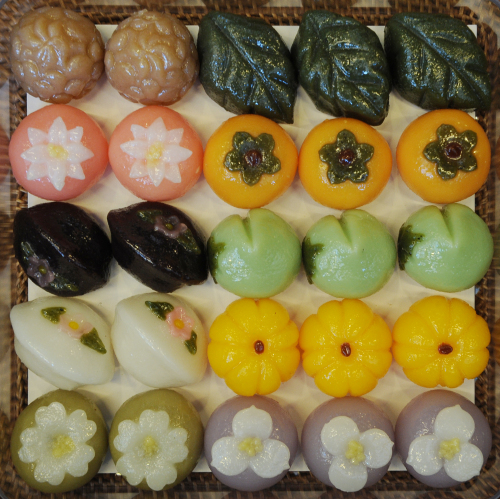
Highway drives that normally take four hours can stretch to ten or twelve. Meanwhile, families sit down to a full 차례 table (Korean pear, jujube, chestnuts, sanjeok skewers, tteok, japchae, jeon) then eat 송편, half moon rice cakes steamed over pine needles. Every family has a slightly wonky one that a five-year-old made.
The gift economy around Chuseok is enormous. Combined with Seollal, the seasonal K-food gift box market pulls an estimated ₩1 to ₩2 trillion each year. Hanwoo beef sets, Korean pear boxes, Spam gift towers (yes, Spam, and Koreans are not embarrassed by it), premium mushroom and abalone assortments. Retail spikes 30 to 40 percent in the two weeks leading up to the holiday. Working at a Korean company during 추석 시즌? Your inbox will contain more corporate gift-set requests than actual work.

Children's Day 어린이날: May 5
어린이날 is exactly what it sounds like, but nothing about it is chill. Started in 1923 by writer and children's rights activist Bang Jeong-hwan (방정환), who insisted Korea treat children as full human beings, it became a national holiday and a commercial event of Black Friday proportions. Everland and Lotte World turn into human parking lots. Show up at either park without a booked reservation on May 5 and you will queue 90 minutes for a churro. That is not hyperbole.
Toy brands live for this week. Sanrio Korea, Line Friends, Kakao Friends and the Pop Mart blind box wave all time launches around the first week of May. Grandparents get in on it too: in many families 어린이날 has quietly become a second sebae opportunity, a low-key envelope from 할머니 (halmeoni) tucked into a card.
The date matters culturally as well. May in Korea is called 가정의 달, the family month, because it packs 어린이날 (May 5), 어버이날 (Parents' Day, May 8), 스승의 날 (Teachers' Day, May 15) and Buddha's Birthday into a single 30-day window. If you work in Korean retail, marketing or logistics, May is your Q4.
Gwangbokjeol 광복절: Liberation Day, August 15
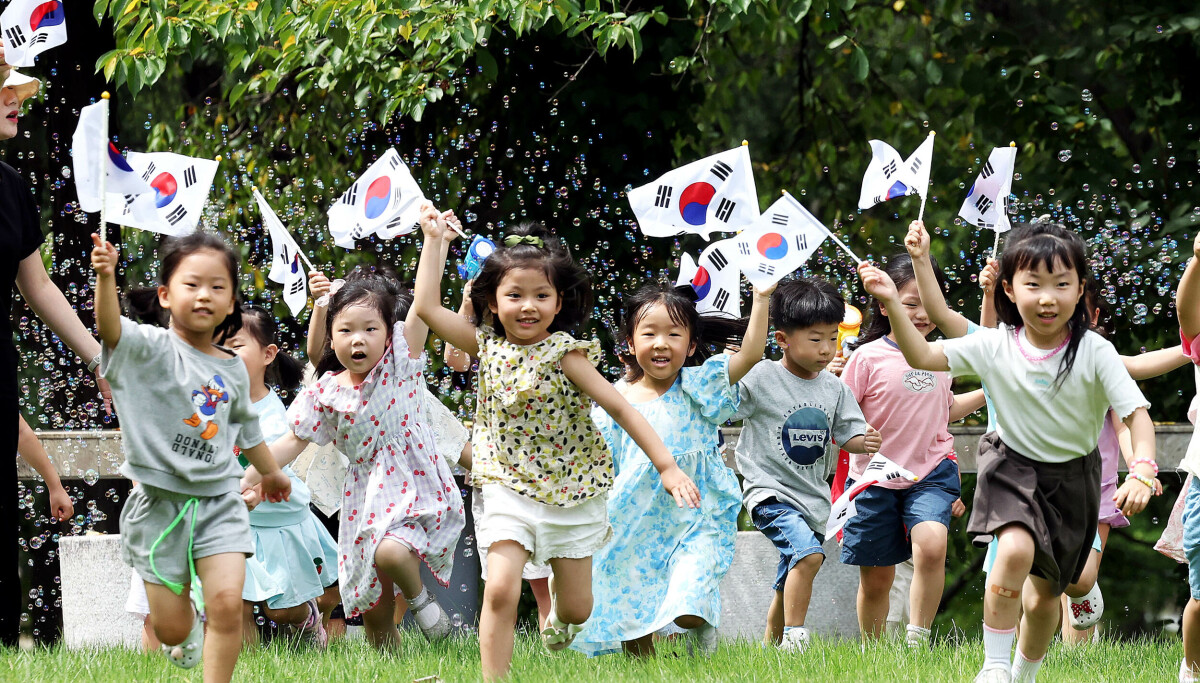
광복 literally means restoration of light. August 15, 1945 is the date Korea was liberated from 35 years of Japanese colonial rule. Every August 15, the 태극기 (Taegeukgi) hangs from apartment balconies, subway stations play patriotic songs and the President delivers an address that will get parsed line by line in Tokyo the next morning. Korea-Japan diplomacy runs hot every year around this date.
The K-film industry knows this rhythm. Patriotic historical dramas and films almost always drop within a two-week window around 광복절. Assassination (2015), The Age of Shadows (2016), Battleship Island (2017) and more recent titles like Phantom (2023) all timed release around this anniversary. Streaming platforms have caught on too, dropping colonial-era period pieces for the August viewing spike. If a new K-drama set in 1930s Gyeongseong (colonial Seoul) drops in early August, that is not a coincidence.

Hangeul Day 한글날: October 9
한글날 celebrates the promulgation of Hangeul, the Korean alphabet designed by King Sejong (세종대왕) and his scholars in 1443. It is the only writing system in the world with a documented creator, a documented date and a written linguistic rationale, which is why Korean linguists get slightly evangelical about it. Government offices close and the annual ceremony happens in front of Sejong's giant statue at Gwanghwamun Square, Seoul.
The cultural weight of this holiday has grown noticeably in the last five years, and it is directly tied to Hallyu. Duolingo's Korean course climbed from a niche add-on to a top ten global language on the app, sitting alongside Spanish and Mandarin. King Sejong Institute (세종학당), Korea's answer to the Alliance Française, now runs 250-plus branches across roughly 80 countries. Fans who once read fan-translated captions want to hear Jisoo say 안녕 and actually understand it. That is a soft power multiplier no ad campaign could buy, and it has quietly turned October 9 into a day K-pop labels build content calendars around.
Why the Calendar Matters
Korean holidays are not just days off. They are commercial cycles, family stress tests, generational negotiations and, increasingly, exports. When BTS wishes fans a happy Seollal on Weverse, ARMY across 40 countries fires back envelope emojis. When 추석 gift-set commercials break, reaction videos land in Manila and Kuala Lumpur within hours. The calendar is the culture, and the culture is now global.
If you want to experience these holidays without booking a flight to Incheon, the closest thing is a curated Korean cultural drop. The Daebak Box packages authentic Korean snacks, lifestyle goods and pop culture picks into a monthly delivery, so you can taste, smell and touch the K-holidays as they happen. Subscribe here: https://daebak.co/products/daebak-box. Your first 송편 moment or 세뱃돈 envelope might arrive by mail.


