


Table of Contents
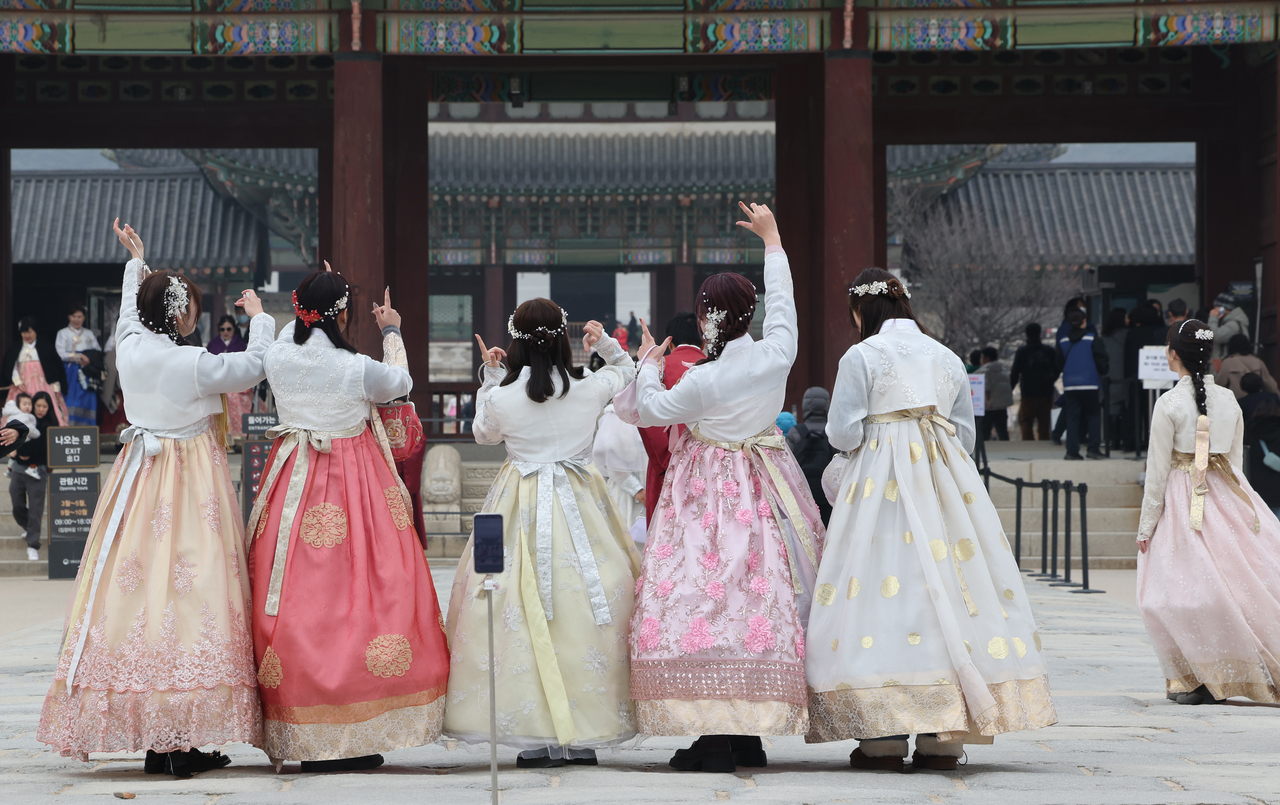
Walk past Gyeongbokgung on any weekend and you'll see the receipts: tourists in rental hanbok, K-pop idols posting Chuseok greetings in silk jeogori, Studio Hyeon dresses on Times Square billboards. Hanbok stopped being a museum piece somewhere around 2015, and the industry hasn't slowed down since. If you binge historical K-dramas, you already know the silhouette. What you might not know is why the pieces are shaped that way, why the colors follow a specific logic, and why a 2010s Jeonju brand called Leesle turned this whole thing into a lifestyle category.
What Is Hanbok, Really?
Break the word apart: 한 (han) means Korea, 복 (bok) means clothing. That's the whole etymology, and it matters because "hanbok" as a codified term is actually pretty recent. Koreans just called it 옷 (ot), clothes, until the late 19th century when Western dress arrived and people needed a word to distinguish the old wardrobe from the new one.
The silhouette we recognize today, high-waisted skirt billowing from just under the bust, cropped jacket floating above, mostly comes from the late Joseon era (1392 to 1910). Commoners wore undyed cotton or hemp in daily life. Colored silks were reserved for weddings, funerals, and the yangban aristocracy. That distinction between everyday plainness and ceremonial vibrancy is the reason hanbok reads as "special occasion" today even though for centuries it was just what people put on in the morning.
Here's the appeal point most fashion writers miss. Hanbok's proportions are engineered around volume and layering rather than the body's outline. Western tailoring flatters by hugging. Hanbok flatters by suggesting. That's why it photographs beautifully in motion, and why K-drama directors from Mr. Sunshine (2018) to Under the Queen's Umbrella (2022) shoot so many slow-mo walking scenes in it. The garment does half the choreography.
The Core Pieces: Jeogori, Chima, Baji, Goreum
The 저고리 (jeogori) is the short jacket both men and women wear. Long sleeves, a small squared-off white collar called 동정 (dongjeong) that's removable for washing, and a rounded hem that ends above the waist for women, mid-torso for men. The women's jeogori shrank dramatically through the 18th and 19th centuries, ending up cropped so short it barely covered the chest at its most extreme. Modern versions have pulled back to a more forgiving length.
The 치마 (chima) is the women's skirt: essentially a giant rectangular panel pleated into a wide waistband that ties above the bust. Underneath sits the 속치마 (sokchima), a petticoat that adds volume so the outer chima falls in that unmistakable A-line drape. This is why a proper hanbok looks structured even in soft fabric. The volume is engineered.
Men get the 바지 (baji), loose trousers gathered at the ankle with a 대님 (daenim) tie. They're cut deliberately baggy because Joseon-era men sat cross-legged on 온돌 (ondol) heated floors, and a tight pant was useless in a culture built around floor-sitting. The fit tells you everything about how the wardrobe evolved around domestic architecture.
Then there's the 고름 (goreum), those two ribbon-like strips hanging down the front of the jeogori. They tie the jacket closed, but their real job is decorative asymmetry: one strip short, one strip long, always draped to one side. When hanbok designers talk about "the line of hanbok," they mean the goreum. It's the visual signature. If a modernized hanbok drops the goreum entirely, purists will notice within three seconds.
Outer Layers: Po, Durumagi, Jokki, Magoja
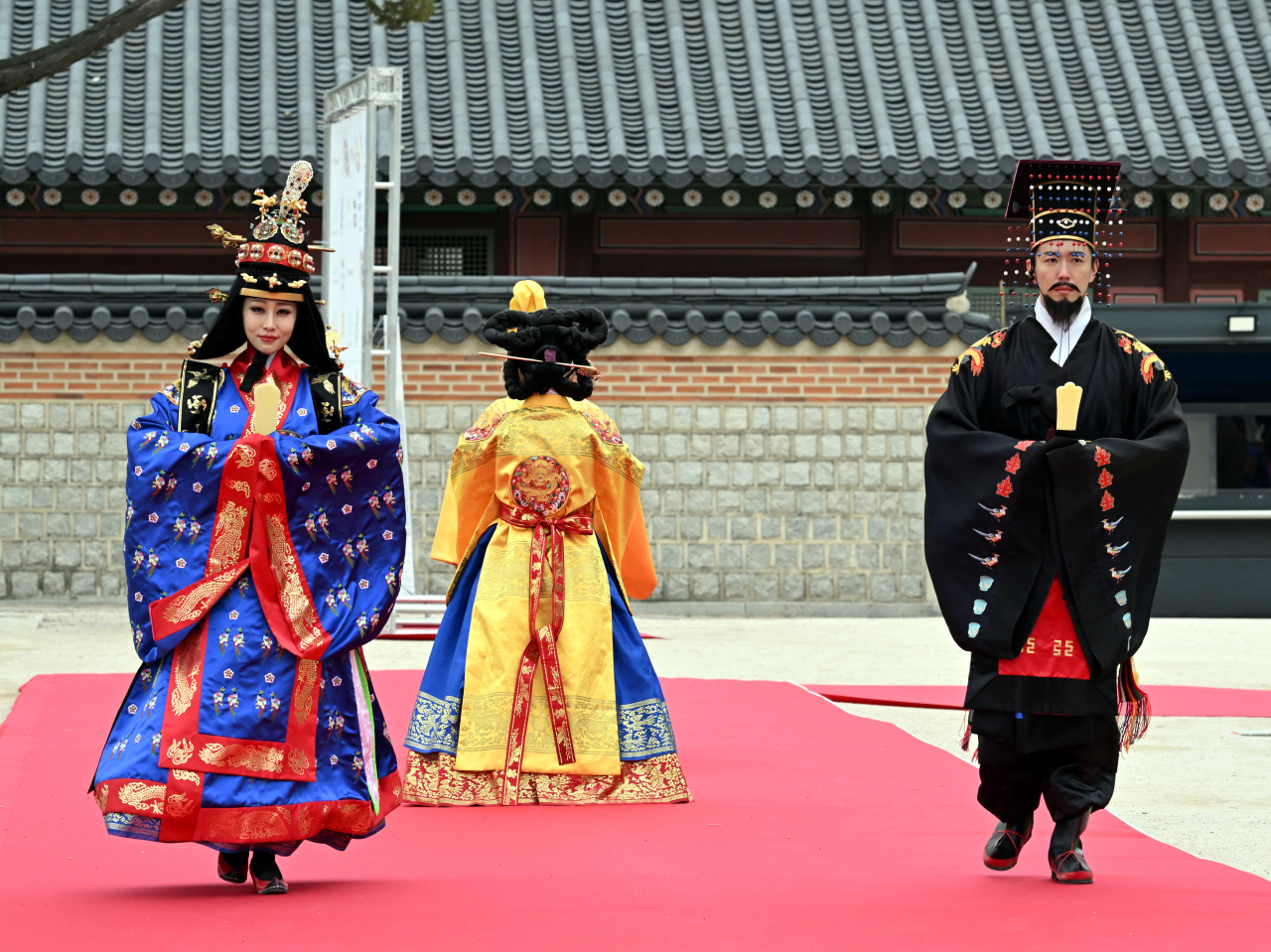
Layering is where hanbok gets nerdy. The 포 (po) is the general term for a long outer robe, a Three Kingdoms holdover that stayed in rotation through the late Joseon period. The 두루마기 (durumagi) is the winter version, ankle-length and lined for warmth, and it's the piece you still see today at formal Seollal photo shoots because it drapes cinematically.
Later additions came from Western contact in the closing decades of Joseon. The 조끼 (jokki) is a vest, essentially a Korean adaptation of the Western waistcoat, worn over the jeogori for warmth or dress-up. The 마고자 (magoja) is a short outer jacket with a straight open front, and here's the industry-insider bit: it was introduced from Manchuria via Heungseon Daewongun, the last king's father, after his return from exile in 1885. So one of the "classic" hanbok layers is actually a 19th-century import that got naturalized so thoroughly nobody questions it anymore.
오방색: The Color System That Isn't Random
Hanbok colors aren't just pretty. They're wired to the 오방색 (obangsaek), the five cardinal colors of Korean cosmology, each tied to a direction and a Wu Xing element:
- 파랑 (blue): East, wood, spring, new life
- 빨강 (red): South, fire, summer, passion and warding
- 노랑 (yellow): Center, earth, the sovereign color (why royal court robes leaned gold)
- 하양 (white): West, metal, purity and mourning
- 검정 (black): North, water, wisdom and depth
You see this most vividly on children's 색동 (saekdong) jeogori, the rainbow-striped sleeves stitched from bands of these five colors. It's not just decoration. Parents dressed children in saekdong to invoke protective energy across all five directions, deflecting bad luck from every angle. The stripes read as cute to Western eyes. To a Korean grandmother, they're a functional talisman.
The other thing worth flagging: gold-leaf trim on the hem of a chima was a royal-family monopoly. Commoners wearing it in the Joseon era could face actual punishment. So when you see gold-print hanbok at K-drama royal weddings, that's a specific signal of court rank the costume designers are shouting at anyone who reads the code.
Children's Hanbok and the 돌 Ritual
The single biggest occasion for children's hanbok is 돌 (dol), the first birthday. It's genuinely one of the most photographed events in Korean family life. Baby wears a miniature hanbok, often with saekdong sleeves, and the parents lay out the 돌잡이 (doljabi) items on a low table: a coin (wealth), thread (long life), a book or pencil (scholar), rice (never going hungry), and a stethoscope or gavel in modern versions (career signals).
Whatever the baby grabs first is prophesied as their future path. It's mostly a party game now, but the ritual survived because it's a beautiful excuse to gather three generations for a photo. The children's hanbok industry runs on this single day. Custom studios in Apgujeong charge ₩300,000 to ₩1M for a dol-day rental package with photographer included.
Headwear: Gat, Binyeo, Daenggi
Unmarried women wore their hair in long braids finished with a 댕기 (daenggi), a wide silk ribbon. After marriage, hair went up into a low chignon at the nape, secured by a 비녀 (binyeo), a long ornamental pin. The binyeo material mapped straight to social rank: jade or coral for nobility, silver for the wealthy middle class, wood or bone for commoners. Grave-goods archaeologists date Joseon burials partly by binyeo composition.
Men wore the 갓 (gat), the sheer horsehair hat with a wide flat brim and a tall cylindrical crown. If you watched Netflix's Kingdom (2019), the gat is what launched a global search-trend spike for "Korean zombie hat." It reads as costume drama now, but for Joseon scholars this was daily headwear, worn indoors and out, marking them as married adult men of literate status.
Wedding, Chuseok, Seollal: The Big Occasions
Modern Koreans don't wear hanbok daily, but four occasions still command it. Weddings, where the bride often changes into a bright red-and-blue 활옷 (hwarot) or 원삼 (wonsam) ceremonial robe for the traditional bowing ritual, 폐백 (pyebaek), before switching back to a Western white gown for the main reception. Two dress codes, one wedding, split down the middle.
추석 (Chuseok), Korean harvest festival in autumn, is a hanbok holiday. Families travel back to hometowns, bow to ancestors, share songpyeon rice cakes. 설날 (Seollal), Lunar New Year, is the other big one: children bow to elders in fresh hanbok and receive 세뱃돈 (sebaetdon) money envelopes for it. And 돌 (dol), as covered above.
Then there's the tourism circuit. Since 2013, Gyeongbokgung offers free admission to anyone wearing hanbok, and this single policy created an entire rental economy in Insadong and around the palace gate. There are now 30-plus rental shops charging roughly ₩15,000 to ₩25,000 for a 4-hour session including hair styling and accessories. Chinese and Southeast Asian tourists drive most of the demand, and Korean high schoolers do it as a weekend friend-group activity. On a peak Saturday you'll see more hanbok inside Gyeongbokgung than you would have on the streets of 19th-century Seoul.
Modern Hanbok: The 개량한복 Movement
개량한복 (gaeryang-hanbok) literally means "improved hanbok," and it's the term the industry uses for the modern reworked pieces you'll find in Insadong boutiques and Instagram closets. The category exploded post-2010, and one Jeonju-based brand deserves most of the credit: 리슬 (Leesle), founded by designer Hwang Yi-seul in 2013.

Leesle's move was surgical. Keep the jeogori-and-chima silhouette that reads instantly as Korean, but rebuild it in machine-washable cotton and linen with modern collar treatments, pockets, and simpler ties. Prices dropped into approachable territory (₩80,000 to ₩250,000 per piece versus custom silk at ₩500,000 to ₩3M). Suddenly hanbok became something a 24-year-old could wear to work or a cafe date, not just something rented for palace photos.
The Korean government's Hanbok Wave project, running since 2020, threw institutional muscle behind this. It commissioned designers like Studio Hyeon's Kwon Hye-jin to dress Kim Yuna, actor Kim Tae-ri, and K-pop groups including Momoland in modernized pieces that got showcased at Times Square in New York. The pattern is intentional: pipe hanbok into the same K-content export channel that pushed Bulgogi and BTS into global rotation.
The K-drama surge did the rest. Mr. Sunshine (2018) had costume designer Kim Jung-won reimagining late-Joseon silhouettes in gauzy layers. Kingdom (2019) turned the gat into a meme. The Red Sleeve (2021) starring Lee Junho reignited royal-court aesthetics for the streaming generation. Under the Queen's Umbrella (2022) leaned into vivid saekdong and became a costume moodboard on Pinterest for months. Each show was a de facto hanbok commercial with a plot attached.

The market backs the vibe up. Korea's hanbok industry sits at roughly ₩200-300 billion in annual revenue depending on which trade body you ask, with rental, custom design, and mass-premium (Leesle and imitators) as the three main pillars. Not a huge category by fashion standards, but growing at roughly double the rate of general Korean apparel since 2018. And unlike qipao or kimono, which stayed largely ceremonial, hanbok is genuinely trying to live in the everyday closet again.
Why This Matters
The insider read is that hanbok's global moment isn't about nostalgia. It's about the same appeal engine that drives all Hallyu: specificity that translates. The five colors mean something. The goreum ribbon is engineered for asymmetry. The gat is unmistakable. When a piece of culture has that many built-in signatures, it doesn't need explanation to feel foreign-and-desirable in a New York boutique or a Manila cafe. It just needs distribution.
And that's what K-content is: distribution at scale for cultural specificity that would otherwise stay local. Hanbok caught the wave. Watch the next five years and it'll show up on more Western runways than you'd guess.
Bring Hanbok Culture Home
Want to keep exploring Korean traditions between palace visits? The Daebak Box ships hand-picked Korean lifestyle finds to your door each month, curated by our Seoul team.


