


Table of Contents
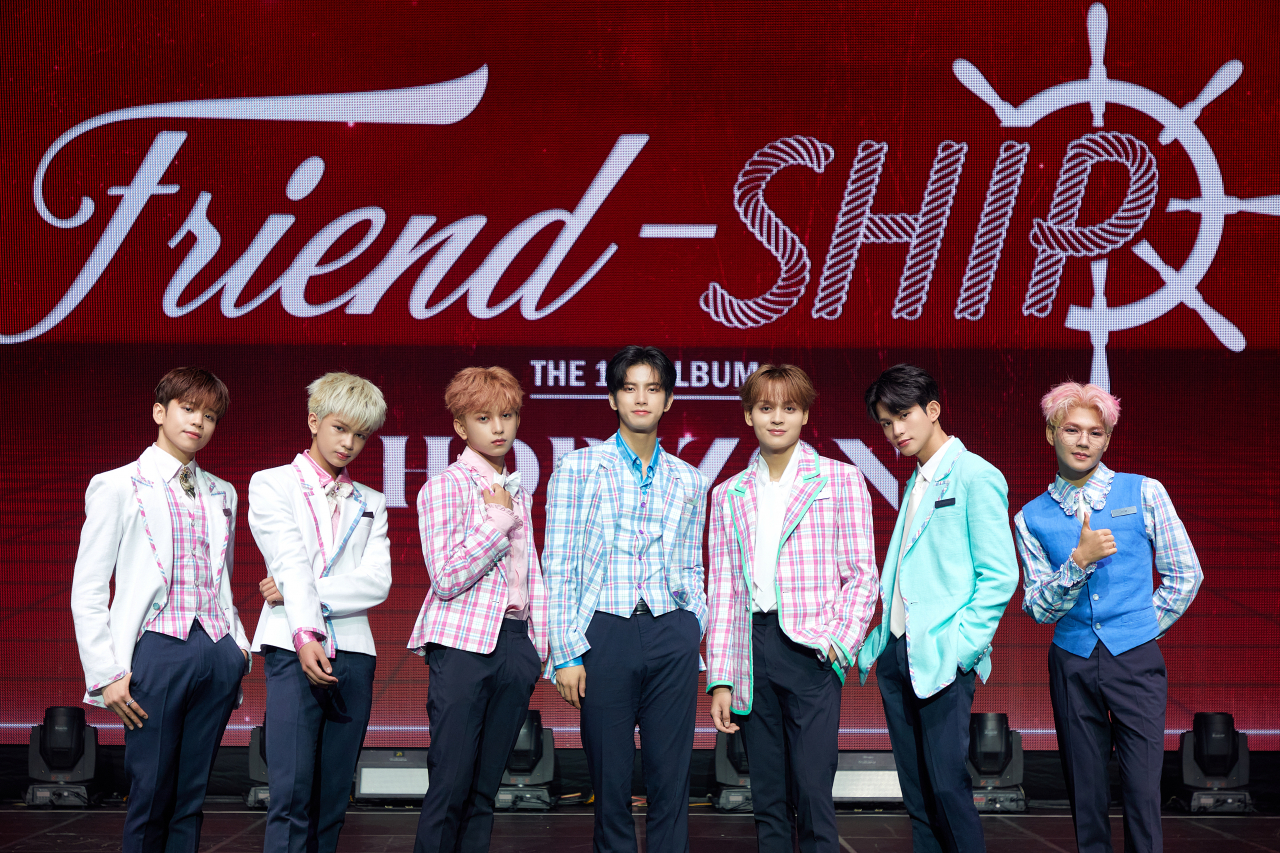
When HORI7ON walked onto the PyeongChang Dome stage on January 19, 2024, the seven Filipino members did something no non-Korean group had ever done at a Korean-hosted Olympic ceremony: they headlined a segment as a Korean-industry-trained pop act performing in front of the IOC, a Girls' Generation TaeYeon set, and roughly a hundred national delegations. If you were paying attention to the K-content business in early 2024, you already knew this booking was less about spectacle and more about a thesis MLD Entertainment had been building since 2020. I've been working in and around the K-pop industry for over a decade, and this moment, quiet as it looked on the broadcast, was one of the clearest signals that the Filipino K-pop pipeline had matured into a real category.
HORI7ON's rise: not a fluke, a strategy
HORI7ON (호라이즌) is comprised of Vinci Malizon, Kim Huat Ng, Kyler Chua, Reyster Yton, Winston Pineda, Jeromy Batac, and Marcus Cabais. They were assembled through Dream Maker, a 2022 survival reality show that MLD Entertainment co-produced with ABS-CBN, the Philippines' biggest broadcaster. Around 100 days of what Korean industry insiders quietly call 지옥훈련 (jiok-hunlyeon, hell training) followed. Same brutal schedule as any HYBE or SM 연습생 (yeonseupsaeng, trainee) endures, only stacked on top of Korean language study.
Here's what makes the story worth telling. HORI7ON did not debut as a Filipino boy band chasing the K-pop aesthetic. They debuted as a Korean-industry act whose members happened to be Filipino. That is a category-defining distinction and the appeal point that Filipino fandoms responded to most: these are their guys, but produced with the full MLD 시스템 (system) that turned MOMOLAND into a Southeast Asia touring machine. Vinci said it plainly in his debut showcase, that the group's challenge was "setting our own standards as HORI7ON," not copying a Korean template.

The Gangwon Olympic slot: why it wasn't just PR
The 2024 Winter Youth Olympics ran from January 19 to February 1, 2024, with the opening ceremony split between Gangneung Oval and PyeongChang Dome. HORI7ON's performance was locked in on opening night, on a bill that also featured TaeYeon, the K-pop veteran whose commercial vocal signature has anchored Korean sports ceremonies since 2018. Bookings like that are political inside the industry. The Korean Olympic Committee, KOCIS, and the local broadcast partners typically want established Korean artists for max audience recognition. Handing PyeongChang Dome minutes to a rookie non-Korean group is unusual.
The read from the industry side: MLD had pitched the Youth Olympics organizers on global representation, and HORI7ON was the perfect stat line. First all-Filipino K-pop act, formed on a bilateral Korea-Philippines TV property (Dream Maker), managed under a Korean label, still commercially fresh six months post-debut. It also gave the Gangwon organizing committee a Southeast Asia broadcast hook, which matters when Winter Youth Olympics ratings in tropical countries are historically brutal. HORI7ON's Manila following alone carried the segment through Filipino TV in ways a purely Korean group could not.

Filipino representation without the tokenism trap
Filipino talent has been quietly threaded through K-pop for over a decade. SEVENTEEN's Vernon has Filipino-adjacent connections through his mother's heritage claims (accurately, his mother is Korean-American; the Filipino-Vernon rumor is a longstanding fandom mix-up). aespa's Winter reportedly has no confirmed Filipino ancestry despite Filipino fandom claims, and the industry precedent is more about Korean-Filipino-American trainees like KATSEYE's Sophia and Manon rather than pure Filipino-national idols. What HORI7ON changed was the direct-hire model. Instead of drafting a Filipino-heritage trainee into a mostly Korean group, MLD built a whole group in the Philippines, ran them through Korean training, and priced the product for both Korean and Southeast Asian markets simultaneously.
That structural difference is why the Gangwon Olympic booking mattered beyond a two-song set. It ratified the model. If a bilateral survival-show group could headline an IOC-broadcast ceremony inside Korea, then the "localized K-pop" playbook was no longer speculative. NCT Wish, RIIZE international members, and even KATSEYE's Manila-heavy fandom strategy are all downstream of the argument that MLD started making with HORI7ON.
Members: what each one actually brings
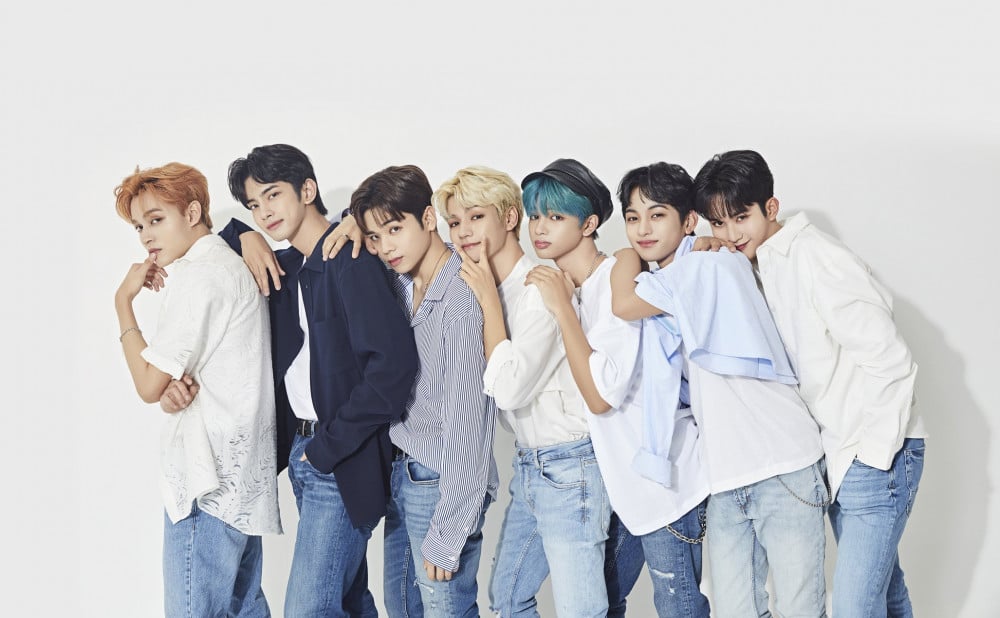
Skipping the standard bio table (their agency has that on Instagram), the more useful frame is what each member does inside the group's performance architecture.
- Vinci Malizon, leader, 23 at debut. Vocal anchor, main promotional face, the member most fluent in the Korean showcase press-conference format. He was later cast as a mentor on the follow-up Be the Next: 9 Dreamers audition show, which tells you MLD sees him as the group's long-term center of gravity.
- Kim Huat Ng, ethnic Chinese-Filipino background, bilingual utility. Provides tonal contrast in choruses.
- Kyler Chua, the visual and social-media traffic driver. His Instagram growth curve outpaced the rest of the group post-debut, which is the metric that decides who gets the fan-meet close-ups.
- Reyster Yton, dance line, cleanest lines in the choreography breakdowns.
- Winston Pineda, the group's designated dance-break moment. Every K-pop group needs someone who can carry the eight-bar solo. That's Winston.
- Jeromy Batac and Marcus Cabais, the sub-unit pair. They performed "How You Feel" as a duo at the debut showcase and remain the group's ballad and R&B lane.
What the performance actually looked like
The set was tight and, tactically, correct. HORI7ON opened with their title track "SIX7EEN" from the Friend-SHIP album, mostly English lyrics with Korean bridges, engineered to travel across broadcast markets that don't default to Korean-language music. The performance leaned choreo-heavy rather than vocal-forward, which is what you want for a stadium-arena Olympic slot where the sound mix is unpredictable and the visual has to sell the bit.
The 정 (jeong, that untranslatable Korean warmth) that Filipino fans built with HORI7ON was on full display on the Manila broadcast side. Filipino fandom read the Gangwon booking as national pride, and that emotional payload gave the segment more juice than the actual arrangement warranted. This is exactly what a good label move looks like. Book a stage where the artist's existing fandom will over-perform on social clip velocity, and let organic sharing carry the campaign further than paid promo could.
The industry read: what comes next
Post-Gangwon, HORI7ON stayed dominant in the Philippine domestic market through 2024 and 2025, notched charting appearances on Korean music shows, and became the go-to case study for "localized K-pop" pitches at industry conferences like MU:CON and KCON Business Forum. MLD leaned harder into the bilateral survival-show model, co-producing Be the Next: 9 Dreamers with Artsro in 2025 and casting Vinci as a mentor alongside 2NE1's Sandara Park and EXO's Chen. Sandara Park, worth noting, was a Philippine market veteran long before joining YG, which makes the Manila-Seoul talent axis in that show non-coincidental.
Where the model gets tested next is retention. Non-Korean idol groups historically have shorter contract-cycle sustainability inside Korean labels because the return-on-training math is different (higher upfront cost, less domestic Korean market saturation). Whether MLD renews HORI7ON on the standard seven-year cycle or restructures them as a Philippine-domestic act will tell us whether the Gangwon Olympic booking was a launch pad or a ceiling. I'm watching that renewal window closely, and so is every other agency currently sourcing Southeast Asian trainees.

Why HORI7ON matters, plainly
The Gangwon 2024 booking gave a Korean-trained, Filipino-national group a platform inside the Korean pop-culture establishment. That's not a small win. It's the first time a non-Korean K-pop act headlined a Korean-hosted Olympic ceremony, and the mechanics behind it (bilateral survival show, Korean label, Southeast Asian broadcast rights) have quietly become the template for the next wave of Korean-labeled Southeast Asia groups. If you're a K-pop 팬덤 (fandom, paen-deom) member trying to understand why so many new groups suddenly have Vietnamese, Thai, or Indonesian trainees on the lineup, HORI7ON's Olympic slot is the reference point.
Whether HORI7ON becomes the Filipino BTS or plateaus as a case study, the group already earned its footnote in K-pop's globalization arc. And for anyone who watched Filipino fandoms carry Momoland's "Bboom Bboom" through Southeast Asia in 2018, this Olympic moment reads as vindication.
If you want to keep exploring the Korean pop culture, snack, and lifestyle ecosystem that groups like HORI7ON operate inside, the Daebak Box ships a monthly curation of Korean snacks, K-pop merch drops, and cultural essentials straight to your door. It's the closest thing to a Seoul care package we can build.


