


Table of Contents
In the last decade, South Korea has become the undisputed world leader in esports. Today, gaming is a thriving aspect of modern Korean culture with mainstream appeal that rivals K-beauty and K-pop. A lot of its cultural impact is due to a generational shift toward younger consumers who not only play, but share their enthusiasm online and generate massive growth for the industry.

Gaming as Mainstream Culture
Korean esports has graduated from niche subculture into something the whole country watches. Match days at LoL Park near Jonggak Station look like a hybrid of a football derby and a movie premiere, with fans lining up in team-branded beanies and queueing for BBQ chicken before the doors open. Only a few hundred fans fit inside the arena, but hundreds of thousands more tune in online through SOOP, Chzzk, and YouTube, turning a regional Saturday match into a globally watched event.
From the 1997 Crisis to StarCraft Nation
Seoul's status as a global esports capital is the product of three decades of strategic evolution. Following the 1997 financial crisis, the Korean government pivoted toward IT infrastructure as a national survival strategy. That decision birthed the PC bang, the neighborhood gaming room offering affordable access to high-speed internet, and when StarCraft arrived in 1998, it found a ready-made ecosystem. By 2000, Korea had launched the world's first game-specialized TV channel, OGN, and a governing body, KeSPA, under the Ministry of Culture and Tourism.

Inside the PC Bang
In South Korea, where the internet is just about as fast as the speed of light, the gaming experience is on another level. Internet cafes, or PC bangs (PC방), are everywhere. They are loaded with rows of high-end machines, ergonomic seating, and often serve food and beverages crafted by professional chefs. Once seen as dim, smoke-filled dens in the 90s, new-generation venues like Gen.G's Gaming Experience in Dongdaemun and RedForce PC rooms in Sinnonhyeon are now high-end lifestyle hubs, blurring the line between hobbyist and aspiring pro.
Worlds Comes Home: Seoul on the Global Stage
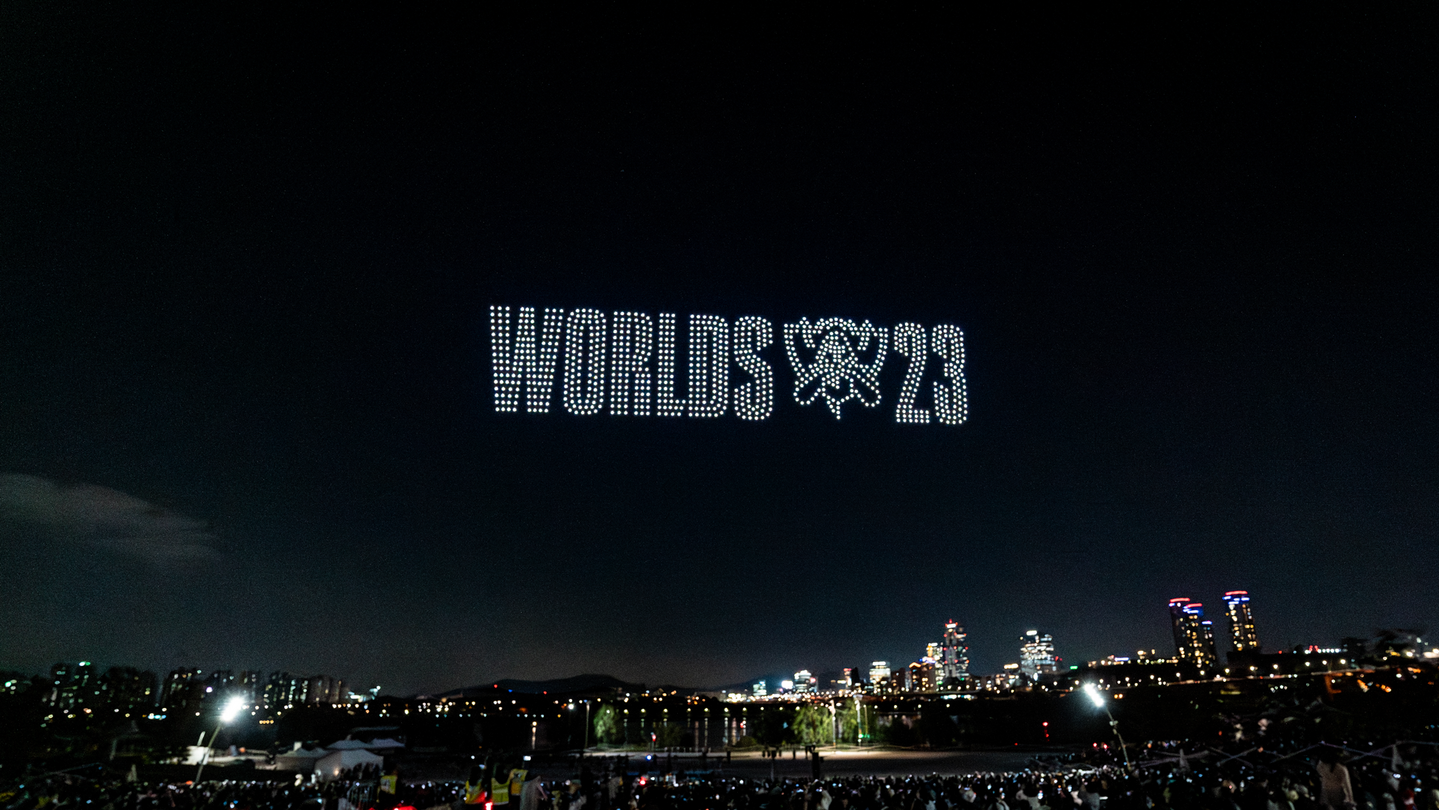
When the League of Legends World Championship returns to Korea, the whole capital lights up. Riot Games has staged enormous Fan Fests in Gwanghwamun Square, drone shows over the Han River, and finals viewing parties at the Gocheok Sky Dome that draw tens of thousands of fans. Korean teams won five straight Worlds titles from 2013 to 2017, and the country remains the cultural and competitive heart of the global esports calendar.
Faker: The Face of Korean Esports
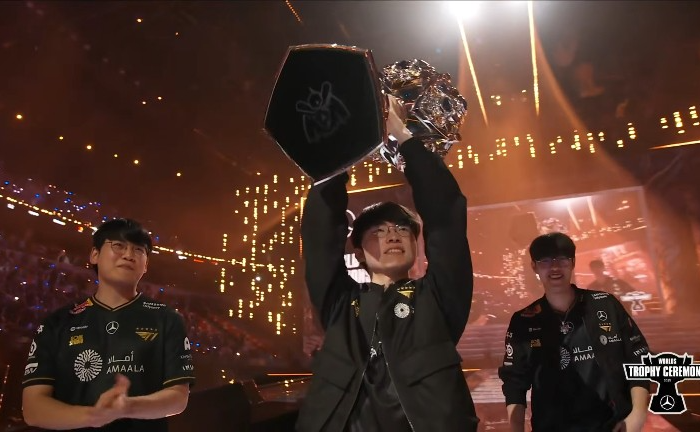
To get a sense of how immense esports is in South Korea, look no further than professional gamer Lee Sang-hyeok, commonly known as Faker. If there is anyone who rivals the popularity of K-pop idols, it is this guy. Faker is the world's top League of Legends player and led T1 to a record-setting run, including a historic three-peat at the 2023, 2024, and 2025 World Championships. In July 2025, T1 announced a four-year contract extension that will keep Faker on the team through 2029, well beyond the typical esports retirement age.
National Recognition and Soft Power
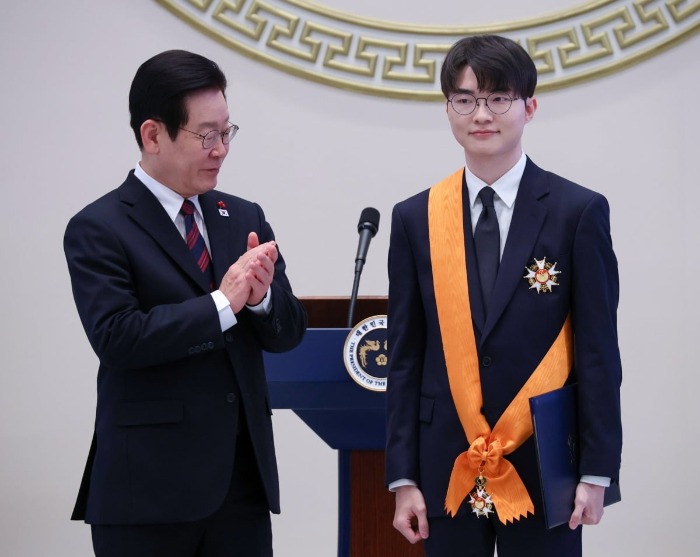
Esports has crossed over from a youth pastime into Korea's national soft power toolkit. Gaming debuted as a medal event at the 2022 Hangzhou Asian Games, where Korean players were celebrated as national heroes alongside traditional athletes. In January 2026, Faker became the first esports athlete to receive the Cheongryong (Blue Dragon) Medal of Sports, Korea's highest sporting decoration, joining icons such as Son Heung-min, Kim Yuna, and Park Se-ri. The Korea Tourism Organization now markets the country as an "esports pilgrimage" hub, targeting young travelers from Taiwan, China, and Vietnam.
Why Gaming Defines Modern Korea
Gaming is not only a hobby for South Korea's youth, but for many it is the cultural language they share with friends, family, and global fandoms. Just as the internet evolved into a vital resource for mass communication, Koreans have used it to reshape everyday life, and gaming has become one of the most influential drivers of that change. From PC bangs on every corner to sold-out LCK arenas, Korea has built a gaming culture the rest of the world is still trying to copy.
Explore More of Korea with Daebak
Want to bring a little piece of Korea into your life? The Daebak Box is packed with the best Korean snacks, ramen, and cultural goodies delivered monthly to your door.


