


Table of Contents
I have been watching the Korean film industry trade flights to Busan every October for over a decade now, and the pattern is always the same. Cannes and Venice command Western prestige. Toronto runs the awards-race lobby. But if you want to know which Asian film a distributor will fight over six months from now, you fly into Gimhae and head straight for Haeundae. The Busan International Film Festival, 부산국제영화제 or BIFF, is where that bet gets placed.
Why BIFF Beats Tokyo and Hong Kong for Asian Cinema Weight
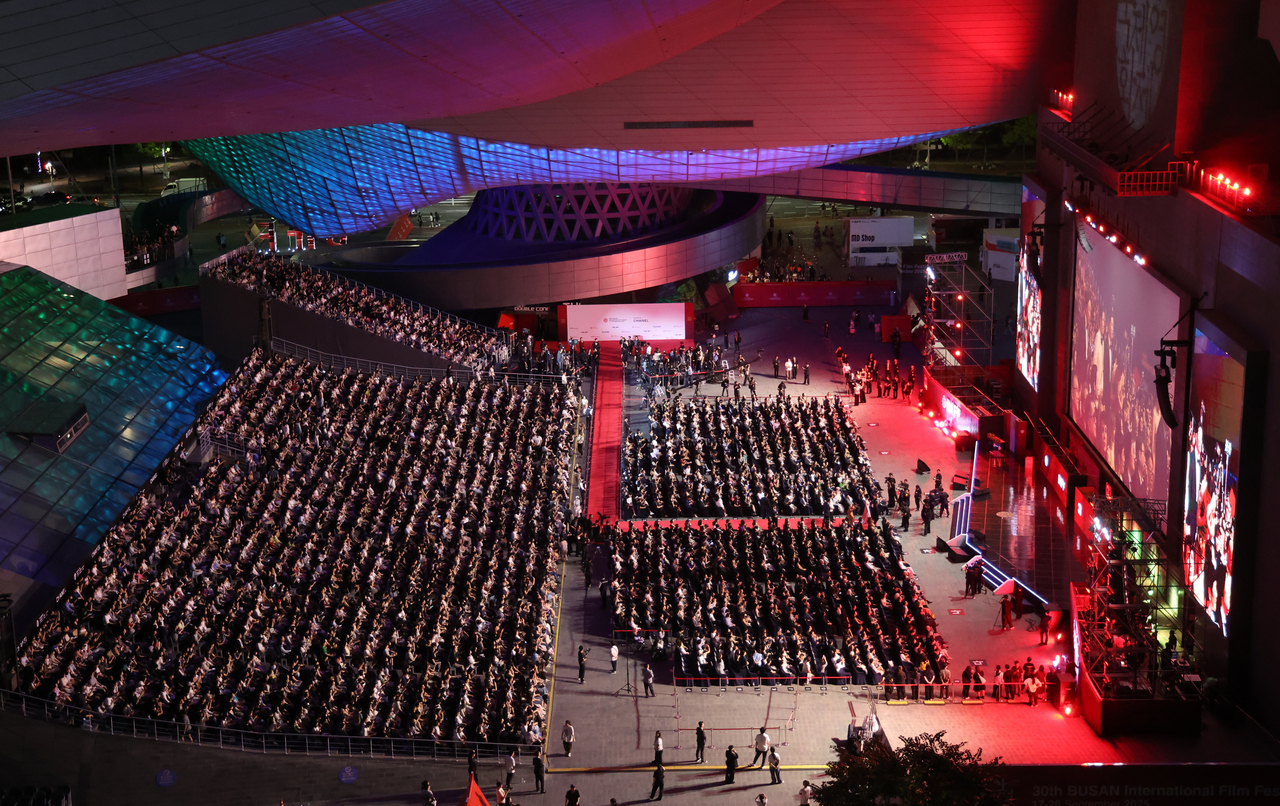
The Tokyo International Film Festival has the budget. Hong Kong has the geographic logic. BIFF still owns the room. The reason comes down to programming reputation, not flash. Since 1996, BIFF's curators have used the A Window on Asian Cinema strand to map the entire continent's output for foreign buyers in one 10-day window. That is the deal-making floor. Sales agents from Paris, distributors from Berlin, and streaming acquisition teams from LA all sit in the same Centum City lounges making offers on Korean rights specifically, because BIFF screenings come with built-in regional press coverage.
Time magazine called it Asia's premier festival back in 2005, and nothing in the last 20 years has flipped that ranking. The 30th edition in September 2025 screened 328 films from 64 countries and pulled in 145,000-plus attendees, numbers that Tokyo cannot touch despite a richer host economy. The trade press still flies the right people. Screen Daily, Variety, Hollywood Reporter, Deadline all post Busan correspondents for the duration, which is the real proxy for industry weight.
The Busan Cinema Center: A $150M Architectural Bet on Cinema
Most film festivals improvise venues. BIFF has a custom-built one, and the building is the loudest signal of how seriously Korea takes its cinematic infrastructure. The Busan Cinema Center, 영화의 전당 (Yeonghwa-ui Jeondang), opened in 2011 in Centum City, Haeundae-gu. The design competition went to Austrian firm Coop Himmelb(l)au, led by Wolf D. Prix, whose proposal cantilevers a 60 by 120 meter roof, the size of a soccer field, off a single support column 85 meters away. That cantilever holds a Guinness World Record. The underside is wrapped in dynamic LED panels that run motion graphics during festival nights, turning the plaza into an outdoor screening canopy.
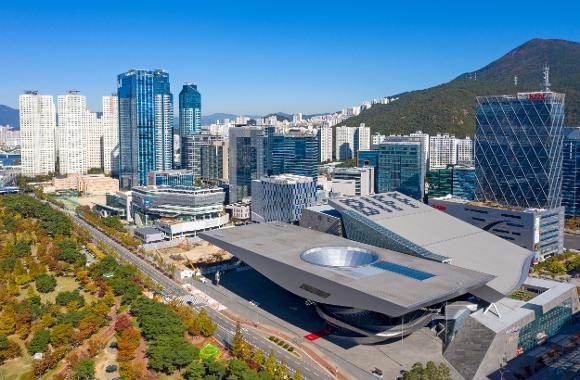
The total venue cost ran near 167 billion won, a public investment that signaled something Cannes and Venice never had to prove: a city government willing to bankroll cinema as civic identity. The complex houses the 4,000-seat BIFF Theater, three indoor multiplex cinemas, a cinematheque, and a small Indieplus venue for independent screenings. During festival days, all of it runs at capacity, plus overflow screenings at CGV Centum City and Lotte Cinema Centum City right next door. That density matters. You can catch a Cannes Palme winner at 11am, an unknown Bangladeshi debut at 2pm, and a Korean genre film world premiere at 7pm, all within a 15-minute walk.
Why Busan, Not Seoul: Haeundae as the Industry's Living Room
Foreign visitors always ask why Korea's biggest film festival is not in Seoul. The answer is partly historical, partly tactical. When Lee Yong-kwan, Kim Ji-seok, and Jeon Yang-joon pitched the idea in 1994, Busan offered something Seoul could not: civic appetite. The Busan city government wanted a cultural anchor that would distinguish the port city. They gave the founders sponsorship access, eventually a custom venue, and political backing through the rough early years. Kim Dong-ho, the founding director, has been blunt about it. Friends in the Seoul film world told him the festival would fail. It did not.
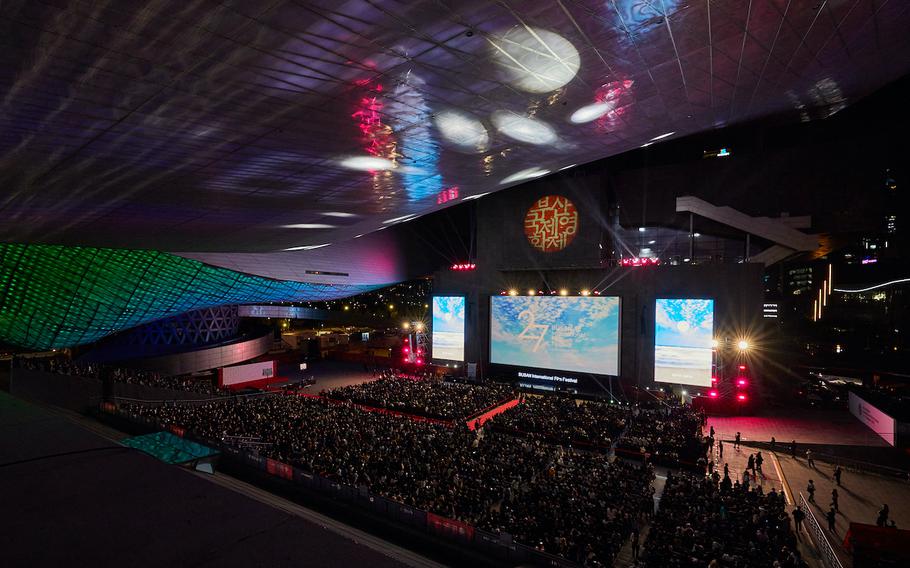
Haeundae itself is the second part of the answer. The festival's social scene runs on the beach. After the 7pm screenings end, the boardwalk turns into a 24-hour open bar with tented pojangmacha (포장마차), filmmakers in folding chairs drinking soju with critics they just argued with at a panel. That informality is where deals close. Cannes has the Hotel du Cap. Busan has Haeundae sand and 5,000 won soju. Both work; only one is approachable for a 30-year-old Asian director hoping to corner a producer for ten minutes.
The Industry Mechanic: How BIFF Launches Korean Cinema Careers
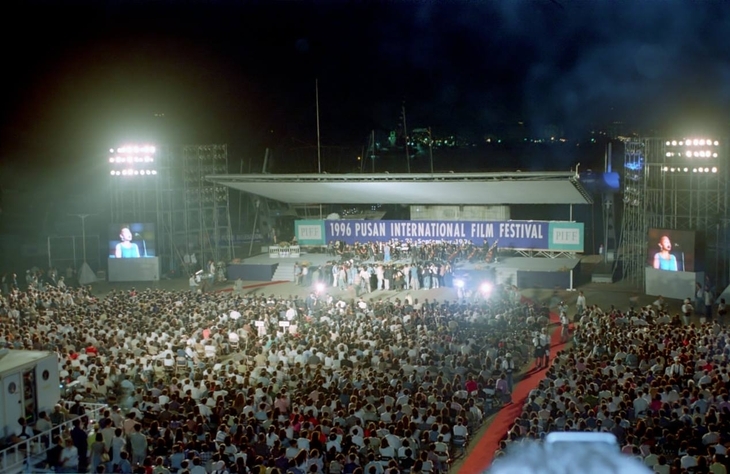
Here is the part casual visitors miss. BIFF is not just an exhibition, it is a launchpad. The New Currents competition for first and second-time Asian feature directors has been running since the inaugural 1996 edition, and its alumni list reads like a Cannes program. Bong Joon-ho's early career broke through Busan visibility, 12 years before Parasite swept four Oscars in 2020. Jia Zhangke, the Chinese auteur, also got his international platform through New Currents. The Hollywood Reporter has called the strand BIFF's most consequential output, the section that produced the directors Cannes now competes for.
For Korean filmmakers specifically, programming a film at BIFF is the equivalent of a label A&R signal. Distributors lock domestic theatrical commitments. Streaming buyers, Netflix and Coupang Play and Wavve, send acquisition teams. Foreign sales agents queue. Park Chan-wook's Decision to Leave (2022), which went on to win Cannes Best Director, had its industry buzz seeded at BIFF first. The opening film slot in particular is now a coveted national platform; Park's own No Other Choice (2025) opened the 30th edition, a Cannes-tier film delivered to Busan precisely because BIFF audiences and trade press validate Korean cinema's prestige value in a way Seoul box office cannot.

The Asian Cinema Fund and ACFM: The Money Side No One Talks About
The reason BIFF kept growing while other Asian festivals stalled comes down to two industry programs the press rarely covers. The Asian Cinema Fund (ACF), launched in 2007, provides development and post-production support for independent features across the continent. It is small money by Hollywood standards, but for a Filipino director or a Bangladeshi debut feature, ACF backing is often the difference between a finished cut and an abandoned project. The Asian Contents and Film Market (ACFM), running parallel to the festival every year, has become the region's primary marketplace for buying, selling, and financing Asian content. It celebrates its 20th edition in 2025 with partnerships involving Google, Amazon Web Services, China's Kling, and TikTok.
What this means practically: when you visit BIFF as a tourist, you are walking past dealmaking floors disguised as press lounges. The Chanel x BIFF Asian Film Academy trains the next generation of Asian directors on Busan's dime. The Busan Asian Film School (BAFA) gives them a curriculum. The Producer Hub introduced in 2025 connects national film organizations across Asia. None of this happens at Tokyo or Hong Kong at this scale. That ecosystem is the structural reason BIFF survives political pressure, sponsor turbulence, and pandemic shutdowns and still expands.
What to Know Before You Go: October Timing, Tickets, and the Open Talks
BIFF historically runs early October, although the 30th edition shifted to September 17 to 26, 2025, after the Venice and Toronto festivals end. Tickets for the opening and closing ceremonies, including the outdoor red carpet view, go on sale roughly two weeks before the festival on the official BIFF booking site, and they sell out in minutes. For regular screenings, advance booking opens for general public about 10 days before opening night. Pro tip from the industry side: the Open Talks and Outdoor Greetings, where stars do informal Q&As with the audience after screenings, are free but require lining up early in the morning at the BIFF Square or the Cinema Center outdoor plaza.
The festival's 시사회 (sisahoe, preview screening) tickets are the toughest to land if a Korean star-attached film is screening. The 개막작 (gaemakjak, opening film) is automatically the most contested. If you cannot get those, the Korean Cinema Today and Vision strands are genuinely the best programming bet: small Korean indies that may not get theatrical distribution otherwise, in a 1,000-seat room with the director attending. That is BIFF's secret weapon. Foreign festivals send their hottest titles. BIFF makes you discover three Korean directors you have never heard of, two of whom will probably be at Cannes in five years.
Explore More of Korea with Daebak
Want to bring a little piece of Korea into your life? The Daebak Box is packed with the best Korean snacks, ramen, and cultural goodies delivered monthly to your door.


