


Table of Contents
For most of the twentieth century, hanbok lived in the back of Korean closets, pulled out for Lunar New Year, Chuseok and weddings. In 2026, the same silhouettes turn up at university campuses, cafes in Seochon, K-pop stages at Gyeongbokgung Palace and luxury runways in Milan. The shift has a name in Korean: modeon hanbok, or modern hanbok, a movement that keeps the jeogori jacket and chima skirt of the Joseon era but trades silk and starch for washable cotton, denim panels, lace and pastel prints.
From Joseon Court Dress to Everyday Closet
Hanbok as Koreans recognize it today was codified during the late Joseon dynasty, when the short jeogori jacket paired with a high-waisted chima skirt for women, or baji trousers for men, became the standard form. After the Korean War and rapid Westernization, the garment was pushed to ceremonial use. Designers complained for decades that traditional hanbok was beautiful but uncomfortable, with long skirts, wide sleeves and silk panels that could not be machine-washed.
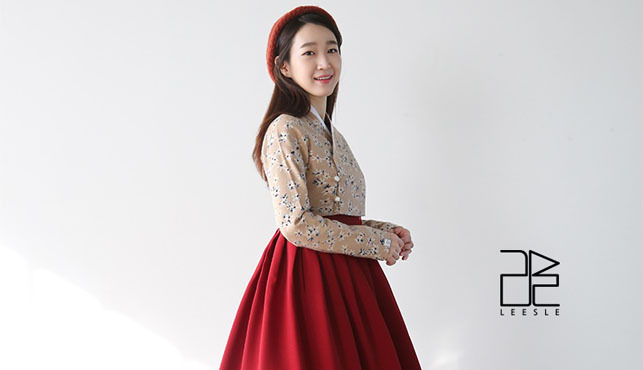
The new wave reverses that. Brands such as Leesle (이슬), founded in 2014 by Hwang Lee-sle in Jeonju, simplify the cut, shorten the skirt and switch to cotton blends so a jeogori can go through a washing machine. Danha (단하), launched in 2018, reinterprets Joseon-era pieces like the cheollik military robe and dopo overcoat as ready-to-wear dresses. Veteran couturier Tchai Kim Young-jin (차이김영진) continues to design high-end traditional hanbok for film and ceremony, while Hwang Yi-seul of Leesle and other young designers push the casual end.
BTS, the UN Speech and the Idol Era
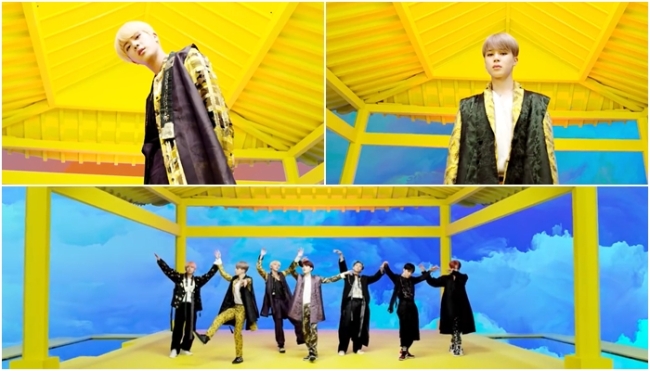
Modern hanbok entered the global pop conversation through K-pop. In 2018, BTS released the music video for Idol, with members wearing modernized black-and-gold hanbok designed by Baek Oak-soo, stripped of the traditional goreum ribbon for a sharper line. That same week, group leader RM delivered the first UN General Assembly address by a K-pop act, and the costumes from Idol were later put on public display at the Gangnam Tourist Information Center as part of the 2018 Gangnam Festival.
BLACKPINK and the Danha Boom of 2020
The bigger commercial shock came in June 2020, when BLACKPINK released How You Like That. In the final dance break, Jennie wore a phoenix-robe-inspired piece and Rose appeared in a cheollik-style top, both purchased from Danha and restyled by YG Entertainment's team. Within days the Seoul-based label reported daily online traffic jumping dramatically, with sales reportedly soaring more than 3,000 percent according to the designer's interviews with Korean media. The video crossed a billion YouTube views, and overseas fans started buying modern hanbok in volume from the United States, China, Europe and Southeast Asia.

NewJeans at Gyeongbokgung and Hanbok on the Palace Stage
In May 2024, NewJeans became the first K-pop girl group to perform inside Gyeongbokgung Palace at the 2024 Korea On Stage event, co-hosted by the Korea Heritage Service and KBS. Members Minji, Danielle, Hanni and Haerin took the stage in pastel-colored hanbok by Seodamhwa designer Song Hye-mi, wearing translucent jeogori jackets and high-waisted, voluminous skirts while performing Ditto, ETA and Super Shy. Unlike most stage hanbok, the costumes used an unaltered jeoksam, the lined inner jacket, signaling that even pop concerts now treat hanbok as living dress rather than costume.

Free Palace Entry and the Hanbok Selfie Economy
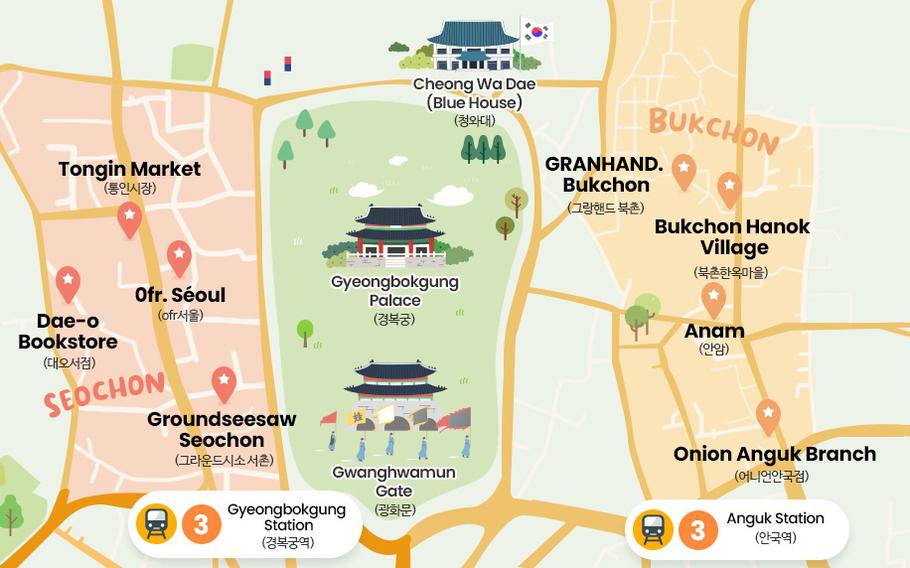
Outside the K-pop spotlight, the daily-wear movement is driven by tourism policy. Visitors who wear hanbok enter Gyeongbokgung, Changdeokgung, Changgyeonggung, Deoksugung and Gyeonghuigung free of charge, a benefit run by the Korea Heritage Service. Rental shops such as Hanboknam, clustered around Gyeongbokgung Station, charge roughly 20,000 to 30,000 won for a four-hour traditional rental, with theme and modern hanbok at higher tiers. According to the Cultural Heritage Administration, 1.6 million people entered the four main palaces and Jongmyo Shrine in hanbok in 2023.
The rentals fuel an Instagram-driven look that Korean media call fusion hanbok: jeogori paired with jeans, lace veils, dreadlocks tucked under a daenggi ribbon, hijabs styled with binyeo hairpins. In 2024 the head of the Cultural Heritage Administration, Choi Eung-chon, publicly urged stricter standards on what counts as hanbok for free palace entry, igniting a debate that continues to shape rental design.
Hanbok Day, Hanbok Culture Week and Government Push
The Korean government codified daily hanbok as cultural policy. October 21 has been observed as Hanbok-ui Nal, or Hanbok Day, since the Ministry of Culture, Sports and Tourism designated it in 1996. Since 2018, the date anchors Hanbok Culture Week, a multi-day program of fashion shows, exhibitions and free try-on events held at Gyeongbokgung and partner venues, with around 300 locations nationwide in 2024 under the theme Beautiful Hanbok, Ambassador of Korean Wave. In December 2024, Seoul went further and designated the last Wednesday of every month as Wear Hanbok Day for public officials and institutions, with hanbok set to become workwear at museums, art galleries and Korean Cultural Centers abroad.
Streetwear Hybrids and the Norigae Keychain
The next stage of the revival is hybrid streetwear. Leesle now sells unisex hanbok sweatshirts and wide-leg jogger pants on Amazon and through its global online shop, marketing the line as Korean Chic, Every Moment. Younger Korean shoppers carry norigae, the traditional silk tassel ornament, as bag charms or keychains. Daenggi ribbons appear as hair ties on TikTok, and OUWR collaborations with Kumdanje, the label that custom-designed BLACKPINK's black cheollik gowns for their 2023 Coachella headline set, push the cheollik into the festival circuit. In May 2023, Gucci staged its Cruise 2024 show at Gyeongbokgung's Geunjeongjeon courtyard, opening the runway with a hanbok-inspired floor-length bomber and goreum-style satin bows, the first luxury fashion show ever held inside the palace.
The Cultural Appropriation Fight
The revival has a defensive front. In late 2020, Chinese social media users and several state-aligned outlets claimed hanbok had originated from China's Hanfu, prompting a backlash from Korean officials, designers and celebrities. The Hanbok Advancement Center and figures such as Sungshin Women's University professor Seo Kyoung-duk have campaigned internationally to defend hanbok's Korean origins through documents and ads in foreign media. Designers like Danha's Kim Dan-ha have answered with collections that lean explicitly on Joseon iconography, while preserving the room for modern reinterpretation.
Why Young Koreans Are Reclaiming Hanbok
Underneath the headlines is a generational shift. University students in Seoul wear Leesle pieces several times a week. Foreign couples book hanbok weddings and engagement photoshoots in Bukchon Hanok Village. Cosplayers buy modern hanbok for conventions abroad. Designer Hwang Lee-sle told The Korea Herald the goal was always practical: clothing that ignores the consumer and the era will die out, so hanbok has to be wearable, washable and beautiful at first sight. With the palaces, the pop stars, the brands and the policy all pulling in the same direction, hanbok has stopped being a costume and is finally, in 2026, just another option in the closet.
Discover Korean Craft with SULSUL
Bring home a piece of Korea's living craft tradition with the SULSUL Box by Daebak, featuring handcrafted norigae, a dragonfly brooch, and a DIY knotted bracelet kit that celebrate traditional Korean artistry.


