


Table of Contents
Superstitions in Korea are not the kind of thing you flag as folklore in casual conversation. They are baked into the calendar. Having spent more than a decade in the Hallyu content and Korean marketing space, I can tell you the fastest way to spot a foreigner-run Korean brand is to see how they treat 미신 (misin, superstition) around food. The real ones respect it. Birthday 미역국 gets shipped in insulated jars. Exam-week promotions build around 엿 (yeot) rather than generic chocolate boxes. And every so often a K-drama couple scene mentions chicken wings and the older audience nods knowingly. This is a look at four food superstitions Koreans still live by, why they persist, and what the industry has quietly built around each one.

1. 미역국 on Your Birthday: Honoring the Mother Who Ate It First
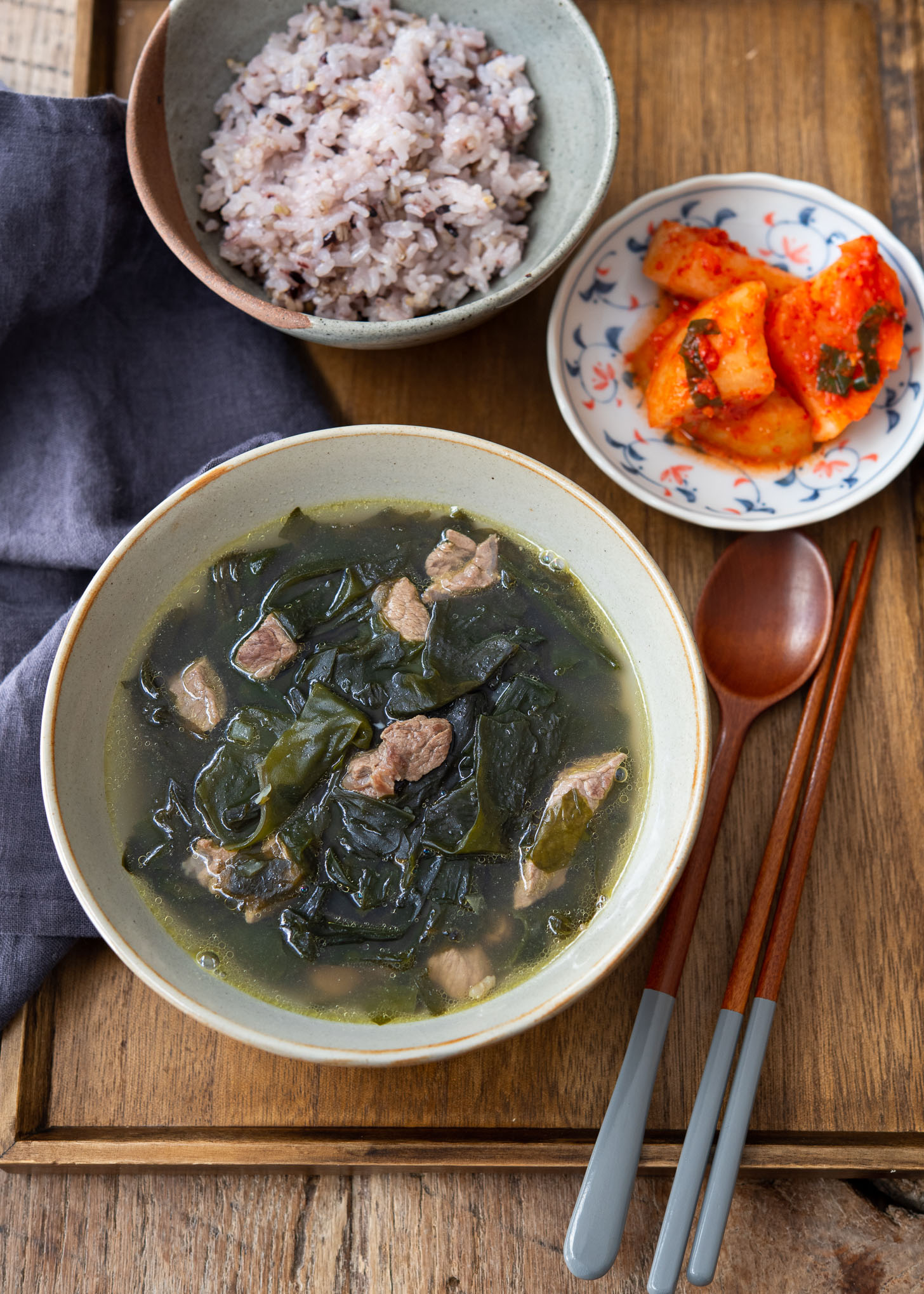
Every Korean birthday breakfast starts with a bowl of 미역국 (seaweed soup). Not a slice of cake, not brunch. Miyeokguk. The reason goes back to the 산후조리 (sanhu joli) postpartum tradition. Korean mothers eat miyeokguk three times a day for weeks after giving birth, because 미역 (wakame) is rich in iodine and iron and is believed to support recovery and breast-milk production. So when you eat it on your birthday, you are not just having soup. You are quietly thanking your mother for what she ate to bring you into the world.
This is why the "did you eat your miyeokguk today?" line shows up in almost every K-drama birthday scene. Foreign viewers read it as generic breakfast small talk. Korean viewers read it as an acknowledgment of maternal sacrifice, and the writers know this. The 정 (jeong, deep affection) that runs through the scene comes entirely from the food's cultural weight, not from anything the actors say out loud.
The industry angle here is real. Korean grocery chains stock beef brisket miyeokguk kits year-round for a reason. Bibigo (CJ CheilJedang's home-meal-replacement brand) sells premade miyeokguk pouches by the truckload, and the birthday-week spike is a genuine merchandising planning cycle for Korean grocery buyers. Miyeokguk is one of the few food categories where an entire product line survives largely on ritual demand, and it is easily a multi-hundred-million-won-per-year retail segment inside Korea alone.
2. 엿 Before the Suneung: The Sticky-Candy "Stick to the Exam" Wordplay
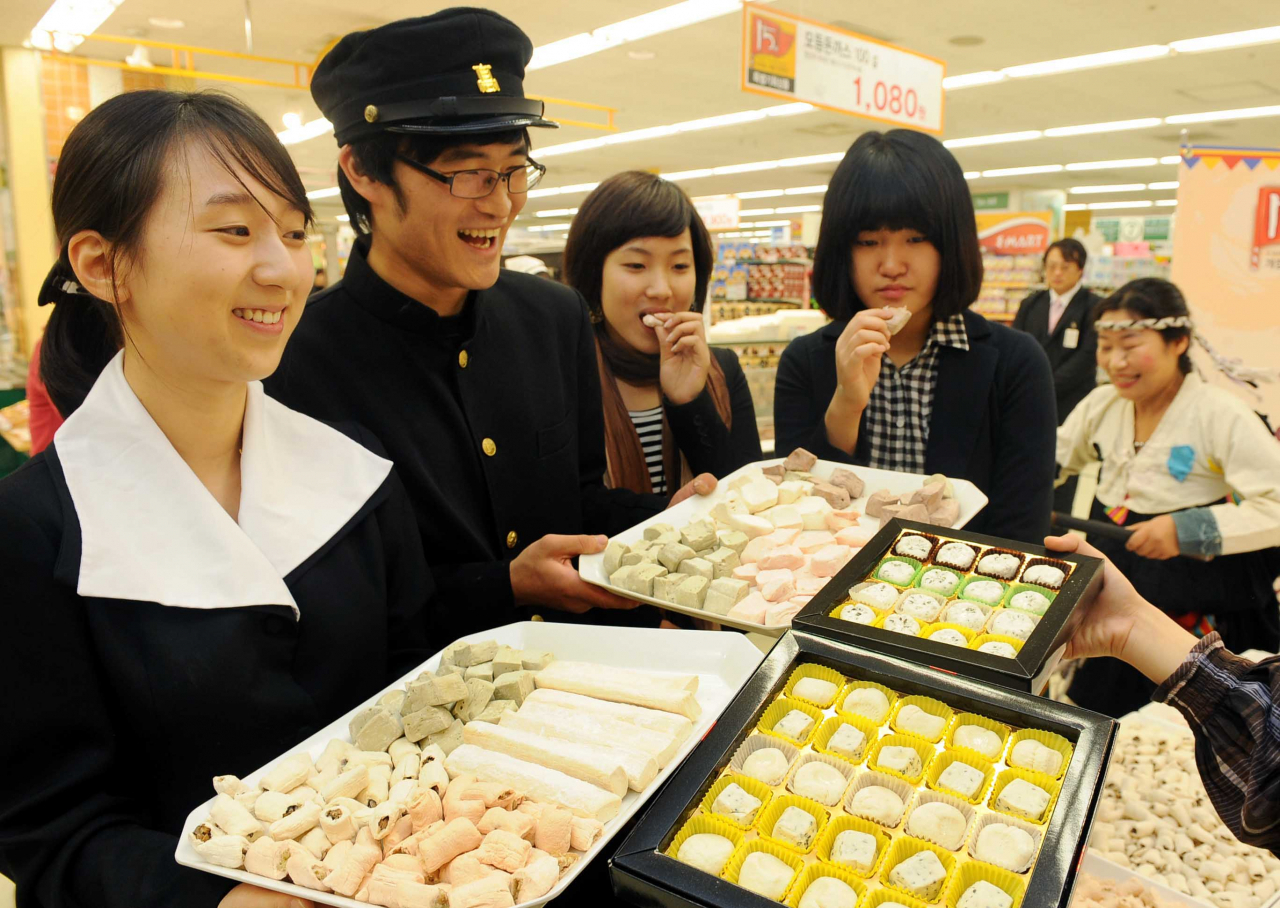
Every November, right before the 수능 (Suneung, the college entrance exam), Korean stationery aisles and convenience stores fill up with sticky candy. The star of the season is 엿, a traditional taffy made by fermenting grains with malt. The logic is a Korean pun. The verb 붙다 (butda) means both "to stick to something" and "to pass an exam" (as in 대학에 붙다, to get into university). So if you feed a test-taker something sticky, they will 붙어 (stick) to the score they need. Rice-based 찹쌀떡 (chapssaltteok) works on the exact same wordplay, which is why parents send both.
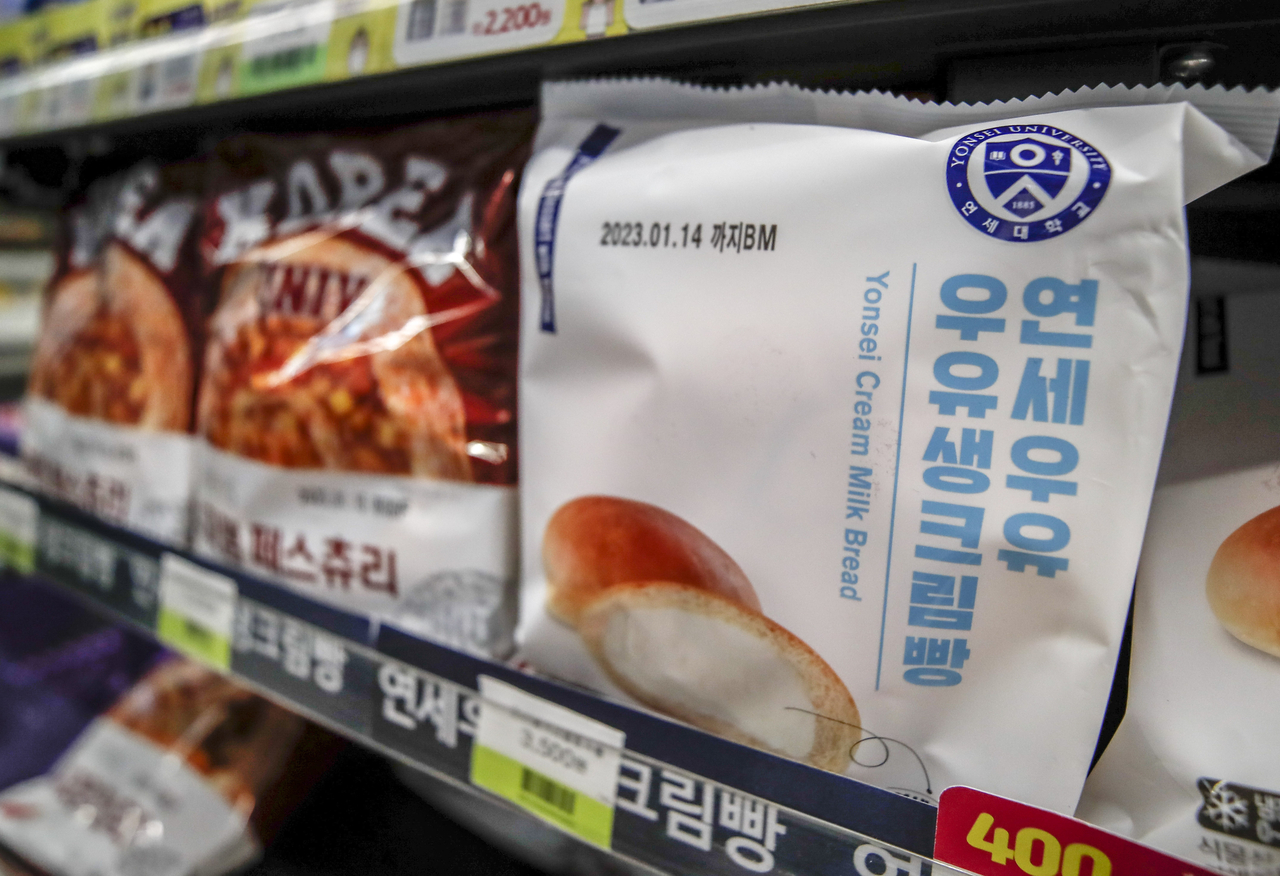
This is not folk tradition rusting in a museum. It is active retail. E-Mart runs yeot-selling events in the two weeks leading up to Suneung. Convenience-store chains stock chapssaltteok in Suneung packaging. And the quiet shift I have watched over the past ten years is that 초콜릿 (chocolate) has muscled in as a co-headliner. Ferrero Rocher and Seoul National University-branded chocolate bars now sit next to the yeot at CU and GS25 counters, because chocolate reads as more contemporary, easier to chew, and glucose is arguably a better focus fuel across an eight-hour exam. The 붙다 wordplay still carries. The candy has just been modernized.
3. The Exam-Day Foods to Avoid: Anything Slippery
The flip side of the sticky-food ritual is the slippery-food avoidance. On Suneung morning, Korean families deliberately do not serve 미역국. The reason is the same 붙다 wordplay in reverse. 미역 is famously slippery in the mouth (Maangchi actually has a story about an American nun friend who quit miyeokguk for exactly that texture), so if you eat it, the exam answers will 미끌 (mikkeul, slip) right out of your head. 죽 (jook, porridge) is loosely on the same avoid list for the same reason. The one day of the year a Korean mother will not make you seaweed soup is the morning of your Suneung.
What outsiders miss is how tightly this ritual is enforced by mothers, not by students. The 어머니 is the one who plans the exam-morning meal. Rice, chapssaltteok, warm broth, no miyeokguk. Skip this rule and you will hear about it for a decade. K-parenting content on Naver blogs and 맘카페 (mom-cafe forums) still runs Suneung-morning meal-plan posts every October, and the miyeokguk-avoidance rule is always item number one. The consumer signal is loud: Korean grocery buyers know not to stock miyeokguk HMR pouches on the Suneung-week end-cap. It would be commercial malpractice.
4. Chicken Wings and the "Flying Away" Superstition
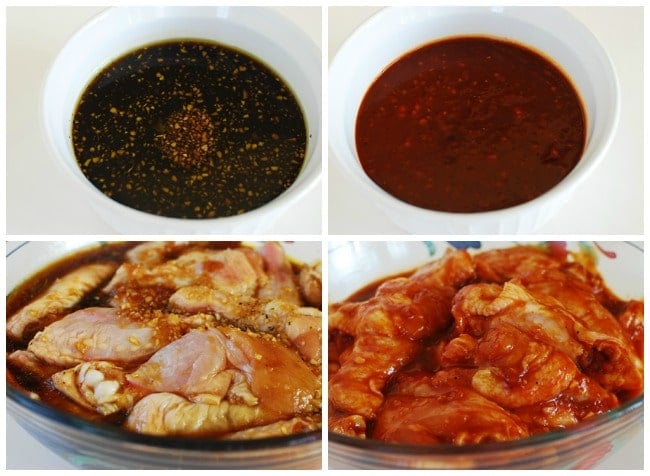
This one is where the folklore gets flirtatious. Korean older-generation wisdom says a woman should not feed her boyfriend or husband 닭날개 (chicken wings), because he will 바람나서 날아간다 (baram-naseo nal-a-ganda, cheat and fly away). The pun is layered. 바람 literally means wind, but the Korean expression 바람피우다 (baram-pi-uda) means to have an affair. Give a man wings and, well, you can guess. There is a parallel version aimed at women (여자는 닭날개 먹으면 팔자 사납다, "a woman who eats chicken wings will have a stormy 팔자 fate"), but that reading is largely treated as an urban legend now, and most young Koreans do not take it seriously.
Modern young Koreans laugh at this openly. It shows up in Korean variety shows as a running joke, and in K-drama couple scenes as a soft signal that the girlfriend is uncertain about the relationship. What is interesting from a K-content angle is that the superstition survives because it makes for good on-screen storytelling. Writers use it as shorthand. When a girlfriend hesitates over feeding her boyfriend a wing at a 치맥 (chi-maek, chicken and beer) table, everyone in the Korean audience gets the subtext instantly. That kind of visual language is why chi-maek scenes carry emotional weight that Western drink-and-share scenes usually don't.
Why These Superstitions Still Move Korean Retail
What these four superstitions have in common is that they translate into retail behavior. Miyeokguk kits move on birthday cycles. Yeot and chapssaltteok move on Suneung cycles. Chicken wings drive a low-grade cultural conversation that keeps 치맥 relevant across generations. Korean CPG brands and grocery buyers plan their yearly calendars around these rituals in ways that Western food marketing rarely does. Watching a Korean grocery flyer in early November is basically watching a Suneung-superstition retail masterclass, and any brand that ignores the pattern gets punished on the P&L.
What makes it specifically Korean is that the superstitions are not treated as embarrassing folk baggage. They are treated as normal. A Seoul National University freshman still remembers the yeot her aunt sent the week before Suneung. A K-drama actor still eats miyeokguk on his birthday and posts it to Instagram. The 어머니 who cooks the Suneung-morning breakfast still skips the seaweed soup. And that continuity is exactly why the food-superstition category continues to move real product in Korea when equivalent Western folk traditions have long since faded into nostalgia.
Try a Taste of Korean Food Culture
Want to explore the authentic Korean snacks, ramen, and treats behind these traditions? Get a curated box of Korean favorites shipped straight to your door with the SnackFever Box by Daebak.


