


Table of Contents
La cuisine coréenne étant de plus en plus populaire, des restaurants ont ouvert leurs portes dans le monde entier et les gens peuvent apprécier partout la gastronomie épicée et savoureuse que la Corée a à offrir. Son goût et son caractère uniques sont le fruit des situations historiques, culturelles et géographiques distinctives dans lesquelles se trouve la péninsule coréenne. Donc, si vous n'avez jamais essayé la cuisine coréenne, ou si vous voulez simplement en savoir plus, voici un guide convivial pour les débutants sur comment et pourquoi la cuisine coréenne est née.
Un peu d'histoire coréenne
La Corée a existé sous une forme ou une autre pendant des centaines de milliers d'années, traversant de nombreuses dynasties et époques. Tout au long de cette période, les styles de cuisine et les traditions alimentaires ont été soigneusement transmis de génération en génération. Un exemple célèbre est la fermentation. La raison pour laquelle la Corée a tant d'aliments de base fermentés (tels que le kimchi et le gochujang) est en partie due à un manque historique de cultures oléagineuses. Avec des moyens limités de frire ou de cuire les aliments, les Coréens ont dû trouver d'autres moyens de cuisiner et de conserver les ingrédients, et la fermentation était la solution la plus fiable. Les céréales et les graines étaient conservées au lieu du lait comme dans de nombreux pays occidentaux, car les Coréens ont commencé à s'installer et à cultiver relativement tôt.
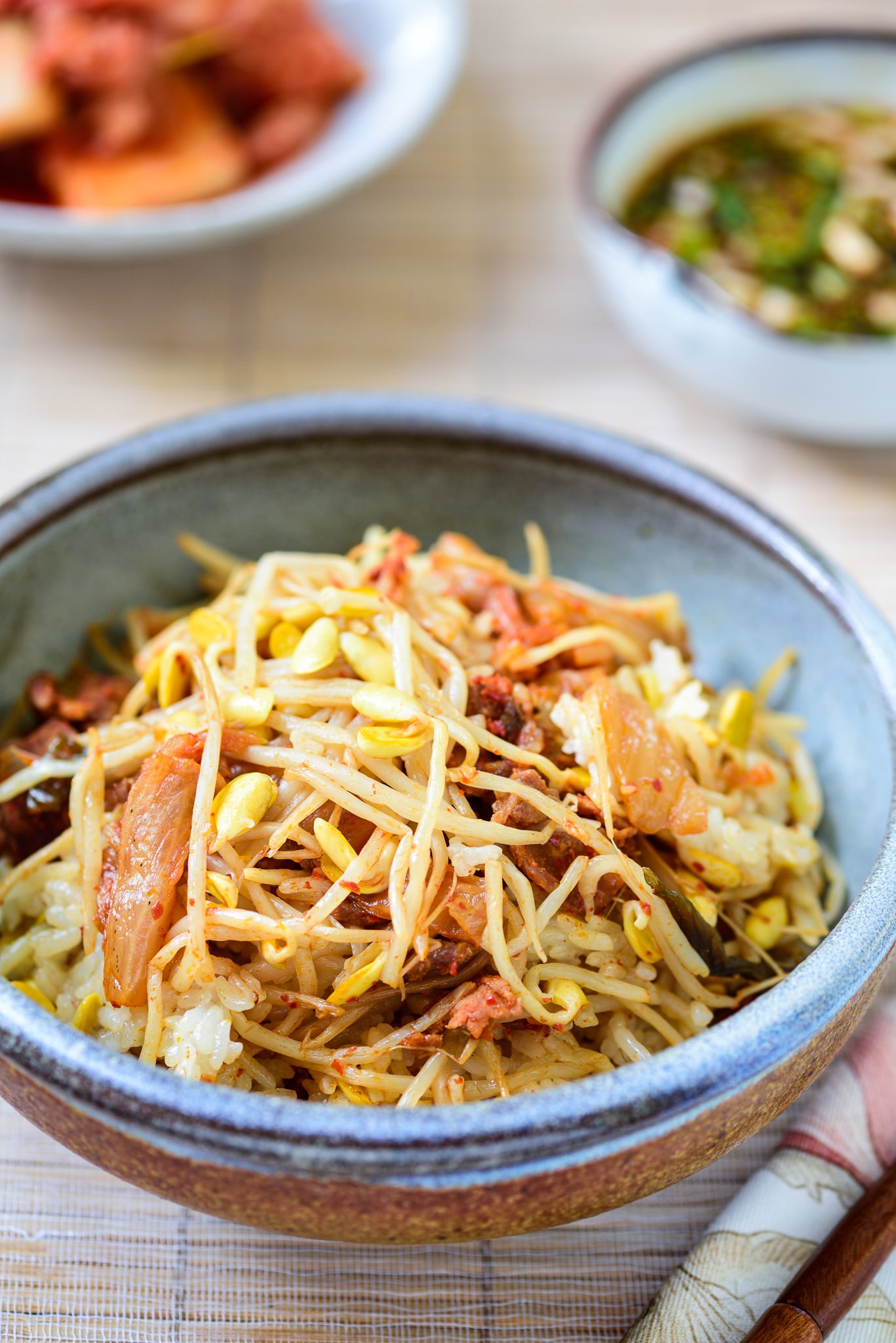
Le riz est une part importante de la gastronomie coréenne aujourd'hui, mais curieusement, il n'est pas originaire de Corée. Il a été introduit pendant la période des Trois Royaumes, ce qui l'a rendu coûteux et rare au début. En fait, le riz était si précieux dans le royaume de Silla qu'il était utilisé comme forme d'impôt. Pour cette raison, le riz était souvent mélangé à d'autres céréales pour le faire durer plus longtemps. Vous pouvez toujours voir cette tradition dans des plats comme le boribap (riz d'orge) et le kongbap (riz aux haricots), même si la production de riz est aujourd'hui abondante.
La viande raconte aussi une histoire. Les vaches dans la Corée ancienne étaient considérées comme des « bêtes de somme » et, dans de nombreux cas, étaient traitées presque comme des serviteurs ou des membres de la famille. Elles étaient élevées principalement pour le travail et consommées uniquement lors de sécheresses sévères ou de difficultés. Au 4e siècle, lorsque le bouddhisme fut introduit, il devint strictement interdit de manger du bœuf. Ce tabou ne fut levé qu'au 13e siècle, lorsque les Mongols envahirent la Corée et levèrent l'interdiction. En raison de cette longue histoire, le bœuf n'est pas aussi dominant dans la cuisine coréenne traditionnelle que l'on pourrait s'y attendre en regardant le menu moderne.
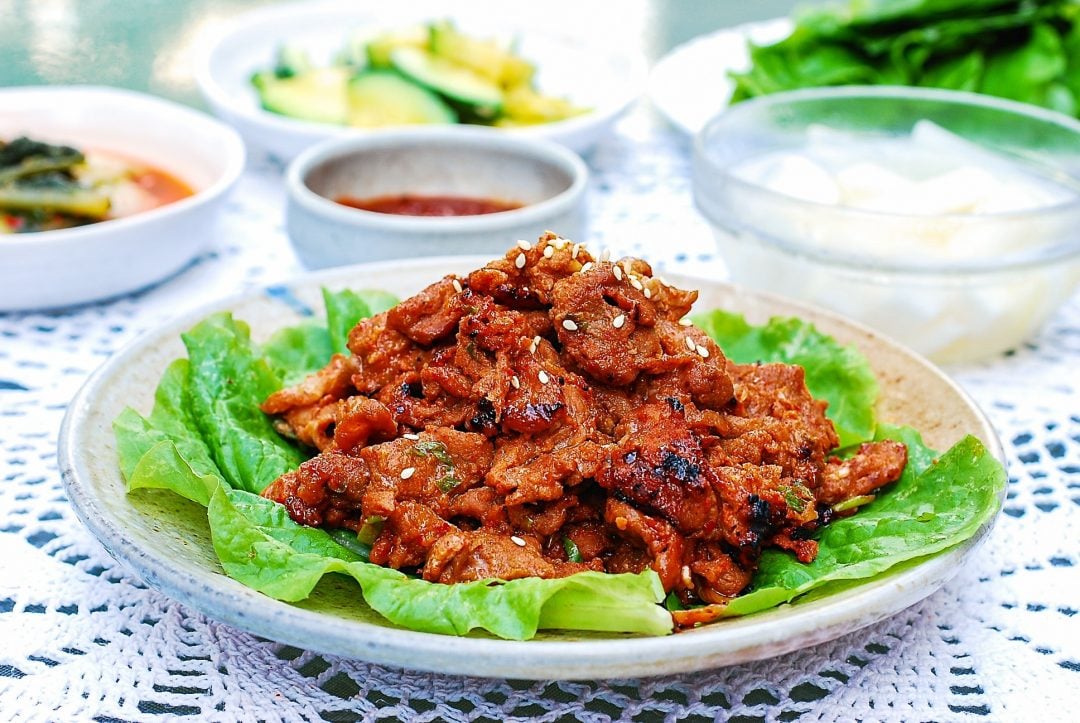
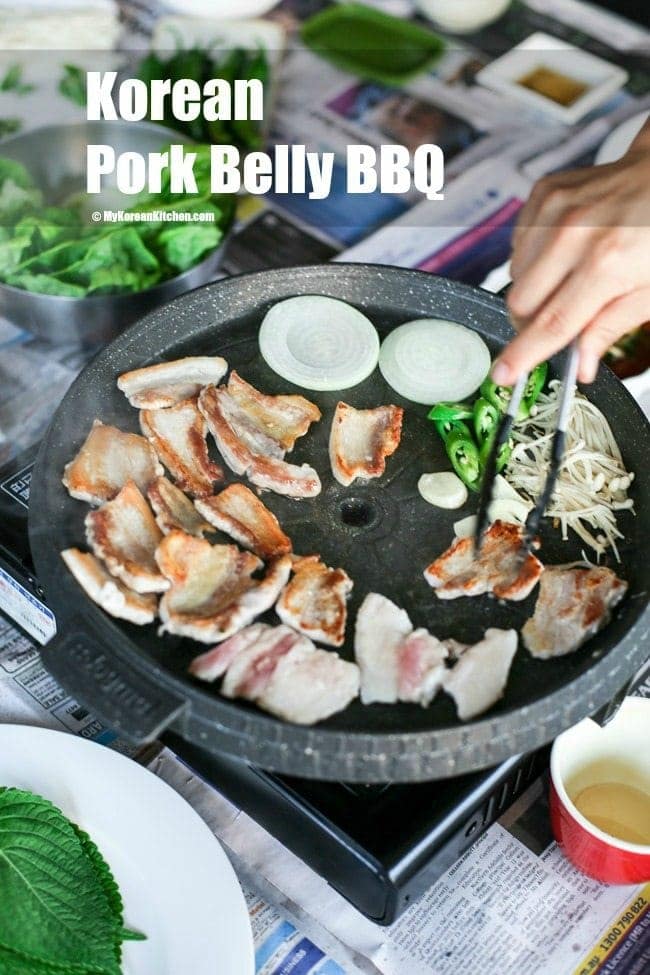
Le porc, en revanche, fait partie du régime alimentaire coréen depuis aussi longtemps que la Corée elle-même. Le porc est l'animal principal historiquement élevé en Corée pour la consommation, et un plat national favori est le samgyeopsal, des tranches de poitrine de porc grillées cuites directement à table. Toutes les parties du porc (y compris la tête) sont utilisées dans différentes recettes, des soupes aux ragoûts en passant par la cuisine de rue.
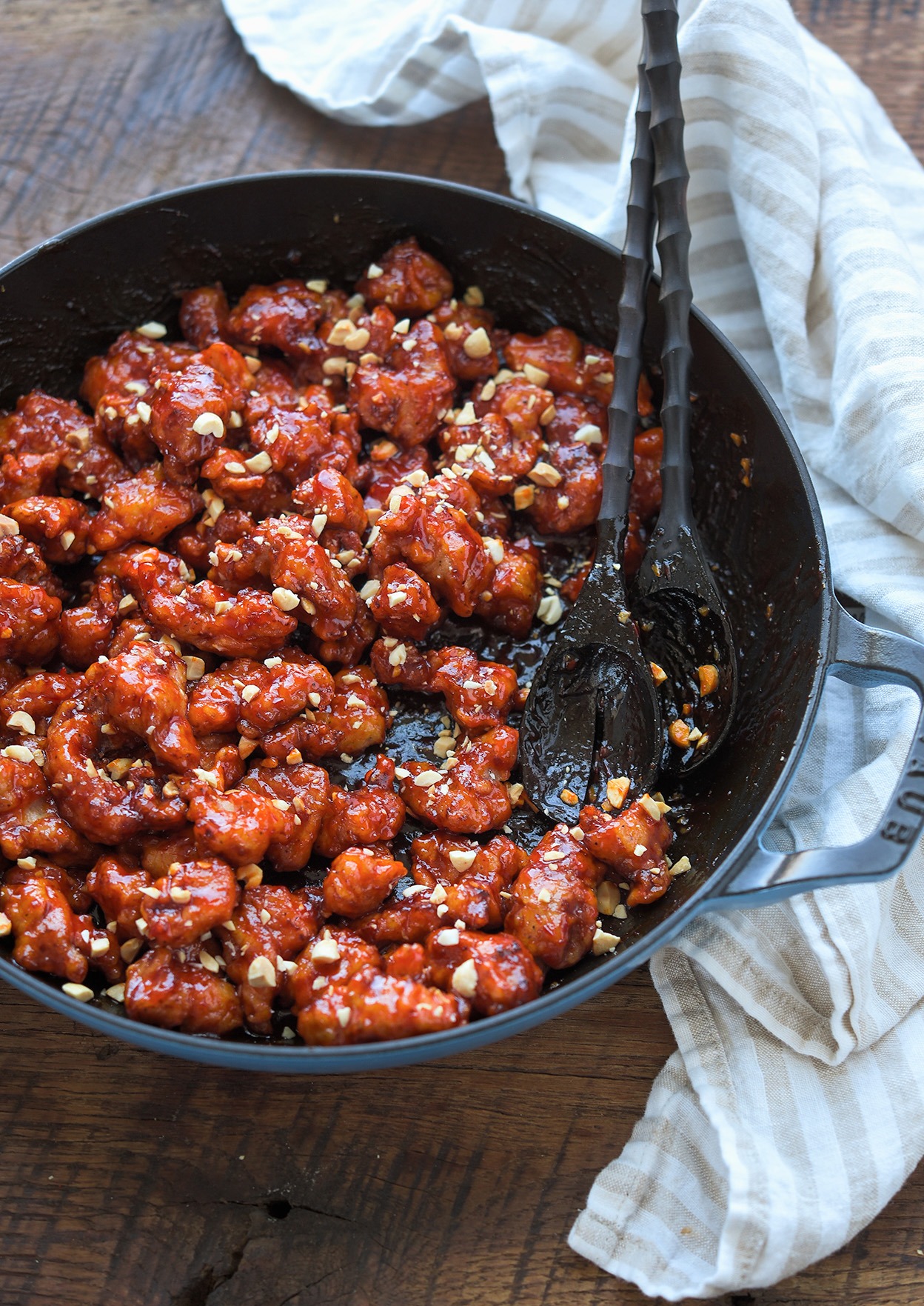
Le poulet a également joué un rôle important dans la cuisine coréenne, car presque toutes les parties de l'oiseau étaient utilisées. Du dakgangjeong sucré et croustillant au poulet frit coréen croquant, en passant par les riches bouillons de soupe et les préparations médicinales comme le samgyetang (soupe au poulet et au ginseng), le poulet a longtemps été traité à la fois comme aliment et comme remède.
Les poissons et les fruits de mer, en revanche, étaient historiquement considérés comme des « aliments de roturiers ». La Corée étant une péninsule entourée par la côte, les poissons et les crustacés étaient abondants et facilement accessibles, ce qui les rendait en fait moins prestigieux aux yeux de la classe supérieure. Aujourd'hui, les fruits de mer coréens, du haemul pajeon (crêpe aux fruits de mer) aux ragoûts de poisson épicés, sont célébrés comme faisant partie des meilleurs de la cuisine du pays.
Comprendre la géographie coréenne
La cuisine coréenne reflète la géographie de la péninsule coréenne. La Corée est entourée par l'océan sur trois côtés (sud, est et ouest) et bordée par des montagnes au nord. Elle possède de nombreuses rivières, des montagnes à l'intérieur des terres et des côtes rocheuses. Le pays connaît des hivers rigoureux et des étés chauds, équilibrés par des automnes calmes et pluvieux et des printemps chauds et fleuris. Grâce à cette variété, la cuisine coréenne est également extrêmement variée. Des plats de fruits de mer aux viandes grillées, des soupes chaudes aux salades fraîches, la cuisine coréenne s'est magnifiquement adaptée au temps et aux différences régionales. Et parce que les saisons pouvaient être rudes, les Coréens avaient besoin de moyens fiables pour conserver les aliments, la fermentation étant une fois de plus en tête.

Importance culturelle
En Corée, il n'est pas rare d'entendre « jal meokkesseumnida », ce qui se traduit à peu près par « Je vais bien manger, grâce à vos efforts ». Cette expression existe parce que la bonne santé est profondément valorisée dans la culture coréenne, et il y a une croyance qu'une vie riche commence par l'estomac et est maintenue en mangeant bien.
Les repas sont aussi une expérience partagée. À table, presque tout est partagé (à l'exception d'un bol personnel de riz et de soupe). Même lorsque personne ne parle, le partage de la nourriture est considéré comme un moyen significatif de passer du temps avec les gens qui vous entourent.
En bref, la cuisine coréenne a une signification historique, géographique et culturelle profonde. Il est fascinant de voir comment de nombreuses méthodes de cuisson traditionnelles ont été préservées, tandis que les touches modernes continuent d'ajouter de nouvelles variétés. Maintenant que vous avez une compréhension de base de l'origine de la cuisine coréenne, vous êtes prêt à explorer les recettes, les plats et les saveurs avec une nouvelle appréciation de l'ancienne richesse de chaque bouchée.
Goûtez la Corée depuis chez vous
Vous voulez commencer votre voyage culinaire coréen sans prendre l'avion pour Séoul ? Essayez une SnackFever Box de Daebak. Chaque boîte est remplie de snacks, de boissons et de friandises coréens sélectionnés, envoyés directement chez vous, afin que vous puissiez goûter la Corée morceau par morceau pendant que vous lisez, regardez et en apprenez davantage sur son incroyable cuisine.


