


Table of Contents
Anyone who has spent even a season inside a Korean subscription-box company will tell you that the fastest way to understand a market is to poll your own team. When Daebak was still called Fever Guys and the SnackFever curation floor was staffed by interns hand-picking 한식 (hansik, Korean cuisine) staples for subscriber boxes, we started every seasonal planning cycle with the same lazy but revealing question: what is your one Korean dish. The answers were never uniform. They mapped almost perfectly onto how each intern had first walked into Korean food, and that map is the same map our subscribers walk in through. Below are the picks that shaped a season of SnackFever curation, one intern at a time.
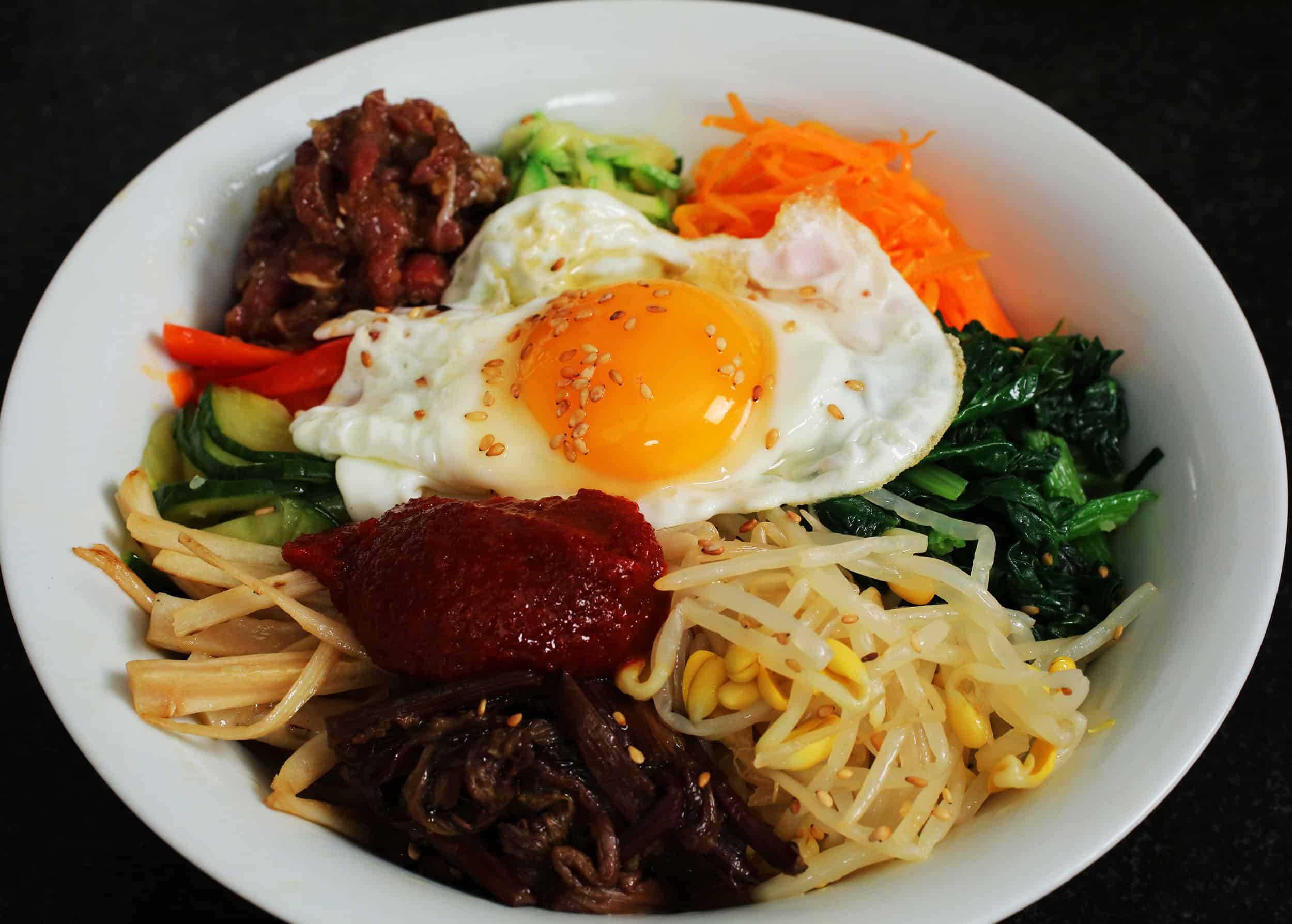
Stephanie and Kaitlin: Bibimbap (비빔밥)
The fact that two of our interns landed on the same dish is not a coincidence, and anyone who has watched the American discovery-curve for Korean food will recognize the pattern. 비빔밥 is the default gateway pick. In the Korean home cooking canon it is technically nothing special, just a rice bowl assembled from whatever seasoned vegetables (namul, 나물) are in the fridge, topped with a bit of marinated beef and an egg, and finished with a spoon of gochujang (고추장). But that is exactly why it works as an entry point for someone whose Western palate has been trained on grain bowls, poke, and Sweetgreen. It looks like a healthy salad with rice underneath, it is colorful in a way that photographs well, and the diner controls the spice level with how much gochujang they mix in.
What Stephanie and Kaitlin were really telling us is that they are ingredient-curious eaters. Bibimbap is not a dish you order in Korea because you are craving one specific flavor. You order it because you want to see the individual components, seasoned separately, then compose them in your own bowl. That is a very Western way to relate to food, and it is why the dish exports better than almost any other Korean staple. When Korean Air made bibimbap its signature in-flight meal in 1997, it did so because bibimbap is the safest possible Korean dish to put in front of a first-time flyer from Frankfurt or Chicago. The pattern held with our interns. It also held in the SnackFever box: whenever we included any bibimbap-adjacent SKU (dried namul packs, single-serve gochujang tubes, 김 gim seaweed sheets for topping) the pull rate from first-time subscribers was measurably higher than harder-sell items like fermented bean paste.
Nicole: Jjajangmyeon (짜장면)
Nicole's pick was the one that made everyone else at the table stop and ask her how she knew about it. 짜장면 is not a dish a casual outsider stumbles onto by browsing Korean food TikTok. It is a Chinese-Korean noodle dish, invented in Incheon's Chinatown around the early twentieth century by Shandong immigrants who adapted their black bean paste (춘장, chunjang) to Korean tastes by making it sweeter and darker, then paired it with thick chewy wheat noodles and diced pork. The result is glossy, almost coffee-colored noodles that Koreans of a certain generation associate with graduation day, moving-in day, and every rainy Sunday of their childhood. When Korean parents in the 1970s wanted to give their kid a "restaurant treat" without spending real money, they ordered jjajangmyeon delivery, and the delivery arrived in a stackable metal tin (철가방) that the restaurant later picked up empty from the front door.
Nicole picking jjajangmyeon told the SnackFever team something specific: she was not just ingredient-curious, she was culture-curious. She had done enough K-drama watching to know that the Black Day (블랙데이, April 14) tradition, where single Koreans eat jjajangmyeon together to mourn their singlehood, is a real thing in the Korean calendar. That kind of deeper reference-point is what separates a customer who will subscribe for one box and churn from a customer who will renew for a year. The box we curated after Nicole's pick leaned into instant jjajang packs, and it retained noticeably better than the "sampler" boxes we ran before.

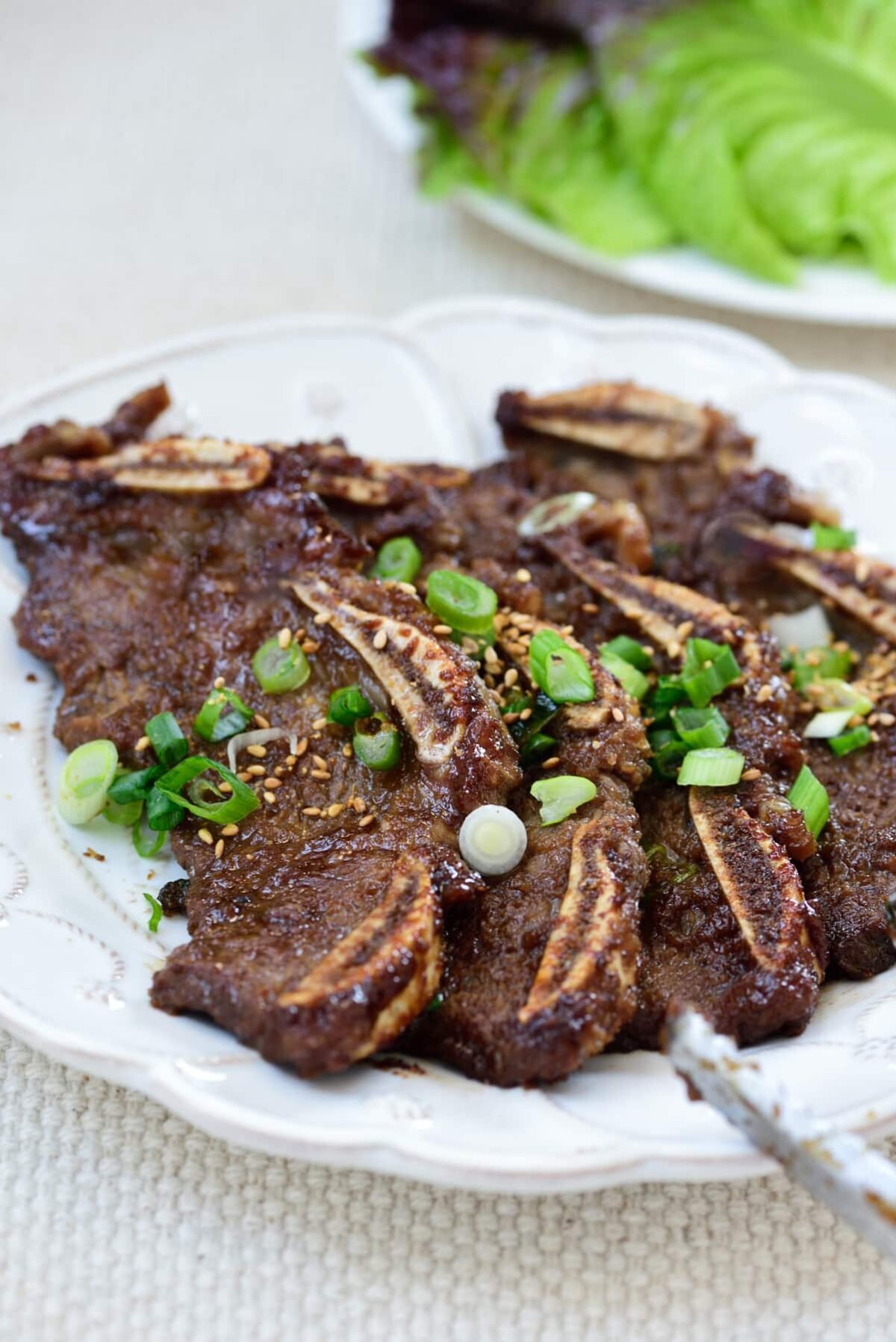
Catherine: Galbi (갈비)
Catherine went with 갈비, and specifically the marinated grilled short rib you find at every Korean BBQ restaurant in Koreatown. The pick makes cultural sense: galbi is the dish most likely to be the first Korean meal an American ever eats, because Korean BBQ is where American groups celebrate a birthday. The marinade is the reason. It is soy sauce, sugar, sesame oil, minced garlic, grated Asian pear (배), and rice wine, cooked into the meat over a low-and-slow soak that transforms a genuinely tough beef cut into something tender enough to grill in three minutes on a tabletop charcoal grill. The Asian pear is doing most of the work: it contains a natural enzyme (calpain protease) that breaks down muscle fiber, which is why Korean grandmothers grate it into every serious meat marinade.
The industry read on Catherine's pick is that galbi is the SnackFever team's "premium anchor." Whenever we ran a limited-edition SULSUL box (soju plus snack pairings), galbi-adjacent items like premium galbi seasoning packs and Korean pear-flavored soju outperformed everything else on the box. Catherine intuited what our subscriber data later confirmed: for the experience-curious foreign palate, galbi is the dish that turns a K-BBQ curious diner into a repeat customer. It is not the cheapest cut, it is not the most authentic side of the Korean menu (that would be doenjang jjigae), but it is the one Americans will pay a Korean grocery store premium to recreate at home.
Tessa: Tteokguk (떡국)
Tessa's pick was the seasonal deep cut, and honestly the one that made me most confident she understood Korean food. 떡국 is a light beef-broth soup with thinly sliced oval rice cakes (garaetteok), traditionally eaten on the morning of 설날 (Seollal, Lunar New Year). The cultural weight is heavy: eating a bowl of tteokguk is how Koreans mark that they have aged one year. If you skip tteokguk on New Year's Day, according to the joke Korean parents tell their children, you do not get older. The oval rice cake shape is intentional and pre-modern: sliced thin, the rice cakes resemble old Korean coins (엽전), and the whiteness of the broth symbolizes a clean start to the year. The garnish (a thin egg-white and yolk ribbon called 지단, shredded seaweed, chopped scallion) is done with the same attention to color contrast that you see in the more famous royal Korean court cuisine.
Tessa's pick worked as a seasonal curation signal for us. Korean subscription-box companies that ignore the lunar calendar leave money on the table. Every January, SnackFever should have a rice-cake-adjacent SKU (dried garaetteok slices, instant tteokguk broth, or the modern grab-and-go instant tteokbokki cups) because Korean-American families are actively looking for them that week. The interns who came from Korean-American families intuited this immediately. The interns who did not, learned it fast the first time we sold out a New Year box in 36 hours.
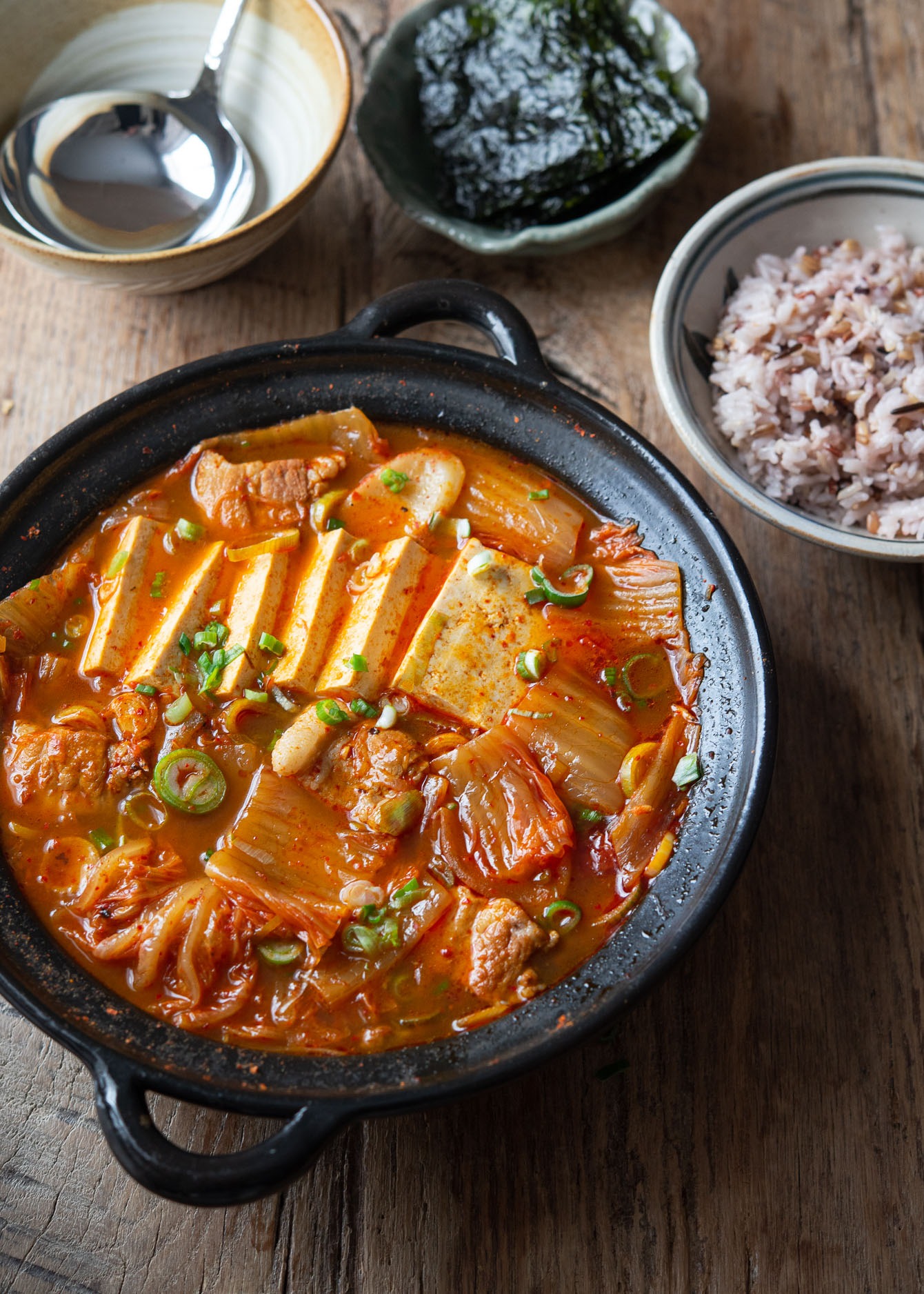
Kalina: Kimchi (김치)
Kalina picking 김치 sounds like the safe answer until you realize she specifically picked kimchi in the plural, meaning she understood there is not one kimchi but over two hundred regional varieties. That distinction matters. Most Western customers, when they think of kimchi, are thinking about baechu kimchi (배추김치), the whole napa-cabbage type made with gochugaru chili flakes, garlic, ginger, salted shrimp (새우젓), and fish sauce. That is the flagship, and it is what shows up in every Instagram fermentation reel. But the Korean kimchi universe also contains kkakdugi (깍두기, cubed radish kimchi that shatters like a crisp cracker), oisobagi (오이소박이, cucumber kimchi stuffed with chives, best in summer), yeolmu kimchi (열무김치, young radish greens kimchi that gets slurped into cold noodle broth), and pa kimchi (파김치, whole scallion kimchi that Jeolla-region grandmothers make in ridiculous quantities).
What Kalina really picked was the entire fermentation grammar. And once you have that vocabulary, kimchi is not one side dish, it is the connective tissue of the Korean meal. It also becomes the main ingredient in the dish that most Koreans actually crave when the fridge kimchi has fermented for two or three months and turned properly sour: 김치찌개 (kimchi jjigae), the pork-belly kimchi stew that no Korean home is ever more than a week from cooking. The comfort-curious subscriber usually starts here. If a first-time box triggers a kimchi jjigae craving, that subscriber stays.
Maegs: Spicy Korean Fried Chicken (양념치킨)
Maegs went for the crowd favorite, and she was not wrong to. Korean fried chicken (치킨, chikin, which Koreans use to distinguish it from the older term 닭튀김 dak twigim) is arguably the single most successful Korean food export of the past twenty years. It is a specific technical style: brined, double-fried at two different temperatures (the first at around 350 degrees to render fat, the second at around 400 degrees to shatter the crust), then either left plain (후라이드), coated in a soy-garlic glaze (간장), or drenched in a sweet-and-spicy gochujang-based sauce (양념) that is the signature red glaze most foreigners now recognize as "Korean fried chicken." Chains like Bonchon, Kyochon, and BBQ turned this technique into a global category, but the real credit belongs to the anonymous Seoul chicken-hof operators of the 1990s who figured out the second-fry step.
The reason Korean fried chicken over-indexes with international customers is chimaek (치맥), the culturally engineered pairing of chicken and beer that Korean drama scenes have exported harder than any advertising campaign could. When "My Love from the Star" aired in 2013 and Jun Ji-hyun's character called out her chimaek craving on screen, Korean fried chicken exports to China spiked in the following quarter. That is a real number, not a marketing legend. Maegs picking it meant our SnackFever team leaned into gochujang-forward heat SKUs (Buldak samples, gochujang-glazed nut mixes) and those consistently earned the highest engagement rate in subscriber feedback surveys.
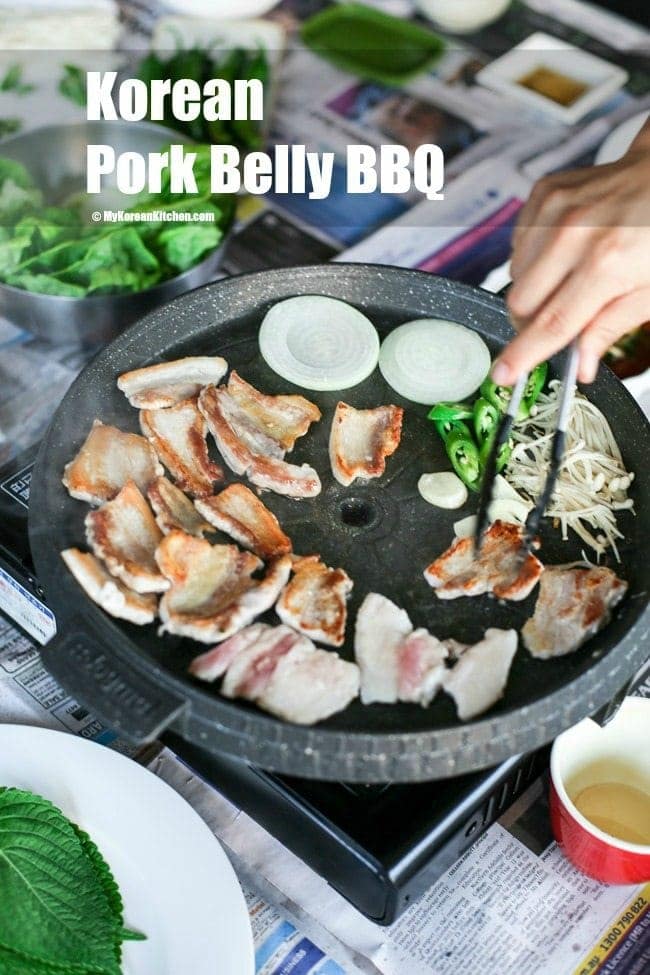
Ash: Samgyeopsal (삼겹살)
Ash's pick closes the loop. 삼겹살, three-layer pork belly, is the Korean group-dining default. It is what a Korean team orders when they want a proper 회식 (hoesik, work dinner where everyone drinks together and pretends the boss is funny). It is what university clubs eat on Friday nights. It is what Koreans consume in astonishing quantity: the Korean Rural Economic Institute has tracked Korean per-capita pork belly consumption at roughly 21 kg (46 pounds) per year, more than half of total meat consumption. There is even an unofficial samgyeopsal day on March 3rd (3월 3일, samsam) because Koreans love a food-based pun.
The technique is deceptively simple. Thick slices of skinless pork belly (0.5 to 1 cm) grilled unseasoned on a slotted grill plate at the table, turned only once, then cut with kitchen scissors into bite-size pieces once the fat has rendered and the outside has crisped. What you do next is where the ssam (쌈) grammar takes over. You lay a piece of pork belly on a lettuce or perilla leaf (깻잎), you add a dab of ssamjang (쌈장, the spicy soybean paste dip), grilled garlic, a smear of raw green chili if you can handle it, maybe a slice of grilled kimchi, then you wrap it into a single bite and put the entire package in your mouth in one go. That last part is not optional. If you take two bites of a ssam wrap, every Korean at the table will notice.
Ash picking samgyeopsal meant she understood that Korean food is not just about ingredients, it is about the ritual of eating it together. That is the exact insight that separates a good subscription-box customer from a great one. Bibimbap curious customers want to know what the food tastes like. Samgyeopsal curious customers want to know how Koreans eat together.
Why Team Palate Predicts Customer Palate
The one industry lesson we took from that season of intern picks: the internal team palate is the cheapest, most accurate customer research a subscription-box company can run. Our interns broke into three groups. The ingredient-curious (bibimbap, kimchi) wanted to understand components. The culture-curious (jjajangmyeon, tteokguk) wanted to understand context. The experience-curious (galbi, samgyeopsal, chikin) wanted to be inside the moment of eating with Koreans. Those three groups are exactly the three subscriber personas we later saw in SnackFever renewal data. When we curated boxes that spoke to all three at once (a shelf-stable component like dried namul, a story-anchored item like New-Year rice cakes, and an experience item like a ssamjang packet) our churn rate dropped noticeably.
If you are new to Korean food and trying to figure out where you belong on that map, the fastest way to find out is to try one dish from each of our interns' picks. See which one you keep going back to. That is your entry point. From there, Korean food will unfold in ways you did not expect.
Want to taste the Korean snack side of this map without cooking? Try the SnackFever Box, our monthly curation of Korean snacks and drinks hand-picked by the same team logic we used on the interns' picks above. Real Korean flavors, shipped to your door.


