


Table of Contents
Ticket-refresh anxiety was the unofficial K-pop workout of 2019. That spring and summer, six-plus flagship tours from HYBE, YG, SM, and JYP overlapped in North America inside a five-month window, something the industry had never coordinated before. If you were an ARMY, BLINK, NCTzen, or Ahgase who did not stay up for the on-sale, you probably did not get in.
I have watched Hallyu's US rollout since 2012 SMTOWN at Madison Square Garden, and 2019 is still the pivot point. This was the year Korean agencies stopped treating America as a bonus stop tacked onto an Asia run and started treating it as the main event. Below is the field guide to the tours that defined that year, and what each one told us about the label playing chess behind the curtain.
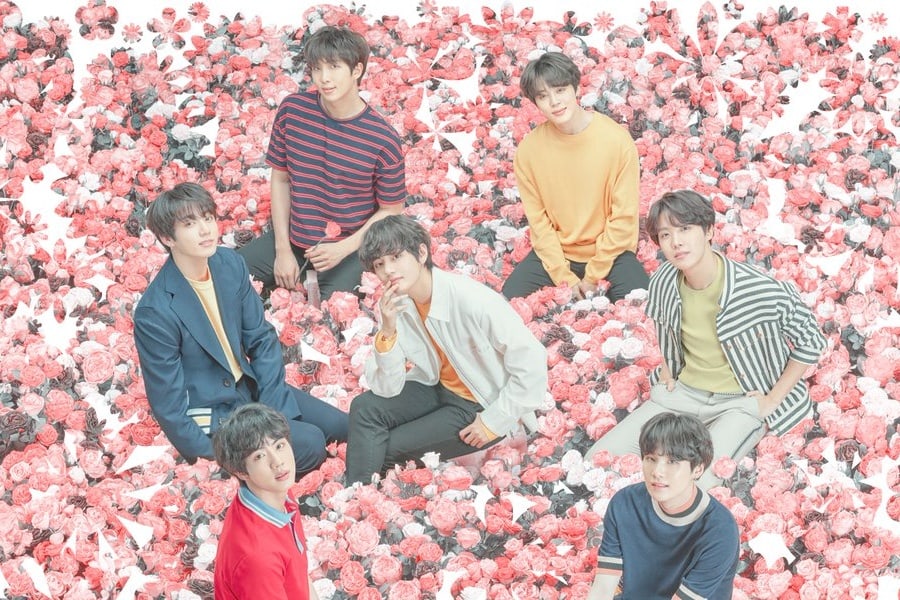
BTS, Love Yourself: Speak Yourself, and the Rose Bowl Ceiling
BTS booked Rose Bowl, Soldier Field, and MetLife Stadium in a two-week sprint. Six US shows, roughly 320,000 tickets, plus Sao Paulo, Wembley, Paris, Osaka, and Shizuoka to follow. The Rose Bowl dates on May 4 and 5 (later remembered as the Pasadena weekend that broke the venue's all-time gross record at 16.6 million dollars for two nights) turned into the moment Western touring executives quietly rewrote their spreadsheets on what a Korean act could sell.
What made this tour different was not the setlist. It was the willingness to skip the arena tier entirely. Big Hit (now HYBE) had done arenas in 2017 and 2018, sold them out fast, and read the demand signal correctly. Booking stadiums on the first US stadium run is a calculated gamble, because empty upper bowls kill a tour's optics for years. BTS never had that problem. By year-end, Billboard Boxscore had them ranked as the top-grossing tour group of 2019 at 196.4 million dollars across 42 shows, beating out The Rolling Stones and Metallica for the crown. No K-pop act has matched that stadium scale since.
BLACKPINK In Your Area: YG's Girl Group Arena Bet with Kia
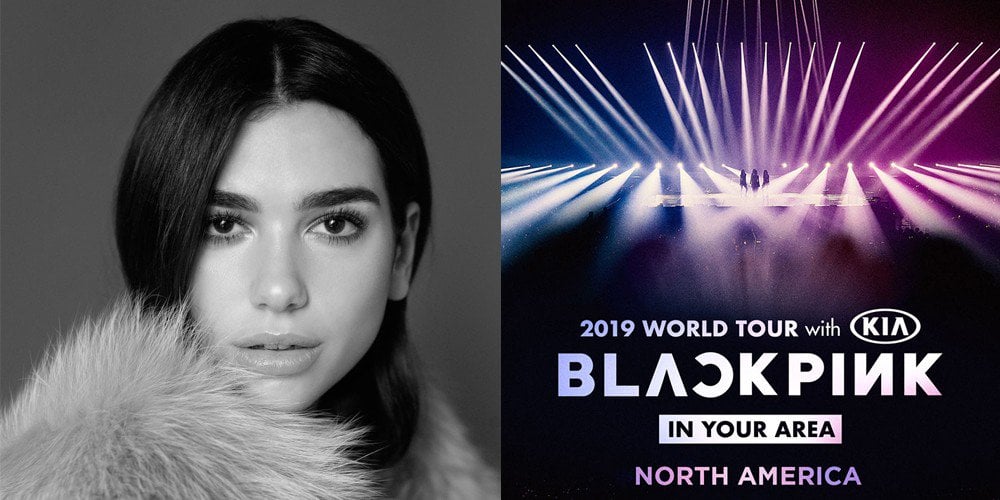
BLACKPINK's In Your Area world tour, announced November 2018 and expanded January 2019, ran with Kia as title sponsor. The North American leg hit Los Angeles, Dallas, Chicago, Hamilton (Ontario), Newark, Atlanta, and Fort Worth, and demand was heavy enough that YG had to add second dates in Fort Worth and Newark. By the time the tour wrapped, it was the highest-grossing K-pop girl group tour in history.
Here is the industry piece nobody talks about. In 2019, no K-pop girl group had a proven Western arena template. YG effectively tested one in real time, using Kia sponsorship dollars to de-risk the routing (Kia's US HQ is in Irvine, so LA was the anchor market). The Newark stop on May 1 and 2 pulled the tour's biggest cultural moment, when Dua Lipa walked out to perform Kiss and Make Up live for the first time ever. That surprise was not accidental. Dua's team and YG had been laying that groundwork since the September 2018 studio release, and Newark was the market for the reveal because East Coast press coverage travels farther. Coachella's headliner invitation eventually came in 2023, but the runway started here.
NCT 127 Neo City: The Origin, or SM's US Infrastructure Test

NCT 127 kicked off Neo City: The Origin at Prudential Center in New Jersey on April 26, 2019, and immediately used the show to drop three unreleased We Are Superhuman tracks (Jet Lag, Highway to Heaven, and the full Superhuman) without warning. That is not a random creative choice. That is SM Entertainment testing whether a US crowd would pop for unfinished, untranslated Korean B-sides the same way a Seoul crowd would. The answer, per every fancam that survived the night, was yes.
NCT 127 is SM's most experiment-heavy project. Sending them out first with a US theater-and-arena run (New Jersey, Atlanta, Miami, Dallas, Phoenix, Houston, Chicago, San Jose, LA) was infrastructure testing dressed up as a tour. Which venue tiers converted? Which markets over-index for K-pop? Which cities need bigger buses next cycle? SM was gathering that data through 127 so aespa, RIIZE, and future groups could route smarter without paying the tuition. The Mark quote from the New Jersey opener, that "bringing K-pop, there's a significance to that," is the polite version. The real quote is that Neo City paid for the map.
GOT7 Keep Spinning: JYP's First K-pop Group on the Today Show

GOT7's Keep Spinning tour, launched at KSPO Dome on June 27 and immediately pivoted to Toronto (June 30), Newark, Dallas (July 3), LA (July 6), and Oakland, moved through Live Nation's US network, which was the interesting infrastructure story. Pre-2019, most K-pop US tours were promoted by Korean or Korean-American concert companies (SubKulture, Powerhouse Live, Studio PAV). Live Nation formally taking a K-pop routing meant the same booking apparatus behind Beyonce and U2 was now handling GOT7's ECLIPSE run. That is a legitimacy jump.
The tour also delivered a quiet history moment. GOT7 became the first K-pop group ever booked on NBC's Today Show, performing an English version of ECLIPSE ahead of the Newark date on June 27. #GOT7onTodayShow trended to number one worldwide. This is why Ahgases still talk about 2019 as the ceiling year, because after GOT7 exited JYP in early 2021 the group re-formed independently under Warner, and the JYP-era stadium infrastructure they built never got fully re-used.
The Undercard That Actually Mattered: Twice, Monsta X, Stray Kids, and Beyond
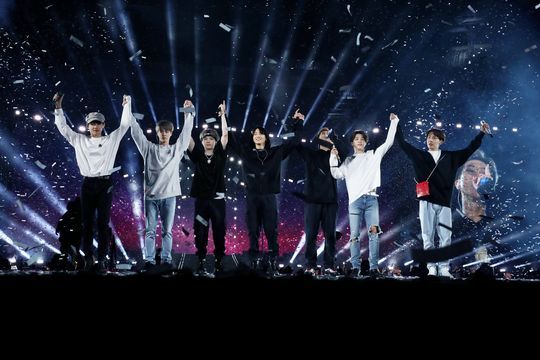
Do not sleep on the tier below the majors. Twice's TWICELIGHTS routed through Los Angeles, Mexico City, Newark, and Chicago in July, giving JYP its second US arena account inside a month. Monsta X's We Are Here hit Dallas, Houston, Atlanta, New York, Chicago, and LA in late July and early August, and Starship notoriously priced tickets low to build the Monbebe base wide (a strategy that paid off with the group's later Jingle Ball run). Stray Kids' Unveil Tour in mid-May brought Newark, LA, and Houston, planting the flag for STAY before I.N had even turned 20. SF9, VAV, and Up10tion, all quieter names, still pulled multi-city US routings that year, which is the real signal, because sub-major companies do not send groups to the US unless the demand curve justifies it.
The whole 미국 진출 (US market entry) framework Korean labels had been drafting since 2010 basically hit its dress rehearsal in 2019. Everyone learned what worked. Then 2020 happened. The stadium-tier ceiling BTS set at the Rose Bowl still stands. When you see a 2024 or 2025 K-pop artist headline an arena and hear the industry call it a breakthrough, remember: that ceiling was not raised, it was inherited, and it was built the year every 콘서트 in America turned into a K-팝 stadium.
Explore More of Korea with Daebak
Want to bring a little piece of Korea into your life? The Daebak Box is packed with the best Korean snacks, ramen, and cultural goodies delivered monthly to your door.


