

Table of Contents
Every K-drama producer in Seoul has the same secret weapon these days: a stack of highlighted webtoon printouts. I have been working in the Hallyu content space for over a decade, and the shift from novel adaptations and original screenplays to webtoon-based IP has been the loudest structural change in Korean television since the birth of tvN. Studios like Studio Dragon (스튜디오 드래곤), SLL, and JTBC now scout Naver Webtoon (네이버 웹툰) and Kakao Webtoon the way music labels used to comb through YouTube covers.
The math is simple. Original screenplays are expensive gambles. Novel adaptations lack a visual reference. A webtoon (웹툰), by contrast, arrives pre-vetted: a proven readership in the millions, a decade of comment-section data telling you which panels made fans cry, and character designs an art director can literally screenshot. IP licenses for major titles now run anywhere from $50,000 to $500,000, and after Squid Game reset Netflix's Korean content budget assumptions in 2021, that ceiling stretched even higher. Sweet Home Season 2, All of Us Are Dead, and Bloodhounds all rode a roughly 200% budget bump for post-2021 webtoon-based Korean originals.
There is also a soft factor Korean producers rarely say out loud: fandom risk. When you adapt a beloved 원작 (source work), the built-in audience shows up on episode one but also holds you accountable. Cheese in the Trap fans still bring up the Baek In-ho arc rewrite as an example of what happens when a production misreads its own IP. The best adaptations either commit to fidelity, the way Itaewon Class did line for line with Jo Gwang-jin's original, or they diverge boldly enough that fans grade the show on its own merits, the way Sweet Home did. Half-measures get shredded on Twitter, Weverse, and the show's own fancafe within hours.
Here are five webtoon-to-drama adaptations that shaped the current wave, and what makes each one worth a spot in your queue.
All of Us Are Dead (지금 우리 학교는)

Adapted from Joo Dong-geun's Now at Our School, a Naver Webtoon that ran 130 episodes between 2009 and 2011, All of Us Are Dead dropped on Netflix in January 2022 and immediately hit the platform's global top 10. It stayed there for weeks. What sets this apart from Western zombie fare is not the gore choreography, though the Hyosan High set pieces do rival Train to Busan for kinetic staging. The pull is the Korean high school pressure cooker itself.
Screenwriter Chun Sung-il and director Lee JQ pushed the source material further into social commentary than the 원작. In the show, the virus is not accidental. Science teacher Lee Byeong-chan engineers it as a desperate response to school bullying his son could not escape. That single change reframes the entire series: the zombies become a metaphor for the institutional violence Korean students already survive daily. Foreign viewers loved the action, but domestic audiences understood the show was a howl about 학교 폭력 (school violence) that mainstream Korean drama had been too polite to name for years.
Sweet Home
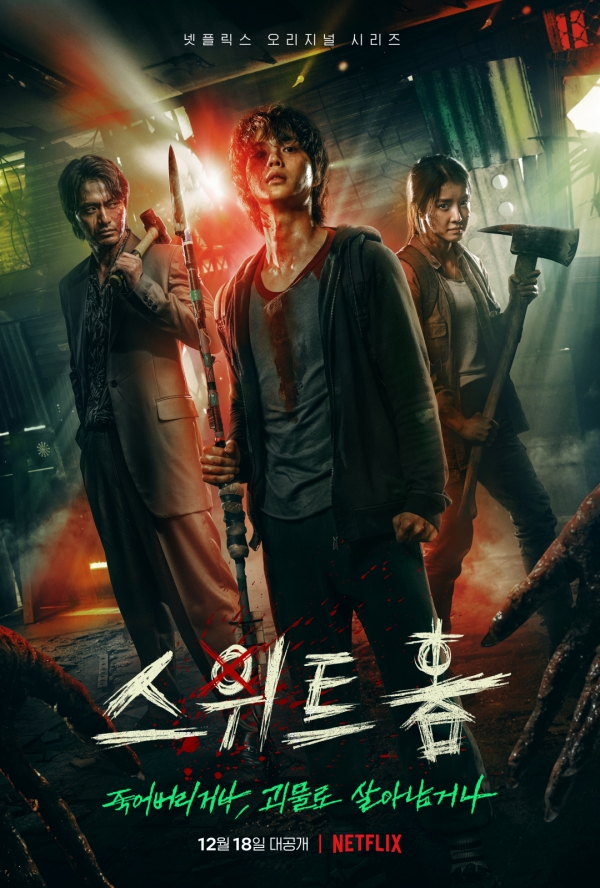
Sweet Home was the Netflix Korea title that proved the streaming platform could bankroll VFX-heavy Korean genre work at a Hollywood scale. Adapted from the Naver Webtoon by Kim Carn-by and Hwang Young-chan (2.1 billion cumulative views, one of the top-earning webtoons in Naver history), the 2020 series arrived with reported creature effects costs that stunned Korean production insiders. Director Lee Eung-bok, fresh off Goblin and Mr. Sunshine, brought pedigree that signaled Netflix was treating this as prestige, not niche genre bait.
What resonates about Sweet Home is the premise: monsters manifest from your deepest desire. A gluttonous man becomes a mouth-covered blob. A jealous influencer becomes a beauty-obsessed nightmare. It is body horror with a moral engine, and it works because Korean creators are unusually comfortable letting protagonists sit in shame and self-loathing. Cha Hyun-su, played by rising star Song Kang, is essentially a suicidal shut-in when the outbreak starts. That psychological texture is the reason it earned two follow-up seasons rather than becoming another one-and-done zombie clone.
Itaewon Class (이태원 클라쓰)
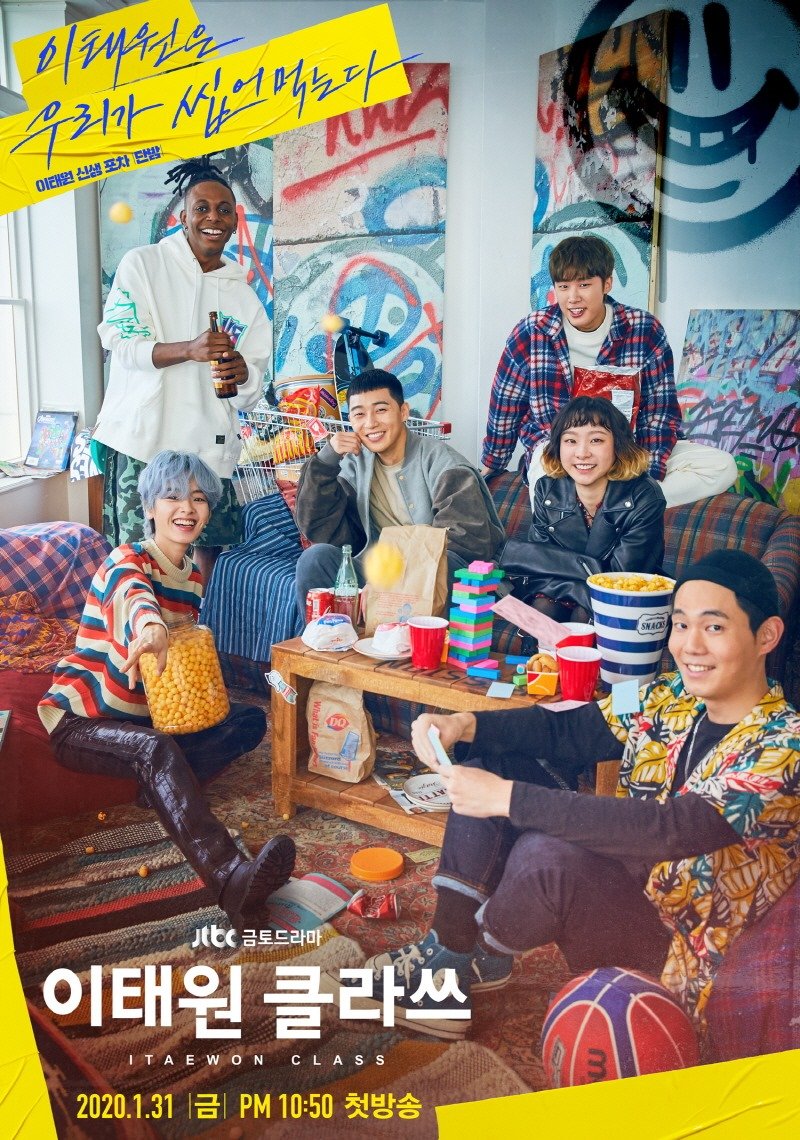
Aired on JTBC in early 2020, Itaewon Class is the case study I use when explaining faithful adaptation to junior producers. Webtoon creator Jo Gwang-jin was hired to write the screenplay himself, which is rarer than people assume. The result: dialogue rhythms, character reveals, and even panel-to-shot compositions map directly onto the source. Fans of the 원작 got what they came for.
Park Seo-joon's Park Sae-ro-yi is the anchor. What makes the character land globally is not the revenge arc, because Korean revenge dramas are a dime a dozen. It is the specific mix of stubborn 정 (a deep, almost familial loyalty that has no clean English translation) and small-business grit. Sae-ro-yi opens DanBam, a pojangmacha-style pub in Itaewon, and rebuilds a chosen family: a trans chef, a Korean-American bartender, an ex-gangster manager. In a country where mainstream drama had historically avoided sexual and racial diversity, Itaewon Class quietly normalized that ensemble as heroic. That is a bigger cultural move than the ratings alone suggest.
Extraordinary Attorney Woo (이상한 변호사 우영우)

Extraordinary Attorney Woo is the outlier on this list because the drama came first and the webtoon adaptation followed. That is worth flagging: the IP pipeline now runs both directions. ENA, a cable channel most non-Korean viewers had never heard of before summer 2022, aired the show and watched its ratings climb from a modest 0.9% opener to 17.5% by the finale, ENA's all-time high. Once it hit Netflix internationally, it topped the non-English weekly chart within two weeks of release. HwaUmJo (art) and Yuil (writing) then serialized it as a 60-episode webtoon on KakaoPage, closing the loop.
Park Eun-bin's Woo Young-woo (an autistic attorney at a prestigious Seoul firm) is the reason. Park studied autism-spectrum research for months and, in a Korea Herald interview, described memorizing every legal citation the way a student crams for the bar. What makes Attorney Woo feel specifically Korean is how the show handles workplace hierarchy: Young-woo's colleagues have to relearn what competence looks like, and the drama takes its time letting stiff-necked seniors publicly change their minds. That slow institutional shift is deeply satisfying to Korean office workers who have watched decades of 갑질 (power abuse) plots and rarely seen resolution this generous.
True Beauty (여신강림)
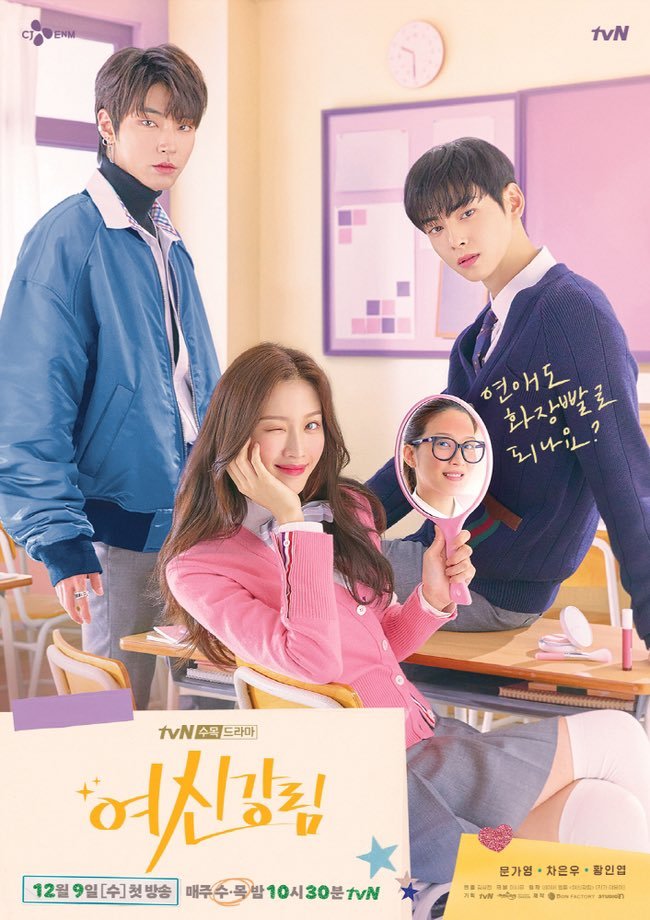
Yaongyi's True Beauty webtoon, a Naver-published romance about makeup as identity armor, cleared billions of cumulative views before tvN adapted it in late 2020. Kim Sang-hyub directed. The casting was the story: Moon Ga-young as Lim Ju-gyeong, ASTRO's Cha Eun-woo as Lee Su-ho, and rookie actor Hwang In-yeop as second lead Han Seo-jun. Hwang In-yeop was a full-blown industry surprise, going from unknown to endorsement king within eight weeks. That trajectory only happens when a webtoon adaptation's built-in fandom pours energy into a supporting character the writers had underestimated.
True Beauty is worth studying for what it did to K-beauty marketing. Every product Ju-gyeong used on screen got a search spike on Musinsa and Olive Young within 24 hours. Korean cosmetics brands now budget for webtoon-drama PPL the way American brands budget for Super Bowl slots. The show's core appeal, a shy girl finding confidence through makeup rather than despite it, also resonated because it never moralized. Korean youth culture is aggressively pro-self-expression, and True Beauty caught that mood at the right time.
Where the pipeline goes next
The current shortlist on producers' desks skews darker and older: revenge thrillers, corporate crime, historical fantasy. Cheese in the Trap (2016) proved a decade ago that college-age psychological drama could work, and the industry has been circling back to that tone with titles like Nevertheless and Hellbound. Studio Dragon signed a multi-year first-look deal with Naver Webtoon in 2023 that essentially keeps the pipeline flowing. If you want to know what next year's Netflix Korea top 10 will look like, open the current Naver Webtoon weekly rankings. That is the actual sourcing document.
Want more curated Korean culture shipped straight to your door? Explore what is inside the Daebak Box.


