


Table of Contents
Hi Daebak-Fam. If you were paying attention to K-pop between 2015 and 2020, the SMTOWN Cafe on the fourth floor of SM Entertainment's COEX Artium in Gangnam was the closest thing the industry had to a proper fandom sanctuary. Not a pop-up. Not a rented rooftop. A permanent, six-story building next to Samseong Station where you could order an EXO mint ade, watch a Red Velvet MV on the LIVErary loop, and eat a cupcake with a tiny SHINee cap on top. I have been covering the K-content space for a decade, and I want to walk you through what that cafe menu actually was, why it worked as a fan-mechanic, and why its 2020 closure quietly changed how Korean agencies think about physical fan spaces. This one is affectionate. It should be. The SMTOWN Cafe deserved a proper writeup.
What the SMTOWN Cafe Actually Was
SMTOWN COEX Artium opened January 2015 as SM Entertainment's flagship offline fan-experience complex. Six floors, right on top of the Samseong-station side of Starfield COEX Mall. The fourth floor housed what SM branded the LIVErary Cafe (a mash-up of live plus library), and that is what fans just called the SMTOWN Cafe. The room combined a coffee bar, a dessert display, a music lounge with SMTOWN artists on rotation, and an archive wall of album inserts you could actually flip through. It was designed to sell K-pop as a sensory product, not just a Spotify stream. You sat, you listened to Red Velvet's Peek-a-Boo through overhead speakers, you drank a color-matched ade, you photographed the cupcake wall, and you left having spent maybe twelve or fifteen dollars total. That price point was the trick. It gave every casual fan a reason to come, and it fed the SUM merch shop on the second floor.
The Artist Ade Menu: Color as Fandom Signal
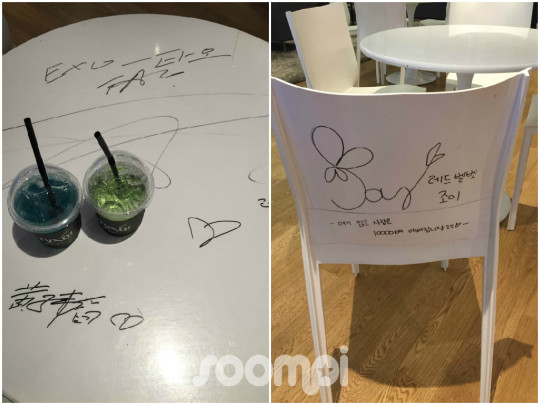
The centerpiece of the menu was the artist ade line-up. Ades (Korean-cafe fruity soda-lemonades) branded by group: mint for EXO, rose for Girls' Generation, blue lemon for Super Junior, green apple for SHINee. Later rotations added Red Velvet strawberry and NCT-adjacent options tied to release cycles. The mechanic behind the color-coding is worth flagging because it is smarter than it looks. Each drink read as a signal on the table. You could tell from three tables away that the group on the corner had ordered EXO. It turned the cafe seating area into a soft fandom map, which is exactly the kind of ambient community-building HYBE's Weverse now tries to replicate digitally with lightstick color palettes and profile-frame skins. SM was doing it with strawberry syrup in 2015.
The choice to make the drinks fruity-carbonated rather than a proper signature cocktail or a themed latte was also on-purpose. Kids under twenty could order without hesitation, the recipes did not need a trained barista, and the flavors were memorable in a photo caption. When a Shawol posted the green apple ade to Twitter, it read as SHINee-coded even without a caption. That is exactly the kind of low-effort, high-signal content Korean agencies engineer for, and it is why the ade rotation outlasted the several attempts SM made at coffee-forward menu overhauls.
The Dessert Wall, the Cupcakes, and the Cake Display
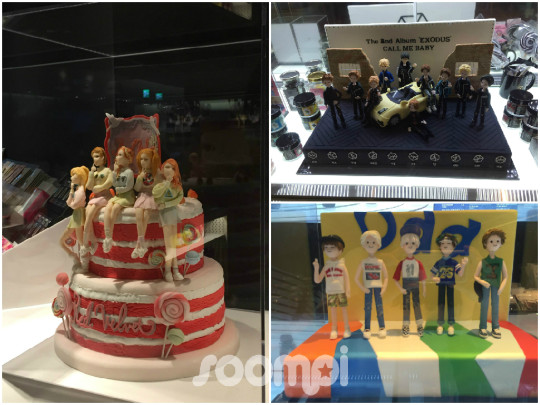
The dessert bar carried a rotating slate of macarons, cookies, and cupcakes. The star item was the artist cupcake: a plain frosted base with a tiny fondant marker on top referencing a member or a group. A little SHINee cap. A miniature EXO logo. A Girls' Generation crown. These were priced approachable enough (roughly 4,000 to 6,000 won) that fans bought two or three to photograph together. Behind glass, an untouchable display held the elaborate character cakes: red velvet cake for Red Velvet, black-and-white tiered towers for EXO's Monster era, pastel domes for Girls' Generation. Those cakes were never for sale, and that was strategic. They served as a photo backdrop, not a revenue item. That distinction (sellable everyday pastry versus display-only aspirational cake) is a piece of merchandising instinct SM's team clearly imported from the Japanese anime-cafe playbook, which had been running the same split for a decade before Artium opened.
The Wider SM Food & Beverage Ecosystem
.jpg)
The Artium cafe did not exist in isolation. SM Food and Beverage Development was a distinct subsidiary running the Artium LIVErary, plus SUM Cafe at the SM Samsung-dong HQ, plus the SMT Seoul five-floor tapas restaurant, plus SMT Tokyo in Roppongi. That vertical structure is why the SMTOWN Cafe menu was polished in a way most idol-themed pop-ups never are. It had trained back-of-house, a real menu-development budget, and a supply chain that could handle limited-run comeback tie-ins. When Red Velvet dropped the Perfect Velvet album cycle, the LIVErary added a matching drink within the week. That is major-label operational muscle, and it is why the SMTOWN Cafe felt like a premium product rather than a fan-service afterthought.
Why the Cafe Was a Pilgrimage Site (성지순례)

Between 2015 and 2020, Korean fandom vocabulary picked up the phrase 성지순례 (seongji-sullye, pilgrimage) to describe visits to Artium. That is not a casual word. It comes with religious weight, and Korean fandoms use it very deliberately. The SMTOWN Cafe earned it because the room hit every touch-point at once: the music you already listened to, the merchandise you already followed, the cupcake you could photograph, the signed chair Joy had left her name on. International fans building an itinerary for Seoul in that window put Artium ahead of Namsan Tower and the palaces. The Peak K-pop tourism era from roughly 2016 through 2019 ran directly through this fourth floor. Korea Herald covered the launch of the on-site SMTown Museum in May 2018 as the next step in that pilgrimage-tourism play, and for a while it worked exactly as designed.
The 2020 Shutdown and What Came After
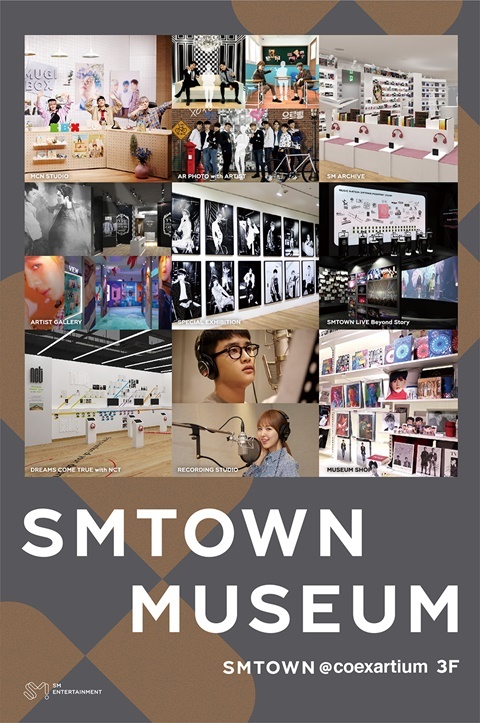
On May 18, 2020, SM Entertainment posted the closure notice: the SMTOWN Cafe, theater, and VR section were already dark, the museum would run until May 31, and the SUM merch store would carry the flag until June 28. The public reason was the expiration of the COEX Mall rental. The private reason, per SM's Q1 2020 earnings report and Koreaboo's contemporaneous reporting, was financial. Physical fan spaces had stopped penciling out. HYBE's Weverse (launched July 2019) was already showing that a subscription-based digital fan-experience platform captured the same fandom energy with vastly better margins. SM briefly floated a Changwon-based mega-complex as the successor. That project moved slowly, and by 2022 SMTOWN Live had rebranded around the Kwangya digital universe (aespa's cinematic worldbuilding) rather than a physical playground. That is not a coincidence. It is the K-pop industry pivoting from real-estate-heavy fan spaces to platform-based ones.
What Replaced the SMTOWN Cafe (And What Did Not)
Nothing has fully replaced it. HYBE Insight in Yongsan (2021 to 2023) tried the physical museum route and closed. JYP Nation and YG have kept it lightweight with popups. The idol themed-cafe scene has moved almost entirely to rental pop-ups: SEVENTEEN CARAT LAND-adjacent cafes for one-week windows, TWICE fan-run cafes for member birthdays, aespa cafes on comeback weeks. These are transient by design, low capex, high-engagement. They copy the SMTOWN Cafe's fandom-signal instinct (color-coded drinks, artist cupcakes, photo walls) but ditch the permanent-real-estate model. If you visit Seongsu-dong on a Saturday you can walk through three or four idol pop-up cafes in an afternoon. What you cannot do anymore is walk into a permanent room, order an EXO mint ade, and know that room will still be there next winter. That is the piece the SMTOWN Cafe held that no successor has taken back.
Why This Matters for Anyone Following K-Pop Fan Culture
The SMTOWN Cafe is worth knowing because it is the reference point every K-pop themed cafe still gets compared to. When a Korean fan says a new idol pop-up feels 성의 없다 (lacking sincerity), what they usually mean is that the room is too obviously rented, the menu too obviously catering-truck. The SMTOWN Cafe set a bar that involved real F&B subsidiary investment, real menu development, and a permanent building. Understanding that bar helps you read the current wave of idol cafes accurately. And if you are building your own K-pop travel itinerary, take the lesson: pilgrimage sites are transient. The 성지 you plan to visit next year may not be there. Book the trip now.
Bring the Culture Home
If the LIVErary aesthetic and the artist ade format made you want more of the Korean 아이돌 카페 굿즈 universe piped straight to you, the Daebak Box is our monthly Seoul-shipped bundle of Korean snacks, culture goods, and 케이팝 lifestyle items. Consider it the mail-order 성지순례 for the era when physical fan spaces are rarer than they should be.


