


Table of Contents
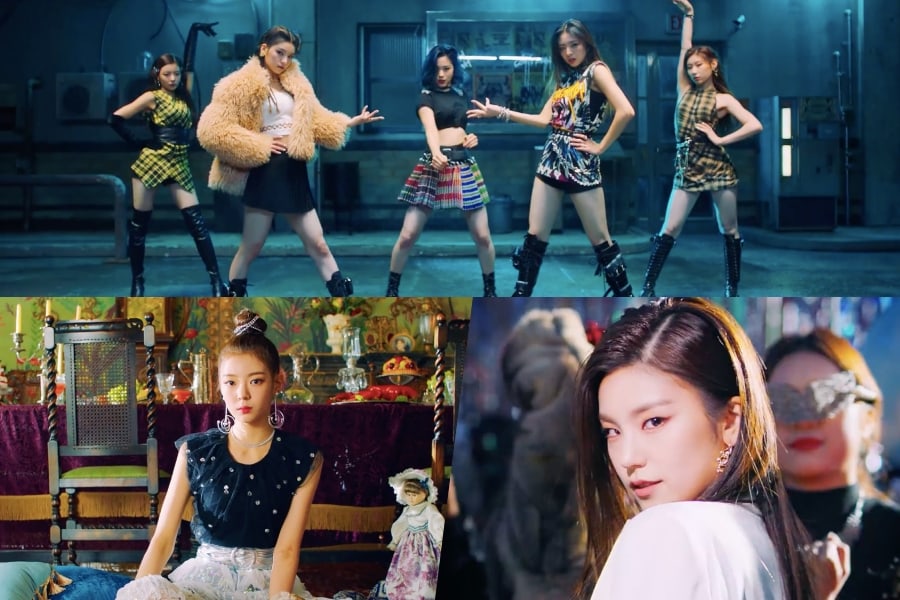
Here is the honest read from someone who has spent over a decade watching Korean agencies engineer girl groups for global export: ITZY (있지) dropping 'WANNABE' on March 9, 2020 was not just another JYP comeback. It was the moment 4th-generation K-pop got its blueprint. The five 있지 members (Yeji, Lia, Ryujin, Chaeryeong, Yuna) came back with 'WANNABE' as the title track of their third EP 'IT'z ME' at exactly the wrong time on paper. COVID had just detonated. Music show audiences were empty. On-site showcase events were cancelled. And yet WANNABE still peaked at No. 2 on the Gaon Digital chart, cleared 45 million YouTube views in 24 hours, and rode a TikTok challenge into playlists across Southeast Asia, Latin America, and North America. The reason it worked, and the reason WANNABE still matters five years later, is that J.Y. Park's team had already stress-tested the 걸크러쉬 (girl crush) formula against post-TWICE market conditions. WANNABE is what a fully engineered pivot looks like.

Why the 걸크러쉬 pivot mattered: JYP's post-TWICE math problem
To understand WANNABE you have to understand JYP's math in 2018. TWICE was the biggest girl group in Asia, engineered around a color-coded, high-cute, K-J bilingual concept that dominated domestic and Japanese markets. But J.Y. Park could read the ceiling. The 'cute' lane was crowded (LOONA, GFRIEND, OH MY GIRL), Western streaming preferred edge over sweetness, and the next generation of fans in Manila, Jakarta, and Mexico City were being trained by BLACKPINK to expect attitude, not aegyo. When ITZY debuted in Feb 2019 with 'DALLA DALLA,' the concept memo was explicit: this is JYP's answer to the 'girl crush' segment BLACKPINK monopolized on the global side. WANNABE was the third title track, which in K-pop production math is when you stop testing and start scaling. The whole EP was engineered around one insight: post-2018 K-pop girl fans want self-love anthems more than boy-love anthems, and they want them delivered with 자기애 (self-love) as an attitude, not a lyric.
The production: Galactika, Ryan S. Jhun, and the 250 orbit
WANNABE's producer credits look boring on paper and matter a lot in practice. Galactika, the same duo behind 'DALLA DALLA,' handled main production, which gave the song ITZY's signature 'anti-drop' structure: no big EDM release, just a hooky, stuttering verse that pivots into the 'I wanna be me, me, me' refrain and a hard dance break. Ryan S. Jhun, the Korean-American producer who had already scored SM hits, contributed to the arrangement layer. And '250,' the low-profile producer who would later become the architect of NewJeans' 2022 debut sound, was already circling that JYP orbit in early 2020. The combined production team is what gives WANNABE its specific texture: EDM-house percussion under a hip-hop verse cadence, with the drop replaced by a choreography moment. That is not accidental. That is Korean agency A&R doing what Western pop A&R rarely does: engineering for TikTok choreo virality two years before TikTok choreo virality was the industry default. WANNABE's viral dance challenge (the 'shoulder dance' hook Ryujin owns in the intro) racked up hundreds of thousands of user videos through 2020, and that was the mechanic that pushed the song past the K-pop core into the mainstream global feed.

The 'I wanna be me' refrain: why the lyric flipped K-pop's love-song default
The appeal point that gets missed in most WANNABE writeups is the lyric mechanic. K-pop girl group title tracks through the 2010s were overwhelmingly about a boy, a crush, a heartbreak, or a longing. Even the girl-crush TWICE tracks were fundamentally cute-flirty. WANNABE's core hook, 'I don't wanna be somebody, just wanna be me,' does something specific: it removes the romantic addressee entirely. The song is a self-address. Member Yeji explained the origin in a Korea Herald Q&A on release day: the lyricist asked what kind of artists ITZY wanted to be, they said 'we just wanna be ourselves,' and that answer became the refrain. That is a small production anecdote and a huge cultural signal. The song landed in the Korean market at exactly the moment a wave of younger K-pop fans (many of them female, many of them global) were exhausted by the 'girl waiting on boy' template. WANNABE gave them a hook they could sing at themselves in the mirror. That is not a marketing accident. That is JYP reading the fan-culture temperature and adjusting the product.
The pandemic release: how ITZY turned a COVID launch into a TikTok win
Every K-pop label had to rewrite its 2020 promo playbook in real time. ITZY's WANNABE launch was one of the earliest tests. The V Live broadcast on Naver replaced the traditional on-site showcase. Music show audiences shrank to production staff only. International promo tours (which JYP had planned around the 'ITZY? ITZY! In the USA!' concept) were dead on arrival. What replaced all of that was TikTok. The WANNABE choreo, particularly Ryujin's opening shoulder-roll and the group's synchronized point moves, translated perfectly to 15-second vertical video. Global fans who had never heard of ITZY started learning the choreo from other fans, not from official JYP content. That is a critical inversion. Pre-2020 K-pop virality still ran through official YouTube MV plays and Melon streaming. WANNABE was one of the first comebacks where a huge percentage of the international discovery pipeline ran through user-generated TikTok covers. Post-2020, every JYP, HYBE, and SM comeback would be engineered with that pipeline as the primary channel. WANNABE was the proof of concept.
The chart receipts: 45M in 24 hours, 500M in three years, RIAA gold in the US
The commercial results are worth listing because they are how the industry measures whether an engineered pivot actually worked. WANNABE peaked at No. 2 on the Gaon Digital chart (blocked from No. 1 in its peak week by a heavyweight ballad, which is a normal ceiling for dance tracks against Korean Melon streaming behavior). It cleared 45 million YouTube views inside the first 24 hours. It rode into eight domestic music show wins (three each from M!Countdown and Inkigayo, two from Show Champion). It hit 100 million YouTube views faster than any prior ITZY MV. Three years later, in May 2023, WANNABE became ITZY's first MV to cross 500 million views on YouTube, per Soompi's tracking. And in November 2023 the RIAA certified WANNABE gold in the US (500,000 units of combined sales, downloads, and audio-video streams), per The Korea Times, which is a rare achievement for a K-pop girl-group track released three years earlier and only partially promoted in English. That gold cert is the receipt on the TikTok-driven long tail: the song kept generating streams every time a new user found the choreo challenge.

Why WANNABE is the pivot point for 4th-generation K-pop
Zoom out and WANNABE lands as one of the cleanest 3rd-gen-to-4th-gen inflection tracks in K-pop history. Third-generation K-pop girl groups (TWICE, BLACKPINK, Red Velvet, MAMAMOO) had roughly split the market into 'cute' and 'girl crush' lanes, with BLACKPINK owning the top of the girl-crush segment globally. When ITZY debuted and then scaled with WANNABE, they proved that JYP could run the girl-crush lane without borrowing YG's aesthetic. That opened the door. Within 18 months of WANNABE, aespa debuted (SM, Nov 2020), IVE debuted (Starship, Dec 2021), NMIXX debuted (JYP again, Feb 2022), and NewJeans debuted (HYBE-ADOR, Jul 2022). Every one of those 4th-gen groups inherited some piece of the WANNABE template: TikTok-first choreography design, self-address lyrical framing over romantic address, and 걸크러쉬 as the default aesthetic rather than an exception. WANNABE was not just a hit song. It was the fingerprint on the next five years of K-pop girl-group A&R.
The industry read: where ITZY sits now, and what WANNABE still tells us
The honest post-2020 read on ITZY as a business is more complicated than the WANNABE peak suggests. The group kept delivering domestic chart consistency (Not Shy in 2020, Guess Who in 2021 which cracked the Billboard 200, Crazy in Love full-length in 2021, Cheshire in 2022, Kill My Doubt in 2023). But on the global stadium scale, ITZY has not converted at the level of BLACKPINK or, more recently, NewJeans. Part of that is timing (COVID gutted their crucial early US tour window), part of it is that HYBE moved aggressively into the same 4th-gen slot with LE SSERAFIM and NewJeans, and part of it is that JYP's global marketing spend has always been leaner than YG or HYBE's on the Western side. But that does not diminish WANNABE. If anything, it clarifies why the song matters: WANNABE proved the girl-crush 4th-gen formula worked, and the industry then ran with it. ITZY did the pathfinding. Everyone else scaled off the map. That is often how K-pop industry cycles actually work.

The Daebak read: WANNABE as the anthem that shifted a decade
Here is what a Hallyu insider would tell you if you asked over a late-night 소주: WANNABE is one of the very small handful of 4th-gen K-pop songs that did not just chart well but actually shifted the industry's default assumptions about what a Korean girl-group title track should sound like, mean lyrically, and look like on choreography. The 'I wanna be me' refrain flipped the addressee. The Galactika + Ryan S. Jhun + 250-adjacent production stack proved that JYP could compete on the girl-crush lane. The TikTok-native choreography design proved that user-generated virality could substitute for cancelled promo tours. And the sub-plot with member breakouts (Ryujin especially) proved that 4th-gen groups needed to be built as constellations of individual visual anchors, not monolithic packages. Every K-pop girl group that debuted after March 2020 has WANNABE somewhere in its DNA, whether the label acknowledges it or not. That is the industry math on 있지 and it is why this comeback is worth revisiting.
Bring the K-Pop Insider View Home with Daebak
If the WANNABE breakdown pulled you deeper into how K-pop actually gets engineered on the JYP side, the Daebak Box is your monthly deep-dive: curated Korean pop culture, snacks, and lifestyle picks that take you past the surface headlines into what Korean fans actually love. Subscribe, and let each month land with the same energy as a MIDZY unboxing a new ITZY comeback.


